April 16, 2026

Month: July 2025

Navigating the world of advertising agencies can feel overwhelming, especially when faced with diverse pricing models and services. This guide delves into the intricacies of advertising agency quotes, providing a clear understanding of their components, typical pricing structures, and crucial factors to consider when selecting the right agency.

From initial consultations to final contracts, we’ll dissect the process of securing an effective advertising partnership. Understanding the language of advertising agency quotes is key to making informed decisions and maximizing your marketing budget.

Introduction to Advertising Agency Quotes

An advertising agency quote Artikels the scope of work, deliverables, and associated costs for a specific project. It serves as a legally binding contract, detailing the terms and conditions of the collaboration between the agency and the client. Understanding the elements of a quote is crucial for both parties to ensure mutual understanding and avoid misunderstandings.The quote acts as a roadmap, specifying the steps the agency will take to achieve the client’s objectives.

It lays out the project’s timeline, the specific tasks, and the resources dedicated to the project, thereby providing a clear picture of the anticipated outcome and cost.

Components of an Advertising Agency Quote

A comprehensive advertising agency quote typically includes a detailed breakdown of services, deliverables, and pricing. Key components usually encompass project scope, timeline, team assignments, and various deliverables, such as creative assets, media plans, and reporting. Clear communication and meticulous documentation are paramount to avoid ambiguity and maintain transparency.

Pricing Models Used by Advertising Agencies

Advertising agencies employ diverse pricing models, each tailored to the project’s specific requirements and complexity. Understanding these models is vital for clients to evaluate the value proposition and choose the most suitable option.

  • Hourly Rate: This model charges a predetermined hourly rate for the agency’s personnel working on the project. It’s often used for smaller projects, consulting engagements, or for specific tasks requiring a focused effort. Example: A graphic designer charges $50/hour, and a project requires 10 hours, resulting in a cost of $500. This method provides a degree of flexibility but can lead to unpredictable costs if the project extends beyond initial estimates.

  • Value-Based Pricing: This approach focuses on the value delivered by the agency to the client, not simply the time spent. The agency assesses the project’s impact and potential return on investment (ROI) to establish a fee structure. For example, an agency might charge a percentage of the anticipated sales generated by the campaign. This approach can be complex but often results in a more collaborative and transparent relationship.

  • Project-Based Pricing: This pricing model involves a fixed fee for the entire project, regardless of the hours spent. It offers predictability and transparency for clients. Example: A complete social media campaign for six months might cost $10,000. This approach works well for projects with clearly defined deliverables and timelines.
  • Retainer Model: This model establishes a recurring monthly fee for ongoing services. It is ideal for clients requiring consistent support and ongoing marketing efforts. For instance, a monthly retainer of $5,000 might cover content creation, social media management, and reporting for a small business.

Common Terms and Phrases in Advertising Agency Quotes

Several terms and phrases are frequently encountered in advertising agency quotes. Understanding these terms is vital for clear communication and accurate interpretation of the quote’s content.

Project Scope: Defines the specific tasks and objectives of the project.Timeline: Artikels the projected start and completion dates for various project phases.Deliverables: Lists the tangible outputs of the project, such as creative assets, media plans, or reports.Budget: Specifies the allocated funds for the project.Payment Terms: Artikels the payment schedule and methods.

Comparison of Pricing Models

Pricing Model Description Example Pros Cons
Hourly Rate Fixed rate per hour. $50/hour x 10 hours = $500 Flexible for tasks. Cost uncertainty, potential overruns.
Value-Based Based on project value and ROI. 10% of anticipated sales. Focuses on client value. Complexity in estimating ROI.
Project-Based Fixed fee for entire project. $10,000 for a 6-month campaign. Predictable cost. Limited flexibility for changes.
Retainer Recurring monthly fee. $5,000/month for ongoing services. Ongoing support, consistency. Long-term commitment.

Understanding Advertising Agency Services

Advertising agencies play a crucial role in helping businesses achieve their marketing goals. They offer a range of services, from crafting compelling creative concepts to managing complex media campaigns. Understanding the services offered, the factors influencing costs, and the various campaign types is essential for businesses seeking to partner with an agency effectively.

Key Services Offered

Advertising agencies provide a diverse range of services, tailored to meet the unique needs of each client. These services encompass strategy development, creative execution, media planning, and campaign management. Examples include market research to understand target audiences, developing brand messaging, designing advertisements, placing ads across various media channels, and tracking campaign performance. They also manage the entire campaign lifecycle, from initial concept to final reporting.

Factors Influencing Service Costs

Several factors influence the cost of advertising services. Project scope, the complexity of the campaign, the target audience, the chosen media channels, and the agency’s expertise and reputation all play a significant role. For instance, a nationwide campaign targeting a broad audience across multiple media platforms will likely cost more than a local campaign with a more defined target.

The level of creative development and production required for the campaign also impacts the overall cost.

Types of Advertising Campaigns and Costs

Different advertising campaigns cater to various needs and budgets. Print advertising, often associated with traditional media, typically involves costs for design, printing, and placement in publications or other print media. Digital advertising encompasses a wide spectrum of online platforms and strategies. Costs vary based on the chosen platforms (e.g., search engine marketing, social media advertising), the level of targeting, and the desired reach.

Social media advertising campaigns often rely on platforms like Facebook, Instagram, or TikTok, and costs depend on factors such as the target audience’s demographics, the level of engagement desired, and the platform’s pricing model. A well-structured social media campaign can generate significant engagement and brand awareness, but the cost-effectiveness is dependent on proper targeting.

Advertising Deliverables

Advertising agencies provide various deliverables to their clients. Creative concepts encompass the core ideas and visuals that form the foundation of an advertisement. These might include mockups, storyboards, or detailed design proposals. Media plans Artikel the strategy for reaching the target audience through specific channels. They specify the media outlets, the frequency and duration of the campaign, and the budget allocated to each channel.

A comprehensive media plan ensures effective allocation of resources and maximization of campaign impact.

Typical Services and Costs

Service Description Typical Cost Factors
Market Research Analyzing target audience and market trends Sample size, research methods, data analysis
Brand Strategy Development Defining brand identity and messaging Client interaction, complexity of the brand
Creative Concept Development Creating compelling advertising ideas Number of iterations, creative team’s expertise
Media Planning and Buying Selecting media channels and purchasing ad space Media outlet costs, campaign duration, reach
Campaign Management Monitoring and optimizing campaign performance Tracking tools, reporting frequency

Comparing Advertising Agency Quotes

Scrutinizing advertising agency proposals is crucial for securing the best possible return on investment. A meticulous comparison process ensures alignment between your marketing objectives and the agency’s capabilities, avoiding costly missteps. Carefully evaluating quotes helps you select an agency that not only understands your brand but also possesses the experience and expertise to drive successful campaigns.Thorough analysis of multiple quotes is paramount to achieving optimal results.

This process allows for a comprehensive evaluation of each agency’s approach, identifying strengths and weaknesses, and ultimately, selecting the most suitable partner. Understanding the nuances of each proposal is essential to maximizing your marketing budget and achieving your desired outcomes.

Factors to Consider When Comparing Quotes

Evaluating advertising agency quotes requires a multifaceted approach, encompassing more than just price. Key factors like experience, reputation, and expertise are essential for making an informed decision. These elements, along with the agency’s understanding of your specific business goals, ultimately determine the success of your marketing strategy.

  • Agency Experience: Consider the agency’s track record, focusing on relevant experience in your industry. Look for agencies with a history of success in similar campaigns and market conditions. An agency with a proven ability to deliver results in your sector is a strong indicator of their competence.
  • Reputation and Testimonials: Research the agency’s reputation within the industry. Check online reviews, testimonials, and case studies. Positive feedback from previous clients often signifies a reliable and effective agency.
  • Expertise and Skill Set: Assess the agency’s team’s expertise in the specific areas relevant to your campaign. A strong team with diverse skills in areas such as creative development, media buying, and analytics can significantly enhance campaign performance.
  • Understanding of Your Brand and Objectives: Evaluate how well the agency understands your brand, target audience, and marketing objectives. An agency that demonstrates a deep understanding of your business and its unique challenges is more likely to develop a successful campaign.

Evaluating the Value Proposition

Understanding the value proposition of each agency is crucial. This involves examining not just the price, but also the range of services offered and how they align with your specific needs. Beyond the surface level, the depth of service, support, and adaptability is key to long-term success.

  • Scope of Services: Carefully examine the scope of services each agency offers. Compare the services included in the quote, such as creative development, media planning, social media management, and analytics. Ensure that the services align with your campaign objectives.
  • Creative Approach: Evaluate the agency’s creative approach and how it aligns with your brand’s identity and target audience. Look for evidence of innovative thinking and strategies that will resonate with your customers.
  • Media Planning and Buying Strategies: Analyze the media planning and buying strategies Artikeld in the proposal. Determine whether the strategies are appropriate for your target audience and budget constraints. Consider the potential for increased reach and engagement through their planned media buys.

Identifying Hidden Costs

Hidden costs in advertising agency quotes can significantly impact your budget. It’s essential to scrutinize every aspect of the proposal, not just the upfront price. Be proactive in uncovering these hidden costs to ensure your budget aligns with the actual value received.

  • Additional Fees: Look for any additional fees or charges that might not be explicitly stated in the initial quote. Examples include extra fees for design revisions, media placement costs, or extra staff hours.
  • Contingency Planning: Assess how the agency handles potential risks or unforeseen circumstances that could impact campaign performance. Adequate contingency planning can help mitigate unexpected costs or delays.
  • Reporting and Analytics: Inquire about the frequency and depth of reporting provided by the agency. Understand the specific metrics they will track and how they will interpret the data. Ensure the reporting aligns with your business needs.

Checklist for Evaluating Advertising Agency Quotes

A structured approach is essential when evaluating advertising agency quotes. This checklist helps you compare proposals systematically, identifying key strengths and potential weaknesses.

Criteria Evaluation
Experience Check for relevant experience in similar campaigns
Reputation Review online reviews, testimonials, and case studies
Expertise Assess team’s expertise in relevant areas
Understanding of Brand/Objectives Evaluate agency’s understanding of your business
Scope of Services Verify alignment with your campaign objectives
Creative Approach Assess alignment with brand identity and target audience
Media Planning/Buying Analyze strategies and their appropriateness
Hidden Costs Identify any additional fees or charges
Reporting & Analytics Inquire about the depth and frequency of reporting

Key Considerations for Selecting an Agency

Choosing the right advertising agency is crucial for achieving marketing objectives. A well-matched agency can significantly boost brand visibility, generate leads, and ultimately drive sales. This section details vital factors to consider when evaluating potential partners.Evaluating agencies isn’t a simple task; it requires a deep dive into their capabilities, experience, and alignment with your brand’s unique needs. Carefully assessing these factors will lead to a more informed decision and a partnership that yields positive results.

Agency Experience and Expertise

A robust understanding of your industry and its nuances is critical for an advertising agency. Agencies with a proven track record in your specific sector possess the knowledge and insights to develop targeted strategies. This industry-specific expertise is often invaluable. For instance, an agency specializing in tech startups might understand the competitive landscape and emerging trends better than a generalist agency.

They can leverage this knowledge to craft campaigns tailored to the tech market’s unique needs and demands. A successful campaign often relies on an in-depth understanding of the industry and its current dynamics.

Researching and Evaluating Potential Agencies

Thorough research is paramount when selecting an advertising agency. Start by gathering a list of potential agencies. Review their portfolios, case studies, and testimonials. Look for agencies that have a history of success in similar campaigns. Consider the agency’s size, structure, and team composition.

A team with diverse skillsets can bring a wider range of perspectives to the table. This comprehensive evaluation helps in identifying the agency that best aligns with your needs and goals.

Understanding the Target Audience

A successful advertising campaign hinges on a deep understanding of the target audience. The agency should demonstrate a clear grasp of your ideal customer’s demographics, psychographics, and behavior patterns. This knowledge is crucial for crafting messaging that resonates with the target audience. A well-defined target audience allows the agency to tailor the advertising strategy and content to their specific needs and interests.

Consider examples of agencies that have effectively understood and targeted particular demographic groups, resulting in high engagement and conversion rates.

Examples of Successful Campaigns

Analyzing successful campaigns by different agencies provides valuable insights. Successful campaigns often employ innovative strategies, engaging content, and a profound understanding of the target audience. Consider campaigns that have achieved measurable results in terms of brand awareness, lead generation, or sales growth. Examples like Nike’s “Just Do It” campaign or Apple’s “Think Different” campaign demonstrate how a compelling message, paired with a well-defined strategy, can achieve remarkable results.

Study these campaigns for inspiration and ideas.

Key Factors to Consider When Choosing an Agency

  • Industry Expertise: An agency’s understanding of your specific industry is crucial for developing relevant and effective strategies. Agencies with a proven track record in similar sectors often possess valuable insights.
  • Portfolio Review: Scrutinize the agency’s portfolio to evaluate their past successes and their ability to deliver results for clients similar to yours. This gives a good indication of their skills and adaptability.
  • Team Composition: A strong team with diverse skill sets, including creative directors, strategists, and account managers, is essential for a successful partnership. This diversity often leads to more comprehensive solutions.
  • Communication Style: Establish clear lines of communication with the agency to ensure that your needs are understood and addressed promptly. A seamless communication flow is key for a productive partnership.
  • Client Testimonials: Reading testimonials from previous clients can offer valuable insights into the agency’s performance and their ability to meet client expectations. This is often a good way to gauge the agency’s overall reputation and reliability.

Branding Agency vs. Advertising Agency

Understanding the distinctions between branding and advertising agencies is crucial for businesses seeking to develop a comprehensive marketing strategy. Both contribute significantly to a company’s overall success, but they approach the task from different perspectives. Branding agencies focus on the long-term identity and perception of a company, while advertising agencies concentrate on short-term campaigns to drive immediate results.While they often work together, understanding their unique roles allows for a more effective allocation of resources and a cohesive marketing strategy.

The differences in their approach, services, and deliverables will be highlighted in the following sections.

Key Differences in Services Offered

Branding agencies primarily focus on building and managing a company’s brand identity. This involves developing a brand strategy, defining brand values, creating a brand voice, and designing a consistent visual identity. Their goal is to cultivate a recognizable and memorable brand image that resonates with the target audience over the long term. Advertising agencies, on the other hand, concentrate on creating and executing advertising campaigns to promote a product or service.

Their work often involves developing marketing materials, managing media placements, and conducting advertising research to ensure maximum impact.

Differing Approaches to Marketing

Branding agencies adopt a strategic, long-term approach to marketing. They focus on building a strong brand foundation, aligning brand messaging with the company’s values and mission, and establishing a consistent brand experience across all touchpoints. Advertising agencies, conversely, often take a more tactical, short-term approach, focusing on immediate sales conversions and driving brand awareness through specific campaigns. They leverage various advertising channels to generate a desired response.

Complementary Roles in a Comprehensive Marketing Strategy

Branding and advertising agencies can complement each other effectively. A strong brand identity provides a solid foundation for advertising campaigns, ensuring consistency and resonance with the target audience. Conversely, successful advertising campaigns can reinforce and elevate a brand’s image, generating interest and driving sales. A cohesive marketing strategy involves leveraging the unique strengths of both types of agencies.

Expected Deliverables from Each Agency Type

The deliverables expected from branding agencies often include a comprehensive brand guideline document, brand style guides, logo designs, brand messaging frameworks, and brand positioning statements. Advertising agencies, conversely, focus on delivering impactful advertising campaigns, which may include creative concepts, media plans, advertising copy, and campaign reports.

Table Outlining Key Distinctions

Characteristic Branding Agency Advertising Agency
Focus Building and managing brand identity Creating and executing advertising campaigns
Timeframe Long-term (building brand equity) Short-term (driving immediate results)
Deliverables Brand guidelines, style guides, logo design, brand messaging, positioning Creative concepts, media plans, ad copy, campaign reports
Metrics Brand awareness, perception, equity Sales conversions, lead generation, reach

Negotiating Advertising Agency Quotes

Securing the right advertising agency requires a strategic approach to negotiation. A well-defined process, coupled with clear communication and a proactive stance, can lead to a mutually beneficial agreement that aligns with your business objectives. This involves understanding the agency’s perspective and their value proposition, not just their proposed price.Effective negotiation hinges on a thorough understanding of the project scope, agency capabilities, and your own business needs.

By preparing meticulously and anticipating potential roadblocks, you significantly enhance your chances of achieving a favourable outcome.

Defining Project Scope and Expectations

Defining the project’s scope is crucial for a successful negotiation. This involves outlining specific goals, deliverables, timelines, and target audience demographics. A precise scope document minimizes misunderstandings and ensures that the agency understands the full extent of the project requirements. This proactive step fosters a transparent relationship and prevents scope creep during the project. Vague or undefined scopes can lead to unexpected costs and delays.

Strategies for Communicating Needs and Requirements

Clear and concise communication of your business needs is paramount. This includes articulating your target audience, desired outcomes, and specific marketing objectives. Present your needs with supporting data, market research, and any relevant case studies to strengthen your arguments and support your decision-making. Documenting these aspects in a detailed proposal or brief is a powerful way to communicate the project’s intricacies.

Addressing Potential Concerns and Objections

Anticipating and addressing potential concerns from the agency is essential. Prepare to discuss budgetary constraints, timeline limitations, and any perceived risks associated with your project. Demonstrate a proactive approach to resolving these concerns by offering alternative solutions or compromises. Be prepared to negotiate on specific elements of the quote rather than accepting or rejecting it outright.

Successful Negotiation Tactics

Several tactics can improve the negotiation process. Understanding the agency’s pricing model and associated costs is important. Negotiating on specific deliverables or services, rather than the entire quote, allows for more granular adjustments. Consider presenting a tiered approach with escalating services and pricing, enabling the agency to adjust based on your budget. Be willing to compromise on certain elements to reach a mutually agreeable solution.

Examples of Successful Negotiation Tactics

One successful tactic is presenting a tiered pricing structure. For instance, a basic package might include website design, while an enhanced package includes ongoing and social media management. This gives the agency flexibility while providing a clear understanding of value for each level of investment. Another example is focusing on specific deliverables rather than the overall quote.

Negotiate the price of a specific campaign, such as a social media campaign, independently from other services. This approach allows for adjustments without compromising the entire agreement.

Case Studies of Advertising Agency Quotes

Understanding the effectiveness of advertising campaigns often involves looking at successful case studies. These provide tangible examples of how different strategies and pricing models have yielded results, helping potential clients gauge the value and cost of an advertising agency partnership. Analysis of successful campaigns sheds light on the crucial factors driving campaign performance and the associated costs.Successful advertising campaigns are rarely a product of chance.

Thorough planning, creative execution, and strategic targeting are essential components. These case studies will illustrate the relationship between these elements and the financial outlay associated with each stage of a campaign.

Successful Campaign Examples

Several successful campaigns demonstrate the impact of well-executed advertising strategies. For instance, Dove’s “Real Beauty” campaign resonated deeply with consumers, shifting societal perceptions and generating significant brand loyalty. Similarly, Nike’s “Just Do It” campaign continues to inspire athletes and consumers alike, showcasing the power of simple, evocative messaging. These campaigns, and others like them, provide valuable insights into how advertising agencies can drive impactful results.

Factors Contributing to Campaign Success

Several key factors contributed to the success of these campaigns. Firstly, a deep understanding of the target audience is crucial. Dove, for example, meticulously researched the desires and anxieties of women, allowing their campaign to resonate on an emotional level. Secondly, compelling creative executions, like the memorable imagery and slogans of Nike’s “Just Do It” campaign, capture attention and leave a lasting impression.

Finally, strategic media planning, ensuring the ads reach the right audience at the right time, is vital. These campaigns highlight the interconnectedness of audience understanding, compelling creative, and strategic media placement.

Stages of an Advertising Campaign and Costs

A typical advertising campaign involves several stages, each with associated costs. The initial stage, planning and strategy development, often includes market research, target audience definition, and campaign objectives. This phase typically requires the agency to analyze current market trends and competitive landscapes. The creative execution stage involves developing compelling advertisements, from concept to final production. The cost of this phase varies depending on the complexity and scope of the creative assets needed.

Media buying and placement, the stage of disseminating the campaign across various channels, incurs significant costs, often varying based on the media chosen (e.g., television, social media, print). Finally, the campaign monitoring and optimization phase involves tracking campaign performance and making necessary adjustments. Agencies often employ analytics tools to measure the effectiveness of the campaign and optimize its impact.

Pricing Structure Examples

The pricing structure for advertising agencies can vary significantly. Some agencies employ a project-based pricing model, where fees are based on the scope and complexity of the campaign. Others use a retainer model, where a fixed monthly fee is charged for ongoing services. Still others utilize a performance-based model, where the agency’s compensation is tied to the campaign’s performance metrics.

It’s essential to understand the agency’s pricing structure to determine if it aligns with the client’s budget and expectations.

Key Takeaways from Case Studies

Campaign Key Factors for Success Pricing Structure Estimated Cost Breakdown (Example)
Dove “Real Beauty” Deep understanding of the target audience, compelling visuals, and strategic media placement. Project-based, with a fixed fee for the project. Planning & Strategy: $20,000; Creative Execution: $30,000; Media Buying: $50,000
Nike “Just Do It” Simple, impactful message, strong brand association, and consistent execution. Retainer-based, with a monthly fee. Planning & Strategy: $15,000; Creative Execution: $25,000; Media Buying: $40,000

These examples demonstrate the multifaceted nature of advertising campaigns and the need for careful consideration of the pricing structures employed by advertising agencies.

Final Summary

In conclusion, securing a suitable advertising agency requires careful consideration of numerous factors. Comparing quotes, understanding services, and negotiating terms are vital steps. This comprehensive guide equips you with the knowledge to make informed choices, leading to a successful advertising campaign. By understanding the complexities of advertising agency quotes, you can optimize your marketing strategies and achieve your desired outcomes.

Top FAQs

What are the typical components of an advertising agency quote?

Typical components include service fees, creative costs, media buys, and potential hidden fees. The specific components vary depending on the scope of the project and the agency’s pricing model.

How do I compare quotes from different agencies?

Consider factors like agency experience, reputation, expertise, and the value proposition offered by each agency’s services. A comprehensive checklist can help structure this comparison.

What are some common negotiation strategies for advertising agency quotes?

Clearly defining project scope, effectively communicating needs and requirements, and being prepared to address concerns are crucial negotiation strategies. Examples of successful tactics can help you tailor your approach.

What are the key differences between branding and advertising agencies?

Branding agencies focus on creating and managing a brand identity, while advertising agencies focus on creating campaigns to promote the brand. Often, they work together in a holistic marketing strategy.
As bitcoin price usd no takes center stage, this opening passage beckons readers into a world crafted with good knowledge, ensuring a reading experience that is both absorbing and distinctly original.

Bitcoin’s price in USD is influenced by a myriad of factors ranging from market demand to economic conditions. Over the past decade, we’ve witnessed significant price fluctuations driven by investor sentiment, regulatory changes, and broader economic trends. Understanding these dynamics helps investors navigate the complexities of the cryptocurrency market effectively.

Overview of Bitcoin Pricing

Bitcoin, the pioneering cryptocurrency, has experienced a highly volatile pricing history since its inception. The price of Bitcoin in USD is influenced by several key factors, including market demand, investor sentiment, regulatory news, and macroeconomic trends. Over the last decade, Bitcoin has gone from a few cents to reaching all-time highs, showcasing its potential as a digital asset. Analyzing historical price trends reveals how external events and market fluctuations have shaped its valuation.

Factors Influencing Bitcoin Price

The price of Bitcoin is largely determined by supply and demand dynamics, investor behavior, and external factors such as regulatory developments. The scarcity of Bitcoin, with a capped supply of 21 million coins, adds to its allure as a store of value. Market demand has played a significant role, with increased adoption by businesses and institutional investors driving prices higher.

Additionally, geopolitical events and economic instability often lead investors to seek Bitcoin as a hedge against traditional financial systems.

Historical Price Trends

Over the last decade, Bitcoin has displayed remarkable price movements. Starting from under $1 in 2011, it surged past $1,000 in late 2013, followed by a significant crash. The price fluctuated until a bullish trend began in 2017, culminating in a peak of nearly $20,000. After a market correction, Bitcoin saw renewed interest in 2020 and 2021, reaching an all-time high near $64,000.

Understanding these historical trends helps investors gauge potential future movements.

Impact of Market Demand

Market demand significantly impacts Bitcoin’s valuation. Increased interest from retail and institutional investors often leads to price surges. Moreover, events like Bitcoin halving, which reduces the supply of new coins, typically create upward pressure on prices as demand remains steady or increases. Thus, tracking market sentiment and demand signals is crucial for predicting Bitcoin’s price movements.

Current Market Conditions

Currently, Bitcoin’s price movements reflect a complex interplay of market forces and investor behavior. Recent fluctuations have shown both bullish and bearish trends, influenced by macroeconomic data, regulatory news, and market sentiment.

Latest Price Movements

As of the latest updates, Bitcoin has experienced significant price fluctuations, trading around the $30,000 mark. Key support and resistance levels are critical for traders, as breaking through these levels can indicate further price trends. Monitoring these movements provides insights into short-term trading opportunities.

Key Players in the Bitcoin Market

Several key players in the Bitcoin market influence pricing dynamics. Major cryptocurrency exchanges, institutional investors, and prominent influencers contribute to shaping market sentiment. Additionally, companies that adopt Bitcoin for transactions or treasury reserves can impact demand significantly.

Recent News and Events

Recent developments, such as regulatory decisions and technological advancements in blockchain, have influenced Bitcoin pricing. Positive regulatory news often leads to price increases, while negative announcements can trigger sell-offs. Keeping abreast of such news is essential for understanding market movements.

Technical Analysis of Bitcoin Price

Technical analysis is a vital tool for traders looking to understand Bitcoin price behavior. By analyzing price charts and patterns, investors can develop strategies to capitalize on market movements.

Reading Bitcoin Price Charts

Understanding how to read Bitcoin price charts involves recognizing patterns, trends, and support and resistance levels. Charts provide visual insights into past price actions and help predict future movements. Traders often use candlestick patterns and trend lines to identify potential entry and exit points.

Key Indicators in Technical Analysis

Several technical indicators are commonly used in Bitcoin analysis. These include:

  • Moving Averages (MA)
  • Relative Strength Index (RSI)
  • MACD (Moving Average Convergence Divergence)
  • Volume analysis

These indicators help traders gauge market momentum and identify potential reversals.

Comparison of Technical Analysis Methods

Different technical analysis methods can yield varied predictions about Bitcoin pricing. Traders often compare traditional charting techniques with modern algorithmic strategies. Utilizing both approaches can enhance prediction accuracy and provide a comprehensive view of market conditions.

Economic Factors Impacting Bitcoin Price

The global economic landscape significantly affects Bitcoin’s price in USD. Understanding these economic factors is crucial for investors.

Role of Inflation and Currency Devaluation

Inflation and currency devaluation can drive investors towards Bitcoin as a hedge against the declining value of fiat currencies. For instance, during periods of high inflation, individuals may seek to preserve their wealth in Bitcoin, leading to increased demand and higher prices.

Global Economic Events and Bitcoin Valuation

Events such as financial crises, geopolitical tensions, and economic sanctions can impact Bitcoin’s valuation significantly. Historical examples, such as the 2008 financial crisis, have shown that Bitcoin can serve as a safe haven asset during turbulent times.

Influence of Interest Rates

Interest rates play a crucial role in investment decisions, including Bitcoin. When interest rates are low, traditional savings yield minimal returns, prompting investors to explore alternative assets like Bitcoin. Conversely, rising interest rates may divert funds back into traditional markets.

Future Predictions and Speculations

Predicting Bitcoin’s future price involves analyzing current trends and market conditions. Several methodologies exist for forecasting Bitcoin prices.

Forecast Model for Bitcoin Price

A popular forecast model for Bitcoin prices is based on historical trends and market cycles. By analyzing past price movements, analysts can estimate future price levels. Current trends suggest a potential bullish outlook, provided market conditions remain favorable.

Methodologies for Price Prediction

Analysts use various methodologies for predicting Bitcoin prices, including:

  • Time series analysis
  • Fundamental analysis
  • Sentiment analysis
  • Technical analysis

Each method offers unique insights, and combining them can enhance prediction accuracy.

Expert Opinions on Future Pricing

Experts hold diverse opinions on Bitcoin’s future pricing. While some foresee continued growth driven by adoption and inflation hedging, others caution against market volatility. Analyzing expert insights helps investors form a balanced perspective.

Bitcoin Price Strategies for Investors

Investing in Bitcoin requires thoughtful strategies to navigate its volatility and maximize returns.

Investment Strategies for Bitcoin

Investors can employ several strategies when focusing on Bitcoin, including:

  • Dollar-cost averaging
  • Short-term trading
  • Holding for the long term
  • Hedging with derivatives

These strategies cater to varying risk appetites and market conditions.

Procedures for Effective Trading

Effective trading involves establishing a clear plan, including entry and exit points, risk management, and disciplined execution. Traders should also stay informed about market trends and continuously refine their approach based on performance.

Risk Management Techniques

Investors should implement risk management techniques to protect their capital. This includes:

  • Setting stop-loss orders
  • Diversifying investments
  • Limiting exposure to high volatility

Incorporating these techniques can help mitigate losses and enhance overall trading success.

Global Comparison of Bitcoin Prices

Bitcoin prices vary significantly across different currencies and exchanges worldwide.

Bitcoin Prices in Different Currencies

A comparison of Bitcoin prices in various currencies provides insights into its global demand. Below is a table showcasing Bitcoin prices in key currencies:

Currency Price
USD $30,000
EUR €25,000
JPY ¥4,000,000

Price Variability Across Exchanges

Bitcoin’s price can vary across different exchanges due to factors like liquidity, trading volume, and regional demand. Traders should consider these differences when executing trades to maximize their potential gains.

Impact of Regulatory Environments

Regulatory environments significantly influence Bitcoin pricing in various regions. Strict regulations may hinder growth and demand, while a more favorable approach can encourage investment. Understanding these dynamics is essential for evaluating Bitcoin’s price prospects globally.

Wrap-Up

In conclusion, comprehending the various elements that impact bitcoin’s price in USD allows investors to make informed decisions. As we look ahead, keeping an eye on market trends and economic indicators will be crucial for those engaged in Bitcoin trading and investment.

Helpful Answers

What factors influence Bitcoin’s price in USD?

Factors include market demand, investor sentiment, regulatory news, and economic indicators.

How can I predict Bitcoin’s price effectively?

Utilizing technical analysis, monitoring market trends, and keeping abreast of news can aid in predictions.

Is Bitcoin a safe investment?

Bitcoin is volatile; while it can offer high returns, it also carries significant risks.

How do global events affect Bitcoin prices?

Global economic events, such as inflation or market crashes, can heavily influence Bitcoin’s valuation.

What are the best strategies for investing in Bitcoin?

Diversifying investments, employing risk management techniques, and staying informed about market changes are effective strategies.

Navigating the world of cryptocurrency can be daunting, especially when considering buying Bitcoin and other cryptocurrencies on Binance within the United States. This guide delves into the intricacies of purchasing crypto on Binance in the US, exploring the process, available methods, security measures, and legal implications. It also offers alternative platforms and a general overview of buying Bitcoin, providing a comprehensive resource for US-based investors.

Understanding the nuances of buying Bitcoin on Binance in the USA is crucial. From fees and processing times to regulatory frameworks and potential risks, this guide provides a clear, concise overview to empower you with the knowledge needed to make informed decisions.

Binance and Bitcoin Buying in the USA

Binance offers a platform for US users to purchase Bitcoin and other cryptocurrencies. Navigating the process can be straightforward, though it’s important to understand the specific procedures and potential costs involved. Regulations surrounding cryptocurrency exchanges in the USA are continually evolving, so staying informed about Binance’s offerings is crucial.

Purchasing Bitcoin on Binance in the USA

The process for buying Bitcoin on Binance in the USA typically involves creating an account, verifying your identity, and selecting a payment method. Once these steps are complete, you can initiate a Bitcoin purchase. Binance supports various payment methods, allowing flexibility for users. Understanding the specific steps and associated fees is key to making informed decisions.

Methods for Buying Bitcoin on Binance

Binance provides several options for funding your Bitcoin purchases. These include bank transfers, credit/debit cards, and potentially other methods in the future. Each method comes with its own advantages and disadvantages, such as transaction fees and processing times.

Comparison with Other Major Exchanges

Binance’s services for Bitcoin purchases in the USA are comparable to other major cryptocurrency exchanges, offering a diverse range of payment methods. However, fees, processing times, and security measures can vary. Users should research and compare different exchanges to find the best fit for their needs and preferences.

Security Measures for Transactions

Binance employs robust security measures to protect user funds and transactions. These measures typically include multi-factor authentication, secure encryption, and regular security audits. Users should familiarize themselves with Binance’s security protocols to ensure their transactions are as safe as possible.

Comparison of Fees for Bitcoin Purchases

The table below Artikels estimated fees for Bitcoin purchases on Binance in the USA, categorized by payment method. These figures are approximate and may vary based on current market conditions and specific transaction details.

Payment Method Fee (USD) Processing Time Additional Information
Bank Transfer Potentially 0.5% – 1.5% Usually 1-3 business days Fees may vary depending on the bank and specific transfer details.
Credit/Debit Card 1.5% – 3.5% Usually immediate or within 1 business day Fees are typically higher with credit/debit cards. Some cards may have additional transaction fees.

Regulations and Legal Aspects

Navigating the legal landscape of cryptocurrency purchases, especially in the United States, can be complex. The regulatory environment surrounding Bitcoin and other cryptocurrencies is constantly evolving, presenting both opportunities and challenges for investors. Understanding the current legal framework and potential risks is crucial for any individual considering purchasing Bitcoin on platforms like Binance.

Current Legal Framework

The current legal framework for Bitcoin purchases in the USA is not explicitly defined as a singular, comprehensive law. Instead, various federal and state regulations, statutes, and interpretations of existing laws govern the cryptocurrency space. This lack of a specific, dedicated cryptocurrency law often leads to uncertainty and potential conflicts. The Securities and Exchange Commission (SEC) and the Commodity Futures Trading Commission (CFTC) are key regulatory bodies, but their interpretations and enforcement actions can vary.

This complex web of regulations creates potential challenges for users and platforms like Binance.

Regulatory Hurdles for Binance Users in the USA

Binance, despite its global reach, faces significant regulatory hurdles in the USA. The platform’s status and operations are subject to ongoing scrutiny and legal interpretations from various regulatory bodies. These hurdles can include restrictions on operating as a cryptocurrency exchange, compliance with KYC/AML regulations, and adherence to anti-money laundering (AML) and know-your-customer (KYC) standards. The SEC’s enforcement actions targeting unregistered securities offerings, for instance, create significant compliance challenges for exchanges.

US users should exercise caution and diligence when using Binance for their cryptocurrency purchases.

Potential Risks and Concerns for US Users

Several risks and concerns arise for US users buying Bitcoin on Binance. The lack of a unified, clear legal framework makes it difficult to definitively predict the future regulatory environment. This uncertainty can result in unexpected penalties or restrictions on user accounts, potentially leading to the loss of funds. Moreover, the risk of fraud and scams associated with cryptocurrency exchanges remains a concern.

Due diligence and thorough research are vital when engaging with any cryptocurrency platform, including Binance. Users should thoroughly review the platform’s terms of service and understand their rights and responsibilities.

Best Practices for Navigating the Legal Landscape

To navigate the legal landscape of buying Bitcoin on Binance in the USA, several best practices should be followed. Thoroughly research and understand the current regulatory landscape, including SEC and CFTC guidance. Consult with a qualified financial advisor or legal professional to assess personal financial situations and potential risks. Actively monitor regulatory updates and news concerning cryptocurrencies.

Be aware of the potential risks associated with operating a cryptocurrency exchange, and ensure Binance adheres to all applicable regulations in the jurisdictions in which it operates.

Table: Legal Implications of Using Binance for Bitcoin Purchases in Different US States

State Legal Status Potential Implications
California Complex, with ongoing scrutiny Potential for heightened regulatory scrutiny regarding compliance with KYC/AML requirements.
New York Stricter regulations Potential restrictions on Binance’s operations within the state, requiring compliance with specific licensing requirements.
Texas Generally less restrictive Potentially fewer immediate legal hurdles compared to other states, but still subject to federal regulations.
Florida Mixed regulatory landscape Requires careful attention to compliance with state and federal laws.
Massachusetts Evolving regulations Potential for future regulatory developments impacting Binance operations.

Alternative Methods for Buying Bitcoin

Beyond Binance, numerous avenues exist for acquiring Bitcoin in the United States. These alternatives offer varying degrees of user experience, security, and regulatory compliance. Understanding these options allows investors to make informed choices aligned with their individual needs and risk tolerance.Alternative platforms provide diverse features and user experiences, differing from Binance in their services and security measures. The regulatory environment surrounding cryptocurrency exchanges continues to evolve, and the choice of platform should consider both the specific features and the regulatory landscape.

Exploring Regulated US-Based Exchanges

US-based exchanges often prioritize compliance with regulations, providing a more secure and transparent environment for Bitcoin purchases. These platforms frequently undergo rigorous audits and maintain strong security protocols to safeguard user funds.

Detailed Steps for Opening an Account

The process for opening an account at a regulated US-based exchange typically involves several steps:

  • Visit the exchange’s website and navigate to the registration page.
  • Provide the required personal information, including name, address, and date of birth.
  • Verify your identity using the requested documentation (e.g., government-issued ID, utility bill).
  • Create a strong password and set up two-factor authentication (2FA) for enhanced security.
  • Fund your account with the chosen payment method.

Comparative Analysis of Alternative Exchanges

This table presents a comparative overview of alternative exchanges, highlighting their features, security ratings, and associated advantages/disadvantages.

Exchange Features Security Rating Pros/Cons
Coinbase Wide range of cryptocurrencies, user-friendly interface, strong security record, robust educational resources. Excellent Pros: Well-established platform, strong reputation, extensive support resources. Cons: May have slightly higher fees compared to smaller exchanges.
Kraken Advanced trading tools, high-volume trading capabilities, excellent security measures. Excellent Pros: Wide range of cryptocurrencies, competitive fees, advanced trading tools. Cons: Steeper learning curve compared to some other exchanges.
Gemini User-friendly platform, robust security protocols, excellent customer support, regulated by the New York State Department of Financial Services. Excellent Pros: Strong regulatory backing, high level of security, excellent customer support. Cons: Limited selection of cryptocurrencies compared to other major exchanges.
FTX (note: FTX is no longer operational, information for reference purposes only) Advanced trading features, competitive fees, large selection of cryptocurrencies. (N/A) Pros: Competitive fees, large selection of cryptocurrencies. Cons: Facing bankruptcy issues; should not be used.

Buying Bitcoin

Buying Bitcoin, or any cryptocurrency, involves exchanging fiat currency (like USD, EUR) for the digital asset. This process often occurs through a regulated marketplace, facilitating transactions between buyers and sellers. Understanding the intricacies of this process is crucial for navigating the cryptocurrency landscape safely and effectively.

The Bitcoin Buying Process

The process of purchasing Bitcoin typically involves these steps:

  • Account Creation: Select a reputable cryptocurrency exchange or platform and create an account. Verification procedures are often required to comply with regulations and ensure account security. Ensure that the platform has the necessary licenses and permits.
  • Funding Your Account: Deposit funds into your account using a supported payment method (like bank transfer, credit card, or others). This is a crucial step to initiate the purchase.
  • Bitcoin Purchase: Once funds are available, use the platform’s interface to specify the amount of Bitcoin you wish to buy. This usually involves selecting the Bitcoin (BTC) ticker symbol.
  • Transaction Confirmation: The platform processes the transaction. The user should receive confirmation of the purchase and details about the transaction. Confirm the transaction details carefully.
  • Bitcoin Wallet Management: A cryptocurrency wallet is necessary to store and manage the acquired Bitcoin. This is a crucial step to secure your holdings.

Types of Bitcoin Wallets

Different types of wallets cater to various needs and security levels. The choice of wallet depends on the user’s risk tolerance and technical expertise.

  • Software Wallets: These wallets reside on your computer or mobile device, offering greater control and security. They require a degree of technical proficiency for management and security measures.
  • Hardware Wallets: These are specialized devices designed for storing cryptocurrency securely. They often provide a higher level of security by physically isolating the private keys from the internet. However, they come at a higher cost than software wallets.
  • Web Wallets: These wallets are hosted online and managed by a third-party service provider. They offer ease of access but carry a higher risk of security compromise if the provider is not reputable.

Cryptocurrency Exchanges

Cryptocurrency exchanges act as intermediaries, facilitating the buying and selling of Bitcoin and other cryptocurrencies. They provide a platform for users to execute transactions.

  • Liquidity and Trading Volume: A reputable exchange usually has high liquidity, ensuring buyers and sellers can find counterparties for their trades. High trading volume also indicates market activity and potential for price fluctuations.
  • Security Measures: Reputable exchanges implement robust security measures, including multi-factor authentication, cold storage, and transaction verification. These measures are crucial for safeguarding user funds and preventing unauthorized access.
  • Fees and Charges: Exchanges typically charge fees for trading transactions. These fees vary between exchanges and should be carefully considered when choosing a platform.

Buying Bitcoin: Advantages and Disadvantages

Buying Bitcoin Aspect Advantages Disadvantages
Potential Returns Bitcoin has shown the potential for substantial price appreciation in the past, offering the possibility of significant returns. Bitcoin’s price volatility can lead to substantial losses if not managed properly.
Accessibility Cryptocurrency exchanges offer accessibility to a broad range of users, allowing for easier entry into the market. Certain jurisdictions may impose regulations or restrictions on buying and selling Bitcoin, limiting access for some users.
Global Reach Bitcoin transactions can be conducted across geographical boundaries, offering global reach. Transactions are not always immediately processed, and delays can occur.
Decentralization Bitcoin operates on a decentralized network, offering an alternative to traditional financial systems. The lack of central authority can result in a higher risk of scams and fraudulent activities.
Security Appropriate security measures can be taken to safeguard digital assets. The security of digital assets is entirely dependent on the user and the platform, and external factors can affect security.

User Experiences and Reviews

User experiences with Binance’s Bitcoin purchasing service in the USA offer a mixed bag of positive and negative feedback. Understanding these varied perspectives is crucial for potential users considering Binance as a platform for buying Bitcoin. This section examines common themes and feedback from US users, highlighting both the advantages and challenges associated with the platform.

Summary of User Feedback

US users’ experiences with Binance’s Bitcoin purchasing process reveal a spectrum of opinions. Some users praise the platform’s ease of use and wide range of options, while others report frustrating experiences with delays, fees, and customer service. A key takeaway is the need for Binance to address user concerns to enhance the overall user experience.

Positive Experiences

Many US users highlight the ease of navigating Binance’s platform for Bitcoin purchases. The user-friendly interface and diverse selection of payment methods are often cited as strengths. Furthermore, some users express satisfaction with the platform’s speed and efficiency in processing transactions.

  • A common positive experience is the wide array of payment methods offered, accommodating various user preferences and financial situations.
  • Some users praise the platform’s 24/7 availability, allowing them to execute transactions at their convenience.
  • Other positive feedback revolves around the comprehensive support documentation and educational resources available to users.

Negative Experiences

A significant portion of US users report negative experiences with Binance’s Bitcoin purchasing service. Common complaints include slow transaction processing times, high fees, and difficulties with customer support. Some users express concerns about the platform’s security measures and regulatory compliance in the US market.

  • A common complaint is the perceived slow processing of Bitcoin transactions, which can be frustrating for users seeking immediate access to their purchased cryptocurrency.
  • The fees associated with Bitcoin purchases are frequently cited as a source of concern, particularly when compared to other platforms.
  • Difficulties with customer support are a recurring issue, with users reporting slow responses and inadequate assistance.

Review Table: Binance Bitcoin Purchasing in the USA

Category Positive Feedback Negative Feedback
Ease of Use Intuitive interface, diverse payment options Complex procedures, confusing navigation for some users
Transaction Speed Fast transaction processing for some users Slow transaction processing times, delays in receiving Bitcoin
Fees Competitive fees for some transactions High fees compared to other platforms, hidden fees
Customer Support Helpful support documentation for some users Slow responses, unhelpful or inadequate support
Security Robust security measures reported by some Concerns about security breaches or lack of transparency on security measures

Final Summary

In conclusion, purchasing Bitcoin and cryptocurrencies on Binance within the United States requires careful consideration of the available options, associated fees, and the legal landscape. This comprehensive guide has provided a clear roadmap to understanding the process, security measures, and regulatory aspects. By exploring alternative platforms and gaining a deeper understanding of Bitcoin transactions, you can confidently navigate the cryptocurrency market.

Remember, thorough research and a cautious approach are paramount when dealing with crypto investments.

FAQ Explained

Is Binance a regulated exchange in the USA?

No, Binance is not a regulated exchange in the USA. This means there are specific legal considerations and potential risks to be aware of when using the platform.

What are the different payment methods for buying Bitcoin on Binance in the USA?

Binance offers various payment methods, including bank transfers and credit/debit cards. However, the availability and associated fees may vary.

What are some alternative platforms for buying Bitcoin in the USA?

Several regulated US-based exchanges offer alternative platforms for buying Bitcoin. These often come with different fees and features, and require separate account creation and verification.

What are the potential risks of buying Bitcoin on Binance in the USA?

Potential risks include regulatory changes, security breaches, and market volatility. It’s crucial to conduct thorough research and consider your risk tolerance before investing in cryptocurrencies.

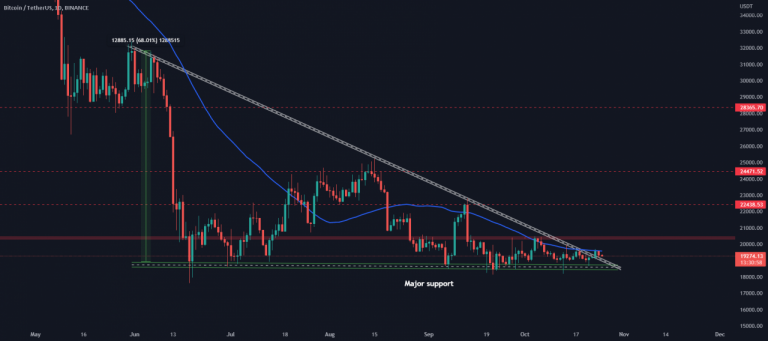
The bitcoin price descending triangle pattern has become a focal point for traders and enthusiasts alike, offering insights into potential market movements. This pattern, characterized by a series of lower highs and a consistent lower support line, often signals a bearish trend, prompting traders to refine their strategies accordingly.

Understanding how this pattern forms and how to identify it on charts is crucial for making informed trading decisions. The nuances of market psychology and trading strategies that leverage this pattern can significantly enhance a trader’s chances of success.

Understanding the Descending Triangle Pattern

The descending triangle pattern is a significant technical analysis formation that often indicates a bearish trend in the market. It typically surfaces when the price of an asset, such as Bitcoin, experiences a series of lower highs while maintaining a consistent low. This pattern can be crucial for traders aiming to predict future price movements and make informed trading decisions.The descending triangle is formed during a period of consolidation when sellers are increasingly willing to enter at lower prices, leading to a tightening price range.

In the context of Bitcoin trading, the pattern emerges as traders set lower highs, while the support level at the bottom remains relatively stable. This scenario highlights the struggle between buyers and sellers, with sellers starting to gain the upper hand as they press prices down towards the support line. As the pattern develops, it’s essential for traders to monitor the price action closely to identify potential breakout points.

Volume Significance in the Descending Triangle Formation

Volume plays a critical role during the formation of the descending triangle pattern, serving as a key indicator of the strength behind price movements. Analyzing volume trends can provide insights into trader sentiment and the likelihood of a breakout.As the descending triangle pattern forms, it’s important to observe how volume behaves. Typically, volume should decrease as the pattern progresses, indicating a reduction in buying interest.

However, a significant spike in volume during the breakout can serve as confirmation of a potential price move. In this context, the following points illustrate the importance of volume:

  • Volume Decrease: A consistent decline in volume throughout the pattern formation may suggest weakening buyer interest, reinforcing the bearish sentiment.
  • Volume Spike at Breakout: A sharp increase in volume during the breakout from the support line signals strong selling pressure and can validate the bearish trend.
  • Low Volume at Support Test: If the price approaches the support level with low volume, it may indicate that sellers are losing conviction, raising the potential for a reversal.

Monitoring these volume dynamics can aid traders in making decisions about entering or exiting positions when the price breaks through the support level, ultimately influencing their trading strategies effectively.

Identifying the Descending Triangle in Bitcoin Charts

Recognizing a descending triangle pattern in Bitcoin price charts is essential for traders aiming to make informed decisions. This pattern often signals a potential bearish continuation, making it crucial to identify correctly. By understanding the characteristics and key indicators of this pattern, traders can better navigate market conditions.The descending triangle is characterized by a series of lower highs converging with a flat support level.

Identifying this pattern involves several steps. First, traders should analyze price movements to spot a consistent trend of lower highs. Next, they should confirm the support level that remains intact during price fluctuations. The pattern typically culminates in a breakout, indicating a potential price decline.

Steps to Recognize a Descending Triangle Pattern

To accurately identify this pattern, consider the following steps:

  1. Examine the price chart for a series of lower highs, indicating a bearish trend.
  2. Look for a horizontal line that forms the support level, which should be tested multiple times.
  3. Confirm the validity of the pattern by ensuring the descending triangle does not break above the upper trend line.
  4. Monitor for a breakout below the support line, as this signals a potential continuation of the downward trend.

Historical Examples of Bitcoin Descending Triangles

Understanding historical price movements can provide insight into the descending triangle pattern. Notable instances in Bitcoin’s history illustrate the significance of this chart pattern. One such example occurred in late 2018, where Bitcoin’s price formed a descending triangle between $6,000 and $3,200. The lower highs established a bearish sentiment, and the eventual breakdown below the support level resulted in significant price declines.

Similarly, in early 2020, Bitcoin’s price exhibited a descending triangle before breaking down, ultimately leading to a strong bearish market phase.

Key Indicators for Identifying the Descending Triangle Pattern

Recognizing the descending triangle pattern is enhanced when traders consider specific indicators. The following table Artikels the key elements to look for in Bitcoin charts:

Indicator Description
Lower Highs A series of peaks that descend progressively, indicating selling pressure.
Horizontal Support A consistent price level that the asset repeatedly tests but does not break.
Volume Trends Declining volume during the formation of the pattern may suggest weakening momentum.
Breakout Confirmation A confirmed breakout below the support level with increased volume indicates a strong bearish signal.

By paying attention to these indicators and historical examples, traders can improve their proficiency in identifying descending triangles on Bitcoin price charts, aiding in their overall trading strategy.

Market Psychology Behind the Descending Triangle

The descending triangle pattern in Bitcoin trading is not just a technical formation; it also reflects the psychological dynamics at play in the trading community. Understanding these psychological factors can provide valuable insights into the behavior of traders and the overall market sentiment. Traders often experience a mix of fear and anticipation when they encounter a descending triangle. As the price continues to make lower highs while maintaining a horizontal support line, many traders begin to feel the pressure of potential losses, leading to emotional decision-making.

This emotional turmoil can influence market outcomes significantly, as traders may act on impulse instead of relying solely on technical analysis.

Emotional Responses of Traders during Descending Triangles

The emotional landscape during the formation of a descending triangle can be complex. Traders may exhibit various behaviors based on their understanding and interpretation of the pattern. The following points illustrate the psychological responses that traders commonly experience:

  • Fear of Loss: As prices approach the support level, traders may become increasingly anxious about a potential breakdown, prompting them to sell off their positions to cut losses.
  • Hope for Reversal: Some traders may cling to the hope that the support level will hold, leading to a reluctance to exit their positions despite mounting evidence of bearish sentiment.
  • Herd Mentality: The actions of traders around them can significantly influence individual decision-making. When many traders begin to sell, others may follow suit, accelerating the downward momentum.
  • Confirmation Bias: Traders often interpret information in a way that confirms their pre-existing beliefs. If they are inclined to believe the descending triangle indicates a bearish trend, they may overlook bullish signals.
  • Overtrading: In the face of uncertainty, some traders may engage in excessive trading, hoping to capitalize on short-term movements, which can lead to increased volatility.

“The descending triangle serves not only as a technical indicator but also as a reflection of trader sentiment, underscoring the emotional rollercoaster that often defines the trading experience.”

Examples of trader behavior can be observed during significant descending triangle formations in Bitcoin’s price history. For instance, during the 2018 bear market, a prominent descending triangle led to heightened selling pressure as traders reacted to negative sentiment in the market, resulting in a sharp decline in prices. Conversely, in earlier bull markets, some traders remained optimistic even as descending triangles formed, hoping for a bullish reversal that rarely came to fruition.Understanding the psychological factors and trader behaviors during these patterns can equip traders with better tools to navigate the market effectively.

Trading Strategies Utilizing the Descending Triangle

The descending triangle pattern can be a powerful tool for traders looking to capitalize on Bitcoin’s price movements. By recognizing this pattern, traders can formulate strategies that align with market behavior, enhancing the potential for profitable trades. This section will Artikel a trading strategy centered on the descending triangle, providing a structured approach for entering and exiting trades effectively.The descending triangle is often considered a bearish continuation pattern, suggesting that the price may break downwards after forming.

Identifying this pattern is crucial for traders, as it provides significant insights into market sentiment and potential price movements. Here, we will explore a reliable trading strategy based on the descending triangle, including clear steps for executing trades and a comparison of approaches that leverage this pattern for trading success.

Step-by-Step Trading Strategy for the Descending Triangle

To effectively trade using the descending triangle pattern, follow these structured steps that will help you navigate entry and exit points:

1. Identify the Pattern

Look for a series of lower highs and a consistent horizontal support level on the Bitcoin chart. The pattern should ideally form over several weeks to confirm its validity.

2. Confirm with Volume

Volume should decrease as the pattern progresses, which indicates a lack of conviction among buyers. A surge in volume during the breakout is a crucial sign.

3. Set Entry Point

The entry point for a short position should be just below the horizontal support level. This level serves as a key indicator that the price is breaking out of the descending triangle.

4. Determine Stop-Loss Level

Place a stop-loss order slightly above the most recent lower high to protect against false breakouts. This helps minimize losses if the market moves against your position.

5. Establish Profit Targets

Determine profit targets based on the height of the triangle. Measure the distance from the highest point of the triangle to the horizontal support level and project this distance downward from the breakout point.

6. Monitor for Reversal Signals

After entering the trade, keep an eye on potential reversal signals. If the price starts to show signs of bullish momentum, it may be wise to exit early to lock in profits.

7. Exit Strategy

Exit the trade when the price reaches your profit target or if a reversal signal appears. An alternative exit could be to trail the stop-loss to lock in profits as the price moves in your favor.

Comparison of Trading Approaches Utilizing the Descending Triangle

Different trading approaches can yield varied results when utilizing the descending triangle pattern for Bitcoin trading. Here are three primary strategies along with their characteristics:

Momentum Trading

This approach involves entering a trade immediately upon the breakout with aggressive targets. Traders who employ this strategy typically have a high-risk tolerance, aiming for quick gains based on immediate market movements.

Swing Trading

Swing traders often wait for confirmation of the breakout, looking for a pullback to the breakout level before entering a position. This method reduces the risk of false breakouts and allows traders to catch more significant price movements over several days or weeks.

Position Trading

Position traders focus on long-term trends and may use the descending triangle as a signal to enter a more extensive bearish position. This strategy is generally less focused on short-term price action, aiming to take advantage of longer duration trends.The choice of trading approach should align with individual risk tolerance, investment goals, and market conditions. Each of these methods can be effective, but understanding their nuances is crucial for successful trading in the Bitcoin market.

Risk Management Considerations

Effective risk management is crucial when trading based on the descending triangle pattern, as it helps mitigate potential losses and protect your capital. With the inherent volatility of Bitcoin, understanding how to manage risk can be the difference between a successful trade and significant financial setbacks. This section delves into the key techniques for risk management that traders should adopt when using the descending triangle pattern.

Key Risk Management Techniques

Implementing robust risk management techniques is essential to safeguard your investments. Here are several important strategies to consider:

  • Position Sizing: Determine the amount of capital to risk on each trade. A common approach is to risk no more than 1-2% of your trading capital on any single trade. This minimizes the impact of a losing trade on your overall portfolio.
  • Stop-Loss Orders: Setting a stop-loss order is vital. For descending triangle patterns, placing a stop-loss slightly above the most recent swing high can help protect against unexpected market movements.
  • Profit Targets: Establish clear profit targets before entering a trade. This not only helps lock in profits but also allows for better decision-making when adjusting trades in response to market changes.
  • Risk-Reward Ratio: Aim for a favorable risk-reward ratio, ensuring that potential profits outweigh potential losses. A common target is a ratio of at least 2:1, meaning for every dollar at risk, you aim to make two.

Importance of Stop-Loss Orders and Profit Targets

Stop-loss orders and profit targets play a pivotal role in maintaining discipline and ensuring that emotional trading decisions do not influence your strategy. By establishing a predetermined point at which you will exit a losing trade, you can maintain your focus on the overall strategy rather than reacting to market fluctuations. Similarly, setting profit targets helps you capitalize on favorable market movements without becoming overly greedy, ultimately contributing to a more systematic trading approach.

Risk-Reward Ratios for Descending Triangle Trades

Understanding risk-reward ratios is fundamental to successful trading. The following table illustrates various scenarios for trades involving the descending triangle pattern, showcasing how different entry and exit points influence potential outcomes.

Trade Scenario Entry Point Stop-Loss Point Profit Target Risk-Reward Ratio
Scenario 1 $30,000 $31,000 $28,000 2:1
Scenario 2 $29,500 $30,500 $27,500 3:1
Scenario 3 $29,000 $30,000 $26,000 4:1

In these scenarios, traders can see how adjusting entry points and stop-loss levels impacts the overall risk-reward ratio. Understanding these ratios helps traders make informed decisions and aligns their trades with their overall risk tolerance.

“The key to successful trading is not just about winning trades; it’s about managing your losses effectively.”

Case Studies of Bitcoin’s Price Descending Triangle Patterns

The descending triangle pattern represents a significant technical analysis formation that has appeared multiple times in Bitcoin’s price history. Studying these instances provides valuable insights into market behavior and potential trading opportunities. In this section, we will explore detailed case studies of notable descending triangle patterns, highlighting their formation, outcomes, and the subsequent movements in Bitcoin’s price.

Case Study: Early 2018 Decline

In early 2018, Bitcoin experienced a notable descending triangle pattern, which began forming after the market reached its all-time high in December 2017. This pattern was characterized by a series of lower highs and a flat support level around $6,000. The chart during this period shows an initial spike to nearly $20,000, followed by price decreases. As the descending triangle formed, market participants began to lose confidence, leading to increased selling pressure.

The descending triangle hinting at bearish sentiment often indicates potential breakdowns below support levels.

By mid-February 2018, the breakout occurred, with Bitcoin price falling to approximately $5,800, confirming the bearish outlook presented by the descending triangle. The aftermath of this pattern saw Bitcoin’s price continue to decline, reaching lows around $3,000 by the end of the year, demonstrating the pattern’s predictive power.

Case Study: Late 2019 Consolidation

Towards the end of 2019, Bitcoin formed another descending triangle pattern as it consolidated after a significant rally earlier that year. The apex of the triangle formed near the $7,000 mark, with lower highs creating a bearish outlook. This time, the support level was tested multiple times, showcasing market indecision.The visual representation of this pattern indicates a series of failed attempts to break above $7,800, while the support was consistently held above $6,500.

As the descending triangle completed, Bitcoin experienced a breakdown in early 2020 that brought prices down to approximately $5,600.

Analyzing volume during the breakout can provide insights into the strength of the move.

This breakdown led to a short-term panic in the market; however, Bitcoin soon recovered, illustrating the volatile nature of cryptocurrency trading.

Case Study: 2021 Market Correction

In the spring of 2021, Bitcoin experienced a descending triangle pattern after reaching an all-time high of around $64,000. This pattern emerged in the wake of rapid price corrections, with the triangle forming around the $55,000 level, characterized by lower highs and a horizontal support line.As the price approached the apex, there was increasing media coverage and speculation about potential market movements.

The breakout occurred in May, where Bitcoin plunged to nearly $30,000, validating the bearish implications of the descending triangle.

A descending triangle can serve as a warning sign for traders to be cautious when approaching key support levels.

The aftermath saw significant volatility, as Bitcoin’s price bounced back, making this case study particularly relevant for understanding market psychology and the potential for reversal after significant drop-offs.

Charts and Data Analysis

Several charts can illustrate the aforementioned case studies more effectively. Each chart can depict the periods where descending triangles formed, highlighting key support and resistance levels.

Chart 1

Early 2018 – Shows the descending triangle around the $6,000 level with price movements leading up to the breakout point.

Chart 2

Late 2019 – Highlights the consolidation around the $7,000 to $8,000 range, emphasizing the numerous attempts to break above resistance.

Chart 3

2021 Correction – Illustrates the triangle formation around $55,000 with the eventual price drop to $30,000.In analyzing these charts, it’s essential to observe volume patterns during the breakouts, which can signify the strength of market sentiment and the likelihood of continued price movement in the direction of the breakout.

Common Misconceptions About the Descending Triangle

The descending triangle pattern is often surrounded by misunderstandings among traders, particularly in the volatile world of Bitcoin. One of the biggest misconceptions is that this pattern is a guaranteed signal for bearish market movements. While there are historical precedents supporting this view, it is essential to approach the descending triangle with a nuanced understanding that considers various market dynamics.Misinterpretations of the descending triangle can lead to premature trading actions and missed opportunities.

This pattern can sometimes signal consolidation or even bullish reversals, depending on contextual factors. Below are some common misconceptions along with insights into why the descending triangle may not always lead to bearish outcomes.

Misconceptions About Bearish Outcomes

One prevailing misconception is that a descending triangle always culminates in a price drop. While this pattern often precedes bearish trends, it is crucial to recognize that market conditions can influence outcomes differently. Several factors can contribute to the invalidation of a descending triangle signal, including:

  • Volume Analysis: A descending triangle formation accompanied by declining volume may indicate weakening bearish sentiment. Conversely, increasing volume during a breakout can suggest strength in a bullish direction.
  • Market Sentiment: Overall market sentiment can drastically alter the expected outcome. Positive news or developments in the cryptocurrency space might lead to a breakout to the upside, despite the descending triangle formation.
  • Time Frame Considerations: The time frame used for analysis can affect the interpretation. A descending triangle on a shorter time frame may not hold the same significance as one on a daily or weekly chart.
  • Fundamental Changes: Major events, such as regulatory news or technological advancements, can disrupt the anticipated trajectory of the market, leading to unexpected outcomes.
  • Support and Resistance Levels: The strength of surrounding support and resistance levels can invalidate the descending triangle pattern if price action reacts to these levels rather than following the anticipated trend.

Understanding these factors helps traders avoid falling into the trap of basing decisions solely on the pattern’s visual representation without considering underlying market conditions. Assessing the broader context and incorporating additional technical indicators can lead to more informed trading decisions.

Closure

Bitcoin BTC USD Chart Descending Triangle Breakout ,000 or ,000

In conclusion, the bitcoin price descending triangle pattern serves as a valuable tool for traders looking to navigate the complexities of the cryptocurrency market. By grasping the intricacies of this pattern and implementing sound trading strategies, traders can better manage their risks and capitalize on potential price movements.

Common Queries

What is a descending triangle pattern?

A descending triangle pattern is a technical analysis chart pattern that indicates a bearish trend, characterized by a series of lower highs converging towards a horizontal support line.

How do I identify a descending triangle on a chart?

To identify a descending triangle, look for lower highs that create a downward slope and a flat support line where price has historically found support.

Can a descending triangle lead to a bullish reversal?

While a descending triangle typically signals a bearish continuation, it can occasionally lead to a bullish reversal if the price breaks above the upper trend line with strong volume.

What role does volume play in a descending triangle pattern?

Volume is crucial as an increase in volume during price declines can confirm the pattern’s validity, while low volume might indicate a lack of conviction in the trend.

Are there any common mistakes traders make with descending triangles?

Yes, a common mistake is failing to wait for confirmation of a breakout, leading to premature trading decisions based on the pattern alone.

Kicking off with bitcoin zbd, this emerging concept is reshaping how we perceive digital currencies. Unlike traditional Bitcoin, Bitcoin ZBD brings unique features and potential applications that could revolutionize various industries.

This innovative cryptocurrency not only enhances transaction efficiency but also offers a fresh perspective on security and economic benefits. As businesses and consumers start to embrace Bitcoin ZBD, its significance in the cryptocurrency landscape becomes increasingly apparent.

Introduction to Bitcoin ZBD

Bitcoin ZBD represents an innovative evolution within the cryptocurrency landscape, built upon the foundational principles of Bitcoin while integrating advanced features to enhance usability and accessibility. Designed to cater to a broader audience, Bitcoin ZBD aims to simplify transactions and broaden the potential applications of cryptocurrency in everyday life. Its significance lies not only in its technological advancements but also in its potential to bridge the gap between traditional finance and the digital currency world.Bitcoin ZBD distinguishes itself from traditional Bitcoin through several key enhancements.

While Bitcoin serves primarily as a store of value and a decentralized digital currency, Bitcoin ZBD focuses on optimizing transaction speed, reducing fees, and increasing transaction capacity. This differentiation allows it to facilitate microtransactions and create a more comprehensive ecosystem for users and businesses alike. By addressing some of the scalability issues that Bitcoin has faced, Bitcoin ZBD seeks to ensure a smoother and more efficient user experience, making cryptocurrency more appealing for various applications.

Potential Use Cases for Bitcoin ZBD in Various Industries

The versatility of Bitcoin ZBD opens up numerous use cases across different industries, showcasing its potential to transform how transactions are conducted in the digital age. Below are several notable applications:

  • Retail and E-commerce: Businesses can leverage Bitcoin ZBD for microtransactions, enabling customers to purchase low-cost items without incurring high transaction fees associated with traditional Bitcoin. This encourages consumers to engage in more frequent transactions.
  • Content Creation and Monetization: Creators can utilize Bitcoin ZBD to receive tips or payments directly from their audience. Its low transaction fees make it viable for micro-donations, allowing artists, musicians, and content creators to monetize their work effectively.
  • Gaming and Virtual Goods: Online gaming platforms can integrate Bitcoin ZBD to facilitate in-game purchases and transactions for virtual assets. This can enhance user engagement and create new revenue streams for developers.
  • Remittances and Cross-Border Transactions: Bitcoin ZBD can streamline international remittances, providing a cost-effective alternative to traditional banking systems. This can benefit individuals in underbanked regions by allowing them to send money home at lower costs and faster speeds.
  • Charitable Giving: Non-profit organizations can adopt Bitcoin ZBD for fundraising campaigns, enabling donors to contribute small amounts without incurring significant fees, thus increasing overall contributions.

The adoption of Bitcoin ZBD across these sectors illustrates its capability to enhance transaction efficiency, reduce costs, and create new economic opportunities, ultimately driving the broader acceptance of cryptocurrency in everyday transactions.

Technical Aspects of Bitcoin ZBD

The technological foundation of Bitcoin ZBD is critical for its operation and reliability in the cryptocurrency landscape. Understanding its architecture, security measures, and efficiency can provide insight into why it stands out among its peers.Bitcoin ZBD is built on a decentralized blockchain technology, which ensures transparency and immutability. This technology facilitates peer-to-peer transactions without the need for intermediaries, maintaining a democratic approach to financial exchange.

The usage of cryptographic protocols secures transactions on the network, promoting trust and security among users.

Underlying Technology

The core of Bitcoin ZBD’s functionality lies in its blockchain infrastructure. This technology provides a distributed ledger that records all transactions across a network of computers, minimizing the risk of fraud and tampering. Key aspects of this technology include:

  • Decentralization: Unlike traditional banking systems, Bitcoin ZBD operates on a decentralized network, meaning no single entity controls the currency. This enhances resilience against attacks and systemic failures.
  • Consensus Mechanism: Bitcoin ZBD utilizes a unique consensus algorithm, ensuring that all transactions are verified by network participants before being added to the blockchain. This consensus mechanism is vital for maintaining the integrity of the system.
  • Smart Contracts: Bitcoin ZBD supports smart contracts, which automate transaction processes and enforce agreements directly through code, thereby reducing the need for intermediaries.

Security Features

Security is paramount in the cryptocurrency domain, and Bitcoin ZBD incorporates multiple layers of protection to safeguard its users and their assets. The integrated security features include:

  • Cryptographic Security: Every transaction is encrypted, making it nearly impossible for unauthorized parties to access sensitive information.
  • Multi-signature Transactions: Bitcoin ZBD allows for multi-signature wallets, requiring multiple private keys to authorize a transaction, thus adding an extra layer of security.
  • Regular Security Audits: The platform undergoes regular security assessments and updates to identify and fix vulnerabilities proactively.

Transaction Speed and Efficiency

When compared to other cryptocurrencies, Bitcoin ZBD emphasizes transaction speed and efficiency, which are crucial for user satisfaction. The following points highlight its performance:

  • Faster Transaction Times: Bitcoin ZBD processes transactions significantly quicker than traditional Bitcoin, often settling within minutes, while Bitcoin can take up to an hour in peak times.
  • Lower Fees: Transaction fees on Bitcoin ZBD are generally lower, making it more cost-effective for users, especially during high-volume periods when other networks may experience increased costs.
  • Scalability: The platform is designed to handle a higher volume of transactions without compromising speed or security, addressing one of the major limitations faced by earlier blockchain networks.

Economic Impact of Bitcoin ZBD

Bitcoin ZBD is not just a new cryptocurrency; it’s a potential game-changer in the economic landscape for both businesses and consumers. Its decentralized nature and increasing accessibility can provide numerous advantages that may reshape financial interactions. Through the lens of economic impact, we explore how Bitcoin ZBD can enhance efficiency, reduce costs, and encourage financial inclusion.

Benefits for Businesses and Consumers

The adoption of Bitcoin ZBD presents significant economic benefits for both businesses and consumers. By leveraging this digital currency, companies can experience lower transaction fees compared to traditional banking methods. These savings can be substantial, especially for small to medium-sized enterprises that often operate on tight margins. Additionally, Bitcoin ZBD facilitates instant cross-border transactions, eliminating the delays associated with conventional payment processing systems.Consumers, on the other hand, can enjoy quicker and cheaper transactions.

The use of Bitcoin ZBD can provide greater security and privacy, addressing concerns related to fraud and identity theft. Furthermore, this digital currency allows consumers to bypass traditional banking systems, offering an alternative for those who may not have access to conventional banking services.

Effects on Global Financial Markets

The integration of Bitcoin ZBD into the global financial ecosystem is poised to affect various markets significantly. As adoption rates increase, traditional financial institutions may feel pressured to adapt or innovate in response. This could lead to a more competitive landscape where digital currencies and blockchain technology are embraced by established financial entities.Statistics indicate a growing trend in the adoption of Bitcoin ZBD.

According to recent data, cryptocurrency ownership among adults has surged, with a reported increase of over 190% since 2019. Projections suggest that by 2025, digital currency transactions could reach $7 trillion globally, significantly altering the dynamics of finance.

Adoption Rates and Growth Projections

Understanding the adoption rates and growth projections for Bitcoin ZBD can provide insight into its potential economic impact. The following statistics illustrate the rising interest and usage among consumers and businesses:

  • As of 2023, approximately 300 million people worldwide are using cryptocurrencies, with Bitcoin ZBD accounting for a notable share of this market.
  • Data from the Cambridge Centre for Alternative Finance indicates that the number of global cryptocurrency users has grown from 35 million in 2018 to over 300 million in 2023.
  • Market analysts forecast that the transaction volume for Bitcoin ZBD will grow by an average of 30% annually, reflecting increasing adoption in retail and online services.
  • Reports suggest that over 15,000 businesses worldwide now accept Bitcoin ZBD as a payment method, highlighting the currency’s acceptance.

The statistics and projections underscore the importance of Bitcoin ZBD in shaping future economic landscapes. As awareness and understanding of cryptocurrencies grow, their integration into mainstream financial practices is likely to expand, creating a ripple effect across global markets.

Regulatory Environment Surrounding Bitcoin ZBD

The regulatory landscape for Bitcoin ZBD is a complex and evolving domain that influences how businesses and individuals interact with this digital currency. As Bitcoin ZBD continues to gain traction, various governments around the world are grappling with how to effectively regulate it, considering factors such as consumer protection, taxation, and the prevention of illicit activities. Understanding the regulatory challenges is vital for businesses looking to integrate Bitcoin ZBD into their operations and for users who wish to navigate this financial innovation responsibly.Governments are approaching the regulation of Bitcoin ZBD with varying perspectives, leading to a patchwork of rules that can differ significantly from one region to another.

In some places, regulatory bodies are embracing Bitcoin ZBD and creating frameworks to facilitate its integration into the mainstream economy. In contrast, others are imposing strict restrictions or outright bans, often citing concerns related to financial security and the potential for misuse.

Regulatory Challenges in Different Regions

The regulatory challenges facing Bitcoin ZBD can be categorized by region, highlighting the diverse approaches that various governments are taking.

  • United States: The U.S. has a fragmented regulatory approach, with different states enacting their own laws regarding Bitcoin ZBD. While the federal government has yet to establish a comprehensive framework, the SEC and CFTC have begun to assert their authority over certain aspects of cryptocurrency regulation, particularly concerning securities.
  • European Union: The EU is working towards a unified regulatory framework, known as the Markets in Crypto-Assets (MiCA) regulation, which aims to provide clarity on crypto assets, including Bitcoin ZBD, and establish a level playing field across member states.
  • China: China has taken a stringent stance against Bitcoin ZBD, implementing a series of bans on cryptocurrency trading and Initial Coin Offerings (ICOs), citing financial stability and risk management as key concerns.
  • India: India’s regulatory environment remains uncertain, with the government oscillating between various positions. Recent discussions indicate a potential move towards regulating Bitcoin ZBD rather than banning it outright, suggesting an evolving approach.
  • Australia: Australia has embraced Bitcoin ZBD with a regulatory framework that includes anti-money laundering (AML) and counter-terrorism financing (CTF) laws, requiring businesses dealing in Bitcoin ZBD to register and comply with regulatory obligations.

Compliance Measures for Businesses Utilizing Bitcoin ZBD

Businesses looking to incorporate Bitcoin ZBD into their operations must navigate a series of compliance measures to ensure adherence to local regulations. These measures are crucial for mitigating risks associated with legal liabilities and maintaining consumer trust.Key compliance measures include:

  • Know Your Customer (KYC) Requirements: Businesses must implement KYC protocols to verify the identity of their customers, helping to prevent fraud and comply with anti-money laundering laws.
  • Anti-Money Laundering (AML) Compliance: Companies are required to monitor transactions for suspicious activity and report any findings to the relevant authorities, ensuring adherence to AML legislation.
  • Tax Compliance: Businesses dealing in Bitcoin ZBD must understand their tax obligations, including reporting capital gains and income derived from cryptocurrency transactions to avoid penalties.
  • Data Protection: Ensuring the security of customer data is critical. Companies must adhere to data protection regulations, safeguarding sensitive information to maintain compliance and customer trust.
  • Consumer Protection: Businesses must establish clear policies for consumer rights, including transparent disclosures about the risks associated with investing in Bitcoin ZBD.

Understanding and adapting to the regulatory environment surrounding Bitcoin ZBD is essential for maximizing its potential while minimizing risks. As regulations continue to evolve, staying informed will be key for all stakeholders involved in the Bitcoin ZBD ecosystem.

Community and Ecosystem of Bitcoin ZBD

The Bitcoin ZBD community is a dynamic and diverse group of individuals and organizations dedicated to the advancement and adoption of Bitcoin ZBD technology. This collaborative environment fosters innovation and support, enabling contributors to share ideas and resources that enhance the overall ecosystem. From passionate developers to enthusiastic users, the community plays a crucial role in driving the project forward.The ecosystem surrounding Bitcoin ZBD is comprised of various stakeholders, including developers, businesses, and organizations, all working together to promote the platform’s growth and utility.

The support from the community not only helps in refining the technology but also in spreading awareness and educating potential users about the benefits of Bitcoin ZBD. Each contributor brings unique expertise and perspectives that help shape the future of this innovative digital currency.

Key Players in the Bitcoin ZBD Ecosystem

The following table Artikels some of the key players in the Bitcoin ZBD ecosystem, highlighting their contributions and roles within the community. Understanding these players is essential for grasping the collaborative efforts that drive Bitcoin ZBD forward.

Player Contribution
Core Developers Responsible for the development and maintenance of the Bitcoin ZBD codebase, ensuring its security and efficiency.
Bitcoin ZBD Foundation A non-profit organization that promotes the use of Bitcoin ZBD through education, advocacy, and community support.
Exchanges Facilitate the buying and selling of Bitcoin ZBD, providing liquidity and accessibility for users.
Wallet Providers Develop and offer secure wallets for storing Bitcoin ZBD, enhancing user experience and security.
Merchant Partners Accept Bitcoin ZBD as payment, helping to increase its real-world utility and acceptance.

“The strength of Bitcoin ZBD lies in its community, where innovators and users unite to shape the future of finance.”

Future Trends for Bitcoin ZBD

As the landscape of digital currencies continues to evolve, Bitcoin ZBD is poised to play a significant role in shaping the future of financial systems. With advancements in technology, increasing user adoption, and potential partnerships, Bitcoin ZBD stands at the forefront of a new era in the financial ecosystem.

Advancements in Technology Related to Bitcoin ZBD

The technological advancements surrounding Bitcoin ZBD are expected to enhance its scalability, security, and user experience. Innovations such as the integration of Layer 2 solutions, like the Lightning Network, promise faster transaction times and lower fees, which are crucial for everyday use. Additionally, the development of smart contracts on Bitcoin’s blockchain could enable more complex transactions and decentralized applications, further broadening the scope of ZBD’s utility.

Potential Partnerships with Financial Systems

As Bitcoin ZBD matures, there is a growing potential for partnerships with established financial institutions and payment processors. These collaborations could facilitate the acceptance of Bitcoin ZBD in mainstream retail environments and online platforms. For instance, partnerships with e-commerce giants and payment platforms like PayPal or Square could provide a seamless integration of Bitcoin ZBD into everyday transactions, thereby enhancing its visibility and usability.

Evolution of User Adoption and Market Presence

User adoption of Bitcoin ZBD is anticipated to grow as awareness and understanding of digital currencies increase. The demographic shift towards younger, tech-savvy individuals who are more comfortable with digital transactions plays a significant role in this trend. Moreover, educational initiatives and user-friendly platforms will likely contribute to a more robust market presence. Statistics indicate that in recent years, more individuals are choosing cryptocurrencies as a viable investment alternative, which directly impacts Bitcoin ZBD’s market share and consumer trust.

“The future of finance is not just digital; it is decentralized.”

With these trends in mind, the trajectory for Bitcoin ZBD looks promising, as it aligns with the broader movement towards digital currency integration in everyday financial activities.

Summary

How to create a ZBD Voucher

In conclusion, Bitcoin ZBD stands at the forefront of cryptocurrency advancements, promising to enhance financial transactions and community engagement. As we explore its potential and keep an eye on regulatory developments, Bitcoin ZBD may very well play a pivotal role in the future of digital finance.

Questions Often Asked

What is Bitcoin ZBD?

Bitcoin ZBD is an innovative cryptocurrency that offers unique features and applications compared to traditional Bitcoin.

How does Bitcoin ZBD ensure security?

It integrates advanced security features to protect transactions and user data.

What are the potential use cases for Bitcoin ZBD?

It can be applied in various industries, enhancing transaction speed and efficiency.

How does Bitcoin ZBD differ from Bitcoin?

Bitcoin ZBD offers improved technological advancements and economic benefits that traditional Bitcoin does not.

What is the future outlook for Bitcoin ZBD?

Its adoption rate is expected to grow significantly, with potential integrations into existing financial systems.

As the cryptocurrency world evolves, Bitcoin remains at the forefront, driving conversations and investments alike. This digital currency, birthed from the idea of decentralized finance, has carved out its own niche in both the financial and cultural landscapes. Its journey from obscurity to prominence reveals a complex interplay of technology, economics, and human behavior that captivates investors and enthusiasts alike.

Understanding Bitcoin means diving deep into its history, the factors that influence its price, and the various strategies one can employ to invest wisely. With a blend of technical analysis and foresight into future trends, this guide aims to equip you with the knowledge necessary to navigate the exhilarating yet volatile world of Bitcoin.

Understanding Bitcoin

Bitcoin is a digital currency that has transformed the financial landscape since its inception in 2009. Unlike traditional currencies issued by governments, Bitcoin operates on a decentralized network using blockchain technology, which guarantees transparency and security in transactions. This innovative concept has not only provided a new form of money but has also revolutionized how we perceive value and engage in financial exchanges globally.The history of Bitcoin traces back to a pseudonymous figure known as Satoshi Nakamoto, who introduced it as open-source software.

The initial white paper published in 2008 laid the groundwork for what would become the first cryptocurrency. Early adoption was limited, and the first real-world transaction, where Bitcoin was used to purchase two pizzas, occurred in May 2010. Over the years, Bitcoin has experienced significant milestones, including the rise and fall of its value, regulatory scrutiny, and growing acceptance by numerous vendors and institutions, marking its evolution from a niche digital asset to a mainstream financial instrument.

Role of Bitcoin in the Cryptocurrency Market

Bitcoin serves as the pioneering cryptocurrency, setting the stage for thousands of alternatives that have emerged since its launch. Its influence is profound, as it consistently dominates the market both in terms of market capitalization and trading volume. Understanding Bitcoin’s role provides insight into the broader cryptocurrency ecosystem.Several factors illustrate the critical position Bitcoin holds within the crypto landscape:

  • Market Leader: Bitcoin commands a significant portion of the total cryptocurrency market, often referred to as ‘digital gold.’ Its price movements often dictate trends in the broader market.
  • Standard Benchmark: Many investors and analysts use Bitcoin as a benchmark to measure performance against other cryptocurrencies. Its historical price patterns influence trading strategies across various digital assets.
  • First-Mover Advantage: As the first cryptocurrency, Bitcoin benefits from brand recognition and trust. This advantage helps maintain its status as the preferred choice for many investors.
  • Institutional Adoption: Over the years, notable institutions have begun to recognize Bitcoin as a legitimate asset class, leading to more significant investments and acceptance in traditional finance.
  • Innovative Technology: Bitcoin’s underlying blockchain technology has inspired the development of numerous other cryptocurrencies and applications, driving innovation in the sector.

The significance of Bitcoin in the cryptocurrency market cannot be overstated. Its revolutionary approach to finance and technology continues to shape the future of how individuals and businesses interact with money, paving the way for decentralized finance (DeFi) and beyond.

Factors Influencing Bitcoin Prices

The price of Bitcoin is subject to various economic, market, and regulatory influences that can dramatically shift its valuation. Understanding these factors is crucial for investors and enthusiasts seeking to navigate the increasingly complex landscape of cryptocurrency. This discussion will delve into the primary economic factors, the role of market sentiment, and the impact of global regulations on Bitcoin pricing trends.

Economic Factors Affecting Bitcoin Prices

Several economic factors play a pivotal role in determining Bitcoin’s price. These include supply and demand dynamics, inflation rates, and macroeconomic conditions.

  • Supply and Demand Dynamics: The total supply of Bitcoin is capped at 21 million coins, creating a scarcity effect. As demand increases, particularly from institutional investors, prices tend to rise.
  • Inflation Rates: Bitcoin is often viewed as a hedge against inflation. When traditional currencies face inflationary pressures, investors may flock to Bitcoin, driving up its price.
  • Macroeconomic Conditions: Economic indicators such as GDP growth, unemployment rates, and consumer spending can influence investor sentiment and, subsequently, Bitcoin prices. During economic downturns, Bitcoin may either gain as a safe asset or lose value due to decreased investment activity.

Market Sentiment and Its Impact on Valuation

Market sentiment encapsulates the overall attitude of investors towards Bitcoin and can heavily sway its pricing. Positive or negative sentiment often manifests in trading patterns, media coverage, and social media discussions.

  • Media Influence: News articles and reports can rapidly shape public perception. For instance, favorable coverage by major financial institutions can lead to a price surge, while negative news can trigger sell-offs.
  • Social Media Trends: Social platforms like Twitter and Reddit have become significant in shaping market sentiment. A viral tweet or post can lead to rapid price fluctuations.
  • Investor Behavior: Fear of missing out (FOMO) or fear, uncertainty, and doubt (FUD) can drive trading decisions, affecting prices. When investors feel optimistic, they are more likely to buy, driving prices up.

Global Regulatory Influences on Pricing Trends

Global regulations play a critical role in shaping the cryptocurrency landscape, and Bitcoin is no exception. The regulatory environment can either foster or hinder market growth, impacting prices significantly.

  • Legal Status: Countries that embrace Bitcoin with favorable regulations can see increased investment and higher prices. Conversely, countries imposing strict regulations can lead to price drops.
  • Tax Policies: Tax treatment of cryptocurrency transactions can influence investor behavior. High taxes may deter investment, while beneficial tax conditions could promote it.
  • Central Bank Policies: Actions taken by central banks, such as interest rate changes and quantitative easing, can affect the attractiveness of Bitcoin as an alternative asset, impacting its price.

Understanding these factors is essential for predicting Bitcoin’s price movements and making informed investment decisions.

Technical Analysis of Bitcoin

Technical analysis is a critical aspect of trading Bitcoin, allowing traders to evaluate price movements and market trends through various indicators and historical data. This methodology assists in making informed trading decisions based on patterns and signals derived from price charts. Understanding how to effectively read Bitcoin price charts and utilize technical indicators is essential for both novice and experienced traders aiming to capitalize on market fluctuations.

Technical Indicators Used in Bitcoin Trading

Technical indicators are mathematical calculations based on the price, volume, or open interest of a security. They help traders identify trends and potential reversal points in Bitcoin trading. Here are some of the most widely used technical indicators:

  • Moving Averages (MA): This indicator smooths out price data to identify the direction of the trend. The two most common types are the Simple Moving Average (SMA) and the Exponential Moving Average (EMA). For instance, a 50-day EMA can help pinpoint short-term trends, while a 200-day EMA can indicate longer-term trends.
  • Relative Strength Index (RSI): RSI measures the speed and change of price movements. It ranges from 0 to 100 and is typically used to identify overbought or oversold conditions in a market. An RSI above 70 may indicate that Bitcoin is overbought, while below 30 can suggest it is oversold.
  • Bollinger Bands: This indicator consists of a middle band (SMA) and two outer bands that represent volatility. When the price approaches the upper band, it may be seen as overbought; conversely, if it approaches the lower band, it may be viewed as oversold.
  • MACD (Moving Average Convergence Divergence): This trend-following momentum indicator shows the relationship between two moving averages of a security’s price. The MACD is calculated by subtracting the 26-period EMA from the 12-period EMA. Traders look for crossovers, divergences, and rapid rises or falls to identify potential trades.

Reading Bitcoin Price Charts and Identifying Trends

Reading Bitcoin price charts involves understanding various chart types and recognizing price movements and patterns. The most common chart types include line charts, bar charts, and candlestick charts. Each of these offers unique insights into market behavior.

  • Candlestick Charts: These charts display the open, high, low, and close prices for a specific time period. A single candlestick provides insight into market sentiment; for example, a long green candle indicates strong buying pressure, while a long red candle suggests strong selling pressure.
  • Support and Resistance Levels: Support levels are where the price tends to find buying interest, while resistance levels are where selling interest typically emerges. Identifying these levels helps traders make more informed decisions about entry and exit points.
  • Trend Lines: Drawing trend lines can help identify the direction of the market. An upward trend line indicates bullish momentum, while a downward trend line indicates bearish momentum. Recognizing these can guide traders in predicting future price movement.

Comparison of Technical Analysis Methods

Different technical analysis methods vary in their approaches and effectiveness in predicting Bitcoin price movements. Each method can offer unique insights, and traders often use a combination to enhance their accuracy.

  • Chart Patterns: Patterns such as head and shoulders, triangles, and flags can signal potential reversals or continuations. They are widely recognized and can provide valuable predictive power based on historical performance.
  • Volume Analysis: Observing trading volume alongside price movements can help confirm trends. For instance, a price increase accompanied by high volume indicates strong support for the price movement, while low volume may suggest a lack of conviction.
  • Fibonacci Retracement: This method uses horizontal lines to indicate potential support or resistance levels based on the Fibonacci sequence. Traders often use these levels to identify potential reversal points in conjunction with other indicators.

Investing Strategies in Bitcoin

Investing in Bitcoin requires a solid understanding of different strategies to maximize potential gains while minimizing risks. With the volatility of the cryptocurrency market, investors must choose their approach wisely, whether they prefer a long-term hold or short-term trading tactics. Below, we explore various strategies that can be employed by both novice and experienced investors.

Long-term Investment Strategy

A long-term investment strategy, often referred to as “HODLing,” involves purchasing Bitcoin and holding onto it for an extended period, irrespective of market fluctuations. This strategy is based on the belief that Bitcoin will appreciate significantly in value over the years. Factors that contribute to the success of a long-term investment strategy include:

  • Market Trends: Historical data shows that Bitcoin has generally trended upward over the long haul, despite short-term volatility.
  • Scarcity: With a capped supply of 21 million coins, demand may outstrip supply as awareness and adoption increase over time.
  • Technological Advancements: Improvements in blockchain technology can enhance Bitcoin’s use cases and value proposition.

Short-term Trading Strategy

Short-term trading involves buying and selling Bitcoin frequently, aiming to capitalize on small price movements. This strategy requires a keen eye on market trends and may involve techniques such as day trading or swing trading.Key aspects of short-term trading include:

  • Technical Analysis: Traders utilize charts and indicators to forecast price movements based on historical patterns.
  • Market Sentiment: Understanding news events and social media trends that influence Bitcoin’s price can guide trading decisions.
  • Liquidity: Short-term traders benefit from high liquidity, which allows for quick entry and exit from positions.

Importance of Risk Management

Risk management is crucial in any investment strategy, especially in the highly volatile Bitcoin market. Employing effective risk management techniques can protect investors from significant losses.Key risk management strategies include:

  • Setting Stop-Loss Orders: This allows investors to automatically sell Bitcoin when it reaches a certain price, minimizing potential losses.
  • Diversification: Spreading investments across different cryptocurrencies and assets can reduce overall risk.
  • Position Sizing: Investors should only risk a small percentage of their total capital on a single trade, protecting themselves from catastrophic losses.

Essential Tools and Resources for Bitcoin Investors

Utilizing the right tools and resources can enhance the investment experience and lead to better-informed decisions. Essential tools include:

  • Cryptocurrency Exchanges: Platforms like Coinbase, Binance, and Kraken allow users to buy, sell, and trade Bitcoin securely.
  • Wallets: Digital wallets (hardware and software) are necessary for securely storing Bitcoin. Examples include Ledger (hardware) and Exodus (software).
  • Market Analysis Websites: Websites such as CoinMarketCap and CryptoCompare provide real-time data on Bitcoin prices and market trends.
  • Trading Software: Tools like TradingView offer advanced charting features and indicators for technical analysis.
  • News Aggregators: Platforms like CoinDesk and CoinTelegraph keep investors informed about the latest developments in the crypto space.

“Investing in Bitcoin requires a strategic approach; understanding market dynamics, managing risks, and using the right tools can make a significant difference in outcomes.”

The Future of Bitcoin

The future of Bitcoin looks promising, shaped by technological advancements and its increasing acceptance among mainstream financial institutions. As we delve into this topic, we will explore the potential innovations that could influence Bitcoin’s trajectory, predictions regarding its market standing in the coming decade, and the broader implications of its adoption by traditional financial entities.

Technological Advancements Impacting Bitcoin

Emerging technologies have the potential to significantly alter how Bitcoin functions and is perceived in the broader financial landscape. Innovations like the Lightning Network are designed to enhance transaction speed and reduce fees, making Bitcoin more user-friendly for everyday transactions. Additionally, advancements in cryptographic techniques can improve security and user privacy, fostering greater adoption among mainstream users.

One notable example is the development of zk-SNARKs (zero-knowledge succinct non-interactive arguments of knowledge), which can enhance privacy by allowing transactions to be verified without revealing any additional information. As these technologies mature, they may lead to broader acceptance of Bitcoin as a viable alternative to traditional fiat currencies.

Market Position Predictions for the Next Decade

As we look ahead, Bitcoin’s market position is expected to evolve, driven by both adoption rates and regulatory developments. Current trends suggest that Bitcoin could solidify its role as a digital gold, serving as a hedge against inflation and economic uncertainty. Analysts forecast that Bitcoin’s market capitalization could reach anywhere from $5 trillion to $10 trillion by 2030, contingent on increased institutional investment and greater integration into everyday financial systems.

For instance, companies like Tesla and Square have already made significant investments in Bitcoin, signaling confidence in its long-term value. Additionally, the growing popularity of Bitcoin ETFs (Exchange-Traded Funds) may attract a new wave of investors, further pushing its market relevance.

Implications of Bitcoin Adoption by Financial Institutions

The adoption of Bitcoin by mainstream financial institutions carries significant implications for both the cryptocurrency itself and the global financial ecosystem. When major banks and financial firms begin to offer Bitcoin-related services, it not only legitimizes the asset class but also provides a layer of security and oversight that can attract traditional investors.

As financial institutions create products such as Bitcoin savings accounts, custodial services, and investment funds, we can expect a surge in institutional demand. This could lead to increased price stability and reduced volatility, making Bitcoin a more attractive option for risk-averse investors. Additionally, as financial systems increasingly integrate Bitcoin into their operations, it may pave the way for more innovative financial products and services centered around cryptocurrency.

Overall, the trajectory of Bitcoin hints at a future where it plays a pivotal role in the global economy, facilitated by technological advancements and the growing trust of mainstream financial institutions.

Bitcoin in Popular Culture

Bitcoin has permeated various aspects of popular culture, influencing films, literature, and even artistic expressions. As a symbol of financial innovation and rebellion against traditional monetary systems, Bitcoin has sparked both fascination and skepticism in the media. Its portrayal often reflects broader societal attitudes towards technology, finance, and the concept of currency in the modern era.One significant way Bitcoin has influenced popular culture is through its representation in films and television.

These media often depict Bitcoin as a tool for both empowerment and criminality, reflecting the dual nature of the cryptocurrency. Additionally, Bitcoin has been featured in numerous documentaries that explore its rise, the complexities of blockchain technology, and the socio-economic implications of decentralized finance.

Examples of Bitcoin in Media

Films and shows have increasingly included Bitcoin as a plot device or thematic element. This inclusion conveys its growing relevance in contemporary society. Here are some notable examples:

  • Silk Road (2017): This film tells the story of the infamous online marketplace that utilized Bitcoin for transactions, highlighting both the anonymity and risks associated with cryptocurrencies.
  • Dope (2015): In this coming-of-age film, the protagonist engages with Bitcoin as part of a drug deal, showcasing its use in alternative economies.
  • Bitcoin: The End of Money as We Know It (2015): This documentary presents a comprehensive view of Bitcoin’s potential to disrupt traditional financial systems and enhance individual freedom.
  • Mr. Robot (2015-2019): The television series portrays hacking and cryptocurrency as part of the narrative, emphasizing Bitcoin’s association with both tech-savvy rebellion and financial independence.

The impact of Bitcoin on societal attitudes towards finance and currency is profound. As people become more aware of Bitcoin and its capabilities, it challenges the conventional notions of trust in banks and government-issued currencies.

“The emergence of Bitcoin symbolizes a shift towards a decentralized financial ecosystem, encouraging individuals to take control of their own money.”

Furthermore, Bitcoin and its underlying technology have inspired a wave of artistic endeavors, ranging from digital art to performances that reflect on the nature of value and trust in a digital age. Artists have used Bitcoin as a medium, exploring themes of scarcity, ownership, and the future of currency. The non-fungible token (NFT) movement, which gained momentum through the popularity of Bitcoin, is a testament to how cryptocurrency has influenced the art world, allowing artists to monetize their work in innovative ways.Overall, Bitcoin’s integration into popular culture has been a catalyst for discussions on the future of money, highlighting its potential to reshape global finance while sparking debates about regulation, ethics, and the very nature of value itself.

Risks and Challenges Associated with Bitcoin

Bitcoin, while revolutionary, does not come without its share of risks and challenges. Understanding these factors is crucial for anyone looking to engage with this cryptocurrency. From security vulnerabilities to market volatility and regulatory hurdles, these elements can significantly impact users and investors alike.

Security Risks in Bitcoin Transactions

One of the primary concerns in the realm of Bitcoin is its security. Despite being built on a robust blockchain technology, there are still significant vulnerabilities that users must navigate. Key security risks include:

  • Hacks and Theft: Cryptocurrency exchanges and wallets have been targets for cyberattacks, leading to significant losses for users. High-profile cases, such as the Mt. Gox hack in 2014, highlight this ongoing threat.
  • Phishing Attacks: Scammers often create misleading websites or send fraudulent emails to trick users into revealing their private keys or login information.
  • Loss of Private Keys: If users lose access to their private keys, they effectively lose access to their Bitcoin, as there is no way to recover it.

Volatility of Bitcoin

The price of Bitcoin is characterized by extreme fluctuations, making it a highly volatile asset. This volatility can be attributed to several factors including market sentiment, regulatory news, and macroeconomic trends. The implications for investors are profound:

  • Investment Risk: Investors may experience significant gains, but equally, substantial losses are possible. For instance, Bitcoin reached an all-time high of nearly $64,000 in April 2021, only to drop to around $30,000 a few months later.
  • Market Manipulation: Due to the relatively low market capitalization compared to traditional assets, Bitcoin is susceptible to market manipulation by large holders, known as “whales.”
  • Psychological Factors: Fear and greed often dictate market behavior, resulting in swift price changes that can be difficult to predict or manage.

Regulatory Compliance Challenges

As Bitcoin gains popularity, the regulatory landscape surrounding it continues to evolve. However, users face several challenges in navigating these regulations, which vary significantly across different jurisdictions. Key challenges include:

  • Legal Uncertainty: In many countries, the legal status of Bitcoin remains ambiguous, leading to confusion for users and investors regarding compliance and taxation.
  • Anti-Money Laundering (AML) Regulations: Many jurisdictions require exchanges and users to comply with stringent AML regulations, which can be burdensome and lead to privacy concerns.
  • Tax Implications: In several regions, Bitcoin is treated as property for tax purposes, complicating reporting requirements for gains and losses.

Bitcoin Mining

Bitcoin mining is a fundamental process that ensures the security and functionality of the Bitcoin network. It involves the use of specialized hardware to solve complex mathematical problems, which in turn validates and records transactions on the Bitcoin blockchain. This not only helps maintain the integrity of the network but also introduces new bitcoins into circulation, playing a crucial role in the cryptocurrency’s ecosystem.The mining process begins with miners competing to solve a cryptographic puzzle known as the proof-of-work algorithm.

When a miner successfully solves this puzzle, they add a new block of transactions to the blockchain and are rewarded with newly minted bitcoins as well as transaction fees from the transactions included in the block. This mechanism not only secures the network against fraud and double-spending but also incentivizes miners to continue providing their computational power to the network.

Environmental Impact of Bitcoin Mining Operations

The environmental implications of Bitcoin mining have become a topic of significant discussion. The process is energy-intensive, requiring substantial electricity to power mining rigs and cooling systems. Factors contributing to the environmental footprint include:

  • High energy consumption: Bitcoin mining consumes approximately 100 terawatt-hours annually, comparable to the energy consumption of entire countries.
  • Source of energy: Many mining operations rely on fossil fuels, particularly coal, leading to high carbon emissions. In contrast, some miners are now turning to renewable energy sources, such as hydroelectric power, to reduce their environmental impact.
  • Electronic waste: The rapid advancement of mining hardware results in significant electronic waste, as older models become obsolete quickly.

Addressing the environmental impact of Bitcoin mining is crucial for its long-term sustainability. As awareness grows, various solutions are being explored, including using more energy-efficient hardware and transitioning to greener energy sources.

Profitability of Bitcoin Mining in Different Market Conditions

The profitability of Bitcoin mining is heavily influenced by market conditions, including the price of Bitcoin, mining difficulty, and operational costs. Key factors affecting profitability include:

  • Bitcoin price fluctuations: Higher prices can lead to increased mining activity, while lower prices may render mining unprofitable for many operations.
  • Mining difficulty adjustments: The network adjusts the difficulty of mining approximately every two weeks to maintain a consistent block generation time, impacting miners’ chances of earning rewards.
  • Operational costs: Expenses such as electricity, hardware, and maintenance can significantly vary by location and affect overall profitability.

For instance, during the bullish market of late 2020 and early 2021, many miners experienced significant profitability due to soaring Bitcoin prices. Conversely, in periods of declining prices, numerous less efficient mining operations were forced to shut down due to unfeasible operational costs.Bitcoin mining remains a dynamic field influenced by various external factors, demanding continuous adaptation from miners to maintain profitability and contribute sustainably to the network’s ecosystem.

Final Thoughts

Bitcoin Up |Is it a SCAM?|? Read before you begin - Grin-Tech

In conclusion, the journey through Bitcoin reveals not only its potential as an investment but also its impact on society. From its technological underpinnings to its representation in popular culture, Bitcoin continues to shape financial discourse. As we look ahead, staying informed and adaptable will be essential for anyone looking to ride the wave of this digital revolution.

Top FAQs

What is Bitcoin?

Bitcoin is a decentralized digital currency that enables peer-to-peer transactions without a central authority.

How is Bitcoin mined?

Bitcoin mining involves solving complex mathematical problems to validate transactions on the blockchain, rewarding miners with new Bitcoins.

Is Bitcoin a good investment?

Like any investment, Bitcoin carries risks; however, many see it as a valuable asset due to its growth potential and scarcity.

What affects Bitcoin prices?

Bitcoin prices are influenced by factors like market sentiment, regulatory news, supply and demand dynamics, and macroeconomic conditions.

Are there risks involved with Bitcoin?

Yes, risks include price volatility, potential security breaches, and regulatory challenges depending on the jurisdiction.

Kicking off with bitcoin price in 2025, the future of this cryptocurrency is a hot topic as investors and enthusiasts alike eagerly anticipate where the value may head. The journey of Bitcoin has been nothing short of extraordinary, with its price history marked by dramatic highs and lows as well as significant market events that have shaped its trajectory.

As we delve deeper into the factors influencing Bitcoin’s price in 2025, including economic trends, regulatory changes, and technological advancements, it becomes evident that a multitude of elements come into play. With the growing interest from institutional investors and the potential for global adoption, understanding these dynamics is crucial for anyone looking to navigate the Bitcoin landscape.

Historical Performance of Bitcoin

Bitcoin has undergone a remarkable journey since its inception in 2009, transitioning from a niche digital currency to a globally recognized asset class. Over the past decade, Bitcoin’s price has exhibited extreme volatility, marked by significant peaks and troughs, shaped by various market forces and events. Understanding these trends offers insights into the cryptocurrency’s evolving nature and its potential future trajectory.The price of Bitcoin has shown a pronounced upward trend overall, despite experiencing several notable corrections.

In 2013, Bitcoin first surpassed the $1,000 mark, driven by increased adoption and media attention. However, the subsequent bubble burst led to a sharp decline, bringing the price down to around $200 by early 2015. The resurgence in 2017 saw Bitcoin reaching an all-time high near $20,000, primarily fueled by institutional interest and speculation. The market correction that followed in 2018 saw Bitcoin’s price drop to around $3,000, illustrating the unpredictable nature of the cryptocurrency.

These fluctuations can be attributed to several factors, including regulatory announcements, technological advancements, and macroeconomic events.

Significant Price Changes and Their Causes

Analyzing Bitcoin’s price fluctuations reveals critical events that have shaped its historical performance. The following significant price changes highlight the relationship between external factors and market behavior:

  • 2013 Surge to $1,000: Bitcoin’s price climbed dramatically due to increased merchant adoption and media coverage, culminating in its first major price milestone.
  • 2017 Bull Run: A perfect storm of interest from retail investors, the launch of Bitcoin futures on major exchanges, and mainstream media coverage pushed the price to nearly $20,000 by December 2017.
  • 2018 Market Correction: After peaking, Bitcoin’s price plummeted more than 80%, driven by regulatory fears, market saturation, and the bursting of the speculative bubble.
  • 2020 Pandemic Response: Bitcoin’s price saw renewed interest during the COVID-19 pandemic, reaching $10,000 in May, spurred by institutional investments and macroeconomic stimulus measures.
  • 2021 All-Time Highs: In April 2021, Bitcoin soared past $63,000 as corporations like Tesla began accepting it as payment and institutional adoption increased significantly.

The impact of these market events on Bitcoin’s price can be profound, leading to rapid changes in investor sentiment and trading behaviors. For example, regulatory announcements, such as China’s crackdown on Bitcoin mining or Elon Musk’s tweets regarding Bitcoin payments, can lead to immediate price responses.

“The interplay of market psychology, regulatory landscapes, and economic developments underscores Bitcoin’s volatility and potential for growth.”

In conclusion, Bitcoin’s historical performance is characterized by significant price volatility, driven by a mix of technological advancements, market sentiment, and external events. As the cryptocurrency continues to mature, understanding these patterns becomes essential for investors looking to navigate its complex landscape.

Factors Influencing Bitcoin Price in 2025

The price of Bitcoin in 2025 will be influenced by a myriad of factors ranging from economic conditions to regulatory frameworks and technological advancements. As the cryptocurrency landscape continues to evolve, understanding these components is essential for grasping potential price movements. Each factor plays a significant role in shaping investor sentiment and market dynamics.

Economic Factors Impacting Bitcoin Pricing

Several economic indicators can sway Bitcoin’s market value significantly. Key factors include inflation rates, shifts in monetary policy, and overall economic growth. A common pattern is that during periods of high inflation, investors often seek alternative assets like Bitcoin as a hedge. For instance, if inflation rates rise significantly in 2025, we could see increased demand for Bitcoin, pushing its price upward.Moreover, the global economic environment will also play a role.

If major economies enter recessions, the demand for Bitcoin may fluctuate as investors seek liquidity. Conversely, a robust economic recovery could enhance retail and institutional investment in cryptocurrencies.

Regulatory Environment’s Influence on Bitcoin

The regulatory landscape surrounding Bitcoin is continually changing and could either foster growth or hinder it. As governments around the world refine their regulatory frameworks for cryptocurrencies, the implications for Bitcoin’s price are substantial. Positive regulatory developments can lead to increased acceptance and investment, driving prices higher. For example, if major countries adopt clearer regulatory guidelines that favor cryptocurrency operations, this could encourage institutional players to invest more heavily in Bitcoin.On the other hand, stringent regulations or outright bans in major markets could severely impact Bitcoin’s value.

For instance, if a country were to implement strict regulations that limit the use of Bitcoin, it could create panic selling among investors and lead to a sharp decline in price.

Technological Advancements Affecting Bitcoin Value

Technological innovations and improvements within the Bitcoin ecosystem are critical in influencing its price. Advancements such as the implementation of the Lightning Network aim to enhance transaction speeds and reduce fees, making Bitcoin more user-friendly. These developments can boost user adoption and increase demand, subsequently driving up the price.Additionally, the security of the Bitcoin network plays a pivotal role. Any significant breaches or vulnerabilities discovered within the system could lead to a loss of confidence among investors, negatively affecting the price.

Conversely, consistent security improvements and successful upgrades can reinforce trust and potentially lead to higher valuations.

Institutional Investment’s Role in Bitcoin Pricing

The influx of institutional investments has transformed the Bitcoin market, significantly impacting its price dynamics. As more hedge funds, asset managers, and publicly traded companies start allocating portions of their portfolios to Bitcoin, the asset’s perceived legitimacy increases. For instance, prominent firms like MicroStrategy and Tesla have made substantial investments in Bitcoin, which not only drives demand but also influences market sentiment.The presence of institutional investors tends to stabilize Bitcoin prices over time; however, their actions can also lead to significant price fluctuations.

For example, if a major institution decides to liquidate its Bitcoin holdings, it could create downward pressure on the price. Therefore, monitoring institutional moves is crucial for understanding Bitcoin’s price trajectory in 2025.

Global Adoption and Its Impact on Bitcoin Value

Global adoption is a key factor that could influence Bitcoin’s value in the coming years. As more individuals and businesses start accepting Bitcoin for transactions, its utility and demand in everyday life will likely increase. Countries like El Salvador, which have adopted Bitcoin as legal tender, serve as case studies for its potential integration into the global economy.Furthermore, increased awareness and acceptance of Bitcoin as an investment vehicle can drive retail participation.

As awareness spreads and educational resources become more accessible, more investors are likely to view Bitcoin as a viable alternative to traditional asset classes. This shift could create a significant upward trend in Bitcoin’s price as demand continues to outpace supply.

Predictions and Forecasts for Bitcoin Price

Bitcoin Price Prediction 2025

The future of Bitcoin pricing is a topic of keen interest among investors and analysts alike. As we look toward 2025, various experts have made predictions based on extensive analysis and market trends. Understanding these forecasts can provide valuable insights into potential investment strategies and market behaviors.Analysts utilize a range of methodologies to project future Bitcoin prices, drawing on both quantitative and qualitative data.

These approaches often include historical price analysis, market sentiment studies, and macroeconomic indicators. By combining these elements, experts aim to create a comprehensive picture of Bitcoin’s potential trajectory.

Comparison of Expert Predictions

A variety of predictions have emerged from respected analysts regarding Bitcoin’s price in 2025. The following table summarizes these forecasts, showcasing the range of expected values and the respective analysts behind them.

Analyst Projected Price (USD) Methodology Used
Analyst A $100,000 Technical Analysis, Historical Trends
Analyst B $50,000 Market Sentiment, On-chain Metrics
Analyst C $150,000 Supply and Demand Economics
Analyst D $75,000 Fundamental Analysis, Institutional Interest

The methodologies employed by analysts play a crucial role in shaping their forecasts. Many rely on technical analysis, where historical price data and chart patterns are examined to predict future movements. Others may focus on market sentiment, gauging investor attitudes and behaviors, which can significantly influence price fluctuations. Additionally, some experts look at fundamental factors, such as regulatory changes and technological advancements, to assess Bitcoin’s long-term viability.

Potential Scenarios for Bitcoin Price Movement

Understanding the potential scenarios for Bitcoin’s price in 2025 is essential for making informed investment decisions. Analysts typically Artikel various market models that help illustrate these possibilities, taking into account both optimistic and pessimistic outlooks.

  • Optimistic Scenario: If Bitcoin adoption continues to grow among institutions and retail investors, coupled with favorable regulatory changes, prices could surge beyond $100,000. This scenario assumes robust demand and limited supply.
  • Moderate Scenario: A steady increase in Bitcoin adoption and usage, balanced with regulatory scrutiny, may lead to a more conservative price target around $75,000. This assumes a stable but cautious market environment.
  • Pessimistic Scenario: If significant regulatory hurdles arise or if a major market correction occurs, Bitcoin prices could fall to around $50,000. This scenario reflects potential investor hesitancy and market instability.

These scenarios emphasize the importance of understanding market dynamics and investor psychology. The interplay of demand, regulatory factors, and technological developments will likely influence the overall market sentiment, affecting Bitcoin’s price trajectory in 2025.

Investment Strategies for Bitcoin

Investing in Bitcoin requires a careful approach, considering its volatility and potential for significant returns. As the cryptocurrency market evolves, various strategies have emerged to help investors navigate the complexities of Bitcoin. Understanding these strategies can empower investors to make informed decisions while optimizing their portfolios.One effective way to approach Bitcoin investment is to adopt a diversified strategy. This means not only investing in Bitcoin but also in other cryptocurrencies or assets.

Diversification can help mitigate risk while still allowing investors to capitalize on potential growth opportunities.

Recommended Investment Strategies

Several strategies can enhance the potential for profitable Bitcoin investments. Below is a list of recommended strategies that investors may consider when entering the Bitcoin market:

  • Dollar-Cost Averaging: This strategy involves investing a fixed amount of money into Bitcoin at regular intervals, regardless of its price. This approach helps reduce the impact of volatility, allowing investors to acquire Bitcoin at various price points over time.
  • Long-Term Holding (HODLing): Investors who believe in the long-term growth of Bitcoin often choose to buy and hold their assets for several years. This strategy capitalizes on Bitcoin’s historical upward trends while minimizing the stress of short-term price fluctuations.
  • Technical Analysis: This involves studying price charts and market trends to identify potential buying or selling opportunities. Technical indicators can provide insights into market sentiment and projected price movements.
  • Risk Management Techniques: Investors should set stop-loss and take-profit orders to protect their investments. This ensures that losses are minimized and gains are secured once a predetermined profit level is reached.
  • Research and Analysis: Staying informed about market developments, regulatory changes, and technological advancements can help investors make educated decisions. Following credible news sources and engaging with the cryptocurrency community enhances understanding and foresight.

Case Studies of Successful Bitcoin Investments

Examining successful Bitcoin investments can provide valuable insights into effective timing and strategy. A notable example is the early investors who acquired Bitcoin in 2010 when its price was around $0.08. By 2017, Bitcoin had skyrocketed to nearly $20,000, resulting in extraordinary returns. This case illustrates the potential of a long-term holding strategy, as early adopters were rewarded for their patience.

Another compelling case is that of the investor who utilized dollar-cost averaging during the 2018 market dip when Bitcoin prices plummeted. By continuously investing a set amount monthly, this investor managed to accumulate a significant amount of Bitcoin at lower prices. When the market rebounded in 2020, their investments appreciated substantially, highlighting the effectiveness of this strategy.

Risk Management Techniques for Investing in Bitcoin

Risk management is crucial for any investment strategy, especially in the highly volatile cryptocurrency market. Effective techniques include:

  • Setting Stop-Loss Orders: Placing orders to automatically sell Bitcoin if its price drops below a certain threshold can help limit losses during market downturns.
  • Diversification: Spreading investments across different cryptocurrencies reduces exposure to any single asset’s poor performance.
  • Regular Portfolio Rebalancing: Periodically reviewing and adjusting the portfolio based on market conditions and individual risk tolerance helps maintain desired risk levels.
  • Using Secure Wallets: Protecting investments with secure wallets, such as hardware wallets, minimizes the risk of theft or loss due to hacks.
  • Limiting Investment Amounts: Investors should only allocate a small percentage of their total capital to Bitcoin, ensuring that their overall financial health remains intact in case of significant losses.

The Role of Technology and Innovation

The evolution of blockchain technology plays a pivotal role in shaping the future of Bitcoin, particularly as we look ahead to 2025. With constant advancements and innovations, the cryptocurrency landscape is undergoing significant transformation, influencing not only the adoption of Bitcoin as a digital asset but also its pricing dynamics. Understanding these technological shifts is essential for investors and enthusiasts alike.Technological advancements in blockchain have the potential to enhance Bitcoin’s functionality, security, and usability.

As the underlying technology improves, it can lead to increased confidence among users and investors, thereby positively impacting Bitcoin’s market price. For instance, the implementation of the Lightning Network, which aims to facilitate faster and cheaper transactions, is a prime example of how innovation can directly influence Bitcoin’s adoption and value.

Advancements in Blockchain Technology

Emerging technologies are consistently shaping the cryptocurrency market, particularly in enhancing Bitcoin’s infrastructure. Here are some notable innovations:

  • Smart Contracts: The integration of smart contracts can automate transactions and create new use cases for Bitcoin, increasing its utility and desirability.
  • Interoperability Solutions: Technologies that enable Bitcoin to interact seamlessly with other blockchains can broaden its use cases, attracting wider adoption.
  • Privacy Enhancements: Innovations like confidential transactions can enhance privacy and security for Bitcoin users, making it more appealing in markets that prioritize anonymity.

The scalability and security of Bitcoin are vital components that will dictate its future viability as a leading cryptocurrency. Scalability solutions, which aim to accommodate a growing number of transactions without compromising speed or cost, are crucial for Bitcoin’s adoption by mainstream users and businesses.

The security of Bitcoin relies heavily on its decentralized nature and the robustness of its blockchain, which must evolve alongside its usage.

Importance of Scalability and Security Measures

As Bitcoin continues to grow, ensuring scalability and robust security measures is paramount. The following aspects are integral to its future:

  • Layer 2 Solutions: Technologies such as the Lightning Network improve transaction throughput by allowing off-chain processing, significantly reducing congestion on the Bitcoin network.
  • Regular Upgrades: Implementing ongoing updates to the Bitcoin protocol is essential for addressing vulnerabilities and enhancing overall security.
  • Decentralized Security Protocols: Innovations that promote decentralized security mechanisms will help maintain trust and integrity within the network.

As the technological landscape evolves, so too will the influence of innovations on Bitcoin’s market positioning and pricing. The continuous integration of advancements in blockchain technology will be crucial for Bitcoin’s ability to maintain its relevance and secure its place in the future of digital finance.

Regulatory Environment Surrounding Bitcoin

The regulatory landscape for Bitcoin is continually evolving, as governments and financial authorities around the world strive to establish frameworks that balance innovation with consumer protection. This regulatory scrutiny has significant implications for Bitcoin’s price and adoption rates, making it a crucial area of focus for investors and enthusiasts alike.The current regulatory environment varies significantly across key countries, reflecting differing approaches to cryptocurrency.

Some countries have embraced Bitcoin, while others have imposed strict restrictions or outright bans. Understanding these regulations is essential for predicting Bitcoin’s trajectory in the coming years.

Current Regulatory Landscape in Key Countries

Several countries stand out with distinct regulatory approaches toward Bitcoin. The following table Artikels the regulatory stances of some major regions:

Country/Region Regulatory Stance Key Regulations Current Status
United States Mixed SEC regulations, FINCEN guidelines Active regulation, with ongoing debates about clarity
European Union Progressive MiCA (Markets in Crypto-Assets) regulation Standardized framework expected by 2024
China Restrictive ICO bans, trading restrictions Comprehensive ban on crypto-related activities
Japan Supportive FSA regulations on exchanges Licensing for exchanges, consumer protection laws in place
India Uncertain Proposed taxation laws Pending legislation, mixed signals from the government

This table illustrates that while the United States and Europe are working towards clearer regulations, countries like China maintain a prohibitive stance, which impacts the global Bitcoin market considerably. Regulatory clarity in key markets can lead to increased institutional investment, potentially driving up prices.

Potential Future Regulatory Changes

Future regulatory changes are expected to play a crucial role in shaping the Bitcoin market. Potential developments include clear frameworks for taxation, consumer protection laws, and the treatment of Bitcoin as a digital commodity. These changes could foster a more stable environment for investment.Regulatory harmonization across regions may also emerge, allowing for smoother cross-border transactions and reduced compliance burdens for businesses.

However, stricter regulations can have a counterproductive effect, possibly leading to decreased interest and a drop in prices, as seen in previous crackdowns.

“Clarity in regulation can trigger a surge in institutional adoption, ultimately impacting Bitcoin’s price positively.”

Overall, the relationship between regulatory developments and Bitcoin pricing is complex and multifaceted. As the regulatory environment continues to evolve, it will remain a key factor affecting Bitcoin’s future prospects in the financial landscape.

Bitcoin’s Competition and Market Position

As the original cryptocurrency, Bitcoin has established itself as a leader in the digital currency space. However, with the proliferation of thousands of alternative cryptocurrencies, often referred to as altcoins, it’s essential to assess Bitcoin’s competitive landscape. Understanding how Bitcoin positions itself among these competitors and the implications for its future price can help investors make informed decisions in the evolving market.The cryptocurrency market is diverse, with Bitcoin often compared to other prominent coins like Ethereum, Binance Coin, Cardano, and Solana.

Each of these cryptocurrencies brings unique features and use cases, which can affect their appeal to investors. For example, Ethereum is renowned for its smart contract functionality, providing a platform for decentralized applications (dApps), while Binance Coin offers utility within the Binance exchange ecosystem. The competition among these cryptocurrencies creates a dynamic market environment, influencing Bitcoin’s price through market sentiment and investor behavior.

Comparison of Bitcoin and Other Cryptocurrencies

Bitcoin, often referred to as digital gold, remains the most recognized cryptocurrency. Its market dominance has been challenged by various altcoins, which have carved out significant market positions. Here are some key comparisons:

  • Market Capitalization: Bitcoin commands a substantial share of the total cryptocurrency market, often around 40-50%. In contrast, Ethereum typically follows with a market share of about 15-20%, while other altcoins like Cardano and Solana capture smaller slices of the market.
  • Use Cases: Bitcoin is primarily viewed as a store of value, while Ethereum’s smart contract capabilities foster innovation in decentralized finance (DeFi) and non-fungible tokens (NFTs). Other altcoins may focus on specific niches, such as payment solutions or privacy features.
  • Transaction Speed and Fees: Bitcoin transactions can be slower and more expensive during peak times compared to altcoins like Solana, which offer faster transaction speeds and lower fees.

The increasing number of altcoins can dilute Bitcoin’s market share, yet it also fosters innovation within the ecosystem. This competitive environment may lead to some investors diversifying their portfolios, which could affect Bitcoin’s price stability and growth.

Impact of Competition on Bitcoin’s Price

Competition among cryptocurrencies can create volatility in Bitcoin’s price, influenced by various factors such as technological advancements, investor trends, and market sentiment. As altcoins gain popularity, Bitcoin may face downward pressure on its price if investors shift their focus to these emerging alternatives.Several factors contribute to how competition affects Bitcoin’s valuation:

  • Market Sentiment: Positive news surrounding altcoins can lead to capital inflow into those assets, potentially resulting in a decline in Bitcoin’s price as investors seek short-term gains elsewhere.
  • Innovation and Utility: If a new cryptocurrency offers superior technology or use cases than Bitcoin, it might attract users and developers, leading to a reevaluation of Bitcoin’s market position.
  • Diversification Strategies: Investors increasingly diversify their holdings among various cryptocurrencies to mitigate risk, affecting Bitcoin’s demand and price dynamics.

Ultimately, while Bitcoin remains a dominant force, its market position is continuously challenged by an evolving landscape of cryptocurrencies, each vying for investor attention.

Market Capitalization Trends

Trends in market capitalization are crucial indicators of Bitcoin’s competitive standing relative to altcoins. Over recent years, Bitcoin’s market cap has fluctuated significantly, reflecting not just its performance but also the rise of various altcoins.Key observations of market capitalization trends include:

  • Bitcoin’s Market Dominance: Historically, Bitcoin’s market dominance has seen fluctuations. For instance, during market rallies, Bitcoin typically captures a larger share; however, during altcoin booms, its dominance may diminish as investors flock to promising alternatives.
  • Altcoin Performance: In periods of bullish market sentiment, altcoins like Ethereum and newer projects have often outperformed Bitcoin percentage-wise, leading to shifts in total market capitalization.
  • Long-Term Stability: Despite competition, Bitcoin has shown resilience, often bouncing back stronger after periods of decline, which reinforces its status as a foundational asset in the crypto space.

As the cryptocurrency market continues to mature, understanding these trends is vital for investors looking to navigate the competitive landscape and capitalize on opportunities.

Psychological Factors in Bitcoin Trading

Investor psychology is a significant driver of market movements, particularly in the volatile world of Bitcoin trading. The emotions of fear and greed often dominate decision-making, leading to erratic price fluctuations. Understanding these psychological factors can provide insights into trading behaviors and market trends.The influence of psychology in Bitcoin trading is profound. Investors’ perceptions and emotions can lead to herd behavior, where individuals follow the crowd instead of making independent decisions.

This behavior is especially evident during market rallies or crashes, where the fear of missing out (FOMO) or the panic of losses can result in dramatic price movements.

Panic Buying and Selling Impact

The phenomena of panic buying and selling have substantial implications on market trends. When prices begin to rise rapidly, many investors jump in, driven by the fear of losing out on potential gains. This can lead to unsustainable price surges. Conversely, during downturns, fear takes over, resulting in panic selling, which can exacerbate declines and create a downward spiral.Key historical moments highlight the role of psychology in Bitcoin pricing:

  • 2017 Bull Run: This period saw Bitcoin prices soar to nearly $20,000 largely due to FOMO among investors. As mainstream media coverage increased, more people rushed to invest, pushing prices higher despite the lack of fundamental support. The subsequent crash illustrated how quickly sentiment could shift, leading to widespread panic selling.
  • 2018 Market Correction: Following the peak of late 2017, Bitcoin’s price plummeted. Many investors, driven by fear and uncertainty, sold off their holdings, which further drove prices down. This event highlighted how psychological factors can amplify market movements.
  • March 2020 Market Crash: Amidst the global pandemic, Bitcoin experienced a sharp decline alongside traditional markets. Panic selling was prevalent as investors sought to liquidate assets for cash. However, this was followed by a rapid recovery, showcasing how quickly sentiment can shift from fear to optimism.

Understanding these psychological elements is crucial for Bitcoin traders. Recognizing when market sentiment is driven by emotion rather than fundamentals can help in making informed trading decisions. By maintaining a level-headed approach and avoiding impulsive reactions, investors can navigate the tumultuous Bitcoin market with greater confidence.

Last Word

In conclusion, the bitcoin price in 2025 is poised to be influenced by a complex interplay of historical performance, market psychology, and technological innovation. By analyzing expert predictions and investment strategies, one can gain valuable insights into what the future may hold for Bitcoin. Whether you’re an investor or simply curious about cryptocurrency, staying informed will undoubtedly be key in this ever-evolving market.

Helpful Answers

What is the expected bitcoin price in 2025?

While predictions vary, estimates suggest Bitcoin could range from $100,000 to over $500,000 by 2025 based on current trends and market analysis.

How will regulation affect Bitcoin’s price?

Regulatory developments can significantly impact Bitcoin’s price as they may influence investor confidence and market stability, either positively or negatively.

What role does institutional investment play?

Institutional investment can drive demand and legitimacy for Bitcoin, potentially leading to increased prices as large entities enter the market.

How does technological advancement influence Bitcoin?

Improvements in blockchain technology and security can enhance Bitcoin’s usability and scalability, positively affecting its price and adoption rates.

What should investors consider before investing in Bitcoin?

Investors should consider market volatility, regulatory risks, and their own risk tolerance before investing in Bitcoin to make informed decisions.

Bitcoin kiosks are revolutionizing the way individuals interact with cryptocurrency, bringing ease and accessibility to the forefront of digital finance. Whether you’re a seasoned trader or a curious newcomer, these self-service machines offer a seamless way to buy and sell Bitcoin without the hassles of traditional exchanges.

Since Bitcoin’s inception, the evolution of these kiosks has been remarkable, adapting to the growing demand for cryptocurrency transactions. With various types available, each offering unique operational features, bitcoin kiosks stand as a testament to innovation in the financial landscape.

Overview of Bitcoin Kiosks

Bitcoin kiosks, often referred to as Bitcoin ATMs, are physical devices that allow users to buy or sell Bitcoin and other cryptocurrencies using cash or debit/credit cards. These kiosks serve as a vital point of access for individuals looking to engage in cryptocurrency transactions without the need for a traditional exchange platform. Their primary function is to facilitate quick and convenient trades, contributing to the overall liquidity and accessibility of the cryptocurrency market.The history of Bitcoin kiosks dates back to 2013, when the first Bitcoin ATM was installed in Vancouver, Canada.

Since then, the technology has evolved significantly, with a steady increase in the number of kiosks globally. Initially, these kiosks supported only Bitcoin transactions, but advancements have allowed for the inclusion of multiple cryptocurrencies. As of recent data, there are thousands of Bitcoin kiosks operating worldwide, reflecting the growing interest and acceptance of cryptocurrencies among the general public.

Main Types of Bitcoin Kiosks

Understanding the different types of Bitcoin kiosks available in the market is important for users looking to engage with cryptocurrencies. Each type has its unique operational differences and functionalities:

  • Two-Way Bitcoin Kiosks: These kiosks allow users to both buy and sell Bitcoin, providing maximum flexibility. Users can convert cash into Bitcoin and vice versa, making them a popular choice for individuals looking for straightforward transactions.
  • One-Way Bitcoin Kiosks: These machines are designed solely for buying Bitcoin. Users can only deposit cash or use debit/credit cards to purchase Bitcoin, making them simpler but less versatile than two-way kiosks.
  • Online Bitcoin Kiosks: These kiosks operate similarly to traditional Bitcoin ATMs but are managed online. Users can interact with the kiosk digitally, often through a mobile app or website, and can choose to have their purchases delivered to a digital wallet or engage directly with the kiosk for instant transactions.

The operational differences between these types of kiosks can have significant implications for user experience. For example, two-way kiosks typically offer a wider range of transaction options, while one-way kiosks may have lower transaction fees. Additionally, online kiosks can cater to a more tech-savvy demographic who prefer digital interactions over physical engagement.

“Bitcoin kiosks play an essential role in bridging the gap between traditional finance and the burgeoning world of cryptocurrencies.”

Benefits of Using Bitcoin Kiosks

Bitcoin ATMs Look To Be The Future Financial Kiosk - Feature

Bitcoin kiosks offer a range of advantages for users looking to purchase cryptocurrency conveniently and securely. These self-service machines are designed to simplify the process of acquiring Bitcoin and other digital currencies, making it accessible to various users, from seasoned investors to newcomers.One of the primary benefits of using bitcoin kiosks is the straightforward and user-friendly experience they provide. Unlike traditional cryptocurrency exchanges that often require lengthy registration processes and complicated verification steps, bitcoin kiosks enable users to make transactions quickly and efficiently.

Users can simply approach the kiosk, follow the on-screen prompts, and complete their purchases in a matter of minutes. This ease of use is especially appealing to those who may be intimidated by technology or unfamiliar with cryptocurrency trading.

Convenience Factors of Bitcoin Kiosks

The convenience provided by bitcoin kiosks is notable. These machines are typically located in high-traffic areas such as malls, convenience stores, and gas stations, allowing users to access them at their convenience. Below are key convenience factors:

  • Accessibility: Bitcoin kiosks are often available 24/7, providing users with the flexibility to purchase cryptocurrency at any time without being restricted by the hours of operation typical of traditional exchanges.
  • Cash Transactions: Many kiosks accept cash, which is particularly beneficial for users who prefer to avoid linking bank accounts or credit cards to their cryptocurrency purchases.
  • Immediate Transactions: Unlike some online exchanges that can experience delays due to banking hours or processing times, bitcoin kiosks usually facilitate instant transactions, allowing users to receive their cryptocurrency immediately.
  • Privacy: Kiosks often require minimal personal information to operate, offering a level of privacy that is not always available in traditional exchanges that necessitate extensive identity verification.

Comparison with Traditional Cryptocurrency Exchanges

When comparing bitcoin kiosks to traditional cryptocurrency exchanges, several advantages stand out. Traditional exchanges require users to create accounts, undergo identity verification, and navigate complex interfaces. In contrast, bitcoin kiosks streamline this process significantly. Key comparative benefits include:

  • Simplicity: The direct interface of a kiosk eliminates the need for understanding advanced trading features that can overwhelm new users on exchanges.
  • No Hidden Fees: Kiosks typically have transparent fee structures displayed upfront, while traditional exchanges may have hidden fees that can complicate the buying process.
  • No Technical Requirements: Users do not need to install software or apps, making it more accessible for those who may lack technical skills.
  • Physical Interaction: Kiosks provide a physical touchpoint for users who prefer face-to-face transactions over virtual interactions.

“The ease of access and straightforward design of bitcoin kiosks make them an appealing alternative to the more complex world of online exchanges.”

Popular Bitcoin Kiosk Providers

Bitcoin kiosks have become an integral part of the cryptocurrency landscape, simplifying the process of buying and selling Bitcoin for users around the globe. As the demand for accessible cryptocurrency transactions increases, several providers have emerged, each offering unique features, services, and geographic coverage. This section will explore some of the most notable Bitcoin kiosk providers, shedding light on their strengths, geographic reach, and user feedback.

Notable Bitcoin Kiosk Providers and Their Features

The following table highlights some of the leading Bitcoin kiosk providers, detailing their key features and services. Understanding these aspects can help users make informed decisions when choosing a kiosk.

Provider Features Services Offered
CoinMe Wide network coverage, user-friendly interface, mobile app integration Buy and sell Bitcoin, cash transactions
General Bytes Multi-currency support, customizable interface Buy/sell Bitcoin, wallet services, API integration
BitAccess Instant transactions, high-level security Buy and sell Bitcoin, cash-to-crypto services
CoinCloud High transaction limits, multiple cryptocurrency options Buy/sell cryptocurrencies, wallet services
Bitstop User-friendly touchscreen, email receipts Buy Bitcoin, cash transactions

Geographic availability plays a crucial role in the effectiveness of Bitcoin kiosks. Many of these providers have established their networks in prominent areas, while others are expanding rapidly to reach underserved locations. The following overview summarizes the geographic coverage of several popular Bitcoin kiosk brands:

  • CoinMe: Primarily located in the United States, with plans for international expansion.
  • General Bytes: Operates globally with a significant presence in Europe, North America, and parts of Asia.
  • BitAccess: Strong presence across Canada and the United States, with growing international reach.
  • CoinCloud: Focused on the U.S. market but expanding into Latin America.
  • Bitstop: Mainly operates in the United States, particularly in urban areas.

User reviews and ratings provide valuable insights into the performance and reliability of these Bitcoin kiosk providers. Compiling user feedback can help potential users gauge the overall experience they can expect. Here is an overview of some user sentiments regarding popular Bitcoin kiosk providers:

“CoinMe kiosks are everywhere in my city, and I’ve had a positive experience each time. Easy to use!” – User Review

“General Bytes has a great customer service team and their kiosks are reliable.” – User Review

“BitAccess has allowed me to buy Bitcoin with confidence, but I wish they had more locations.” – User Review

These reviews indicate that while many users appreciate the convenience and accessibility of these kiosks, there is still room for improvement in terms of geographic coverage and customer support across different providers.

Security Measures in Bitcoin Kiosks

Bitcoin kiosks have revolutionized the way users buy and sell cryptocurrencies. However, with their growing popularity, ensuring the security of user transactions has become paramount. Various security measures are employed by these kiosks to safeguard against potential threats, making them a trustworthy option for those venturing into the world of Bitcoin.One of the primary security protocols employed by Bitcoin kiosks is end-to-end encryption, which protects sensitive user data as it travels between the kiosk and the blockchain.

This means that any information passed back and forth is scrambled, making it nearly impossible for hackers to intercept and read it. Additionally, multi-factor authentication (MFA) has become a standard practice, requiring users to verify their identity through multiple means before completing transactions.

Common Vulnerabilities and Mitigation Strategies

Despite the advanced security protocols, Bitcoin kiosks are not immune to vulnerabilities. Common issues include physical theft, software vulnerabilities, and cyberattacks. Addressing these challenges is crucial for maintaining user confidence.To mitigate these risks, kiosk operators often implement several strategies:

  • Physical Security: Kiosks are often equipped with surveillance cameras and alarm systems to deter theft and vandalism. Their placement in well-lit, monitored areas further enhances their security.
  • Regular Software Updates: Keeping the kiosk’s software up-to-date helps patch any known vulnerabilities, reducing the risk of exploitation by cybercriminals.
  • User Education: Informing users about safe practices, such as recognizing phishing scams or avoiding public Wi-Fi when making transactions, contributes to overall security.

Implementing these strategies can greatly reduce the likelihood of security breaches, ensuring a safer environment for users.

Examples of Successful Security Implementations

Several Bitcoin kiosk providers have successfully integrated advanced security measures. For instance, General Bytes, a leading provider, employs a combination of hardware security modules (HSM) and cold storage for private keys, significantly reducing the risk of key theft. This approach ensures that even if the kiosk is compromised, the keys to the Bitcoin wallets remain secure.Another notable example is CoinCloud, which has implemented biometric authentication features, such as fingerprint scanners, in some of its kiosks.

This not only adds an extra layer of security but also enhances user experience by making transactions quicker and more secure.In summary, while Bitcoin kiosks face inherent vulnerabilities, the combination of robust security protocols and proactive measures contributes to a safer user experience. By staying informed and employing best practices, both kiosk operators and users can help ensure the integrity of their transactions.

User Experience and Interaction

Engaging with a bitcoin kiosk can be an intriguing experience for both novice and experienced users alike. The design and functionality of these kiosks are tailored to create a seamless interaction, ensuring that users can easily buy or sell bitcoin without extensive technical knowledge. Understanding the typical user journey is essential to appreciate the value these kiosks bring to the cryptocurrency landscape.The user journey typically begins with locating a nearby bitcoin kiosk.

This can often be done through a mobile application or online mapping service that displays all available kiosks in the vicinity. Once at the kiosk, users will usually start by selecting the type of transaction they wish to perform—whether buying or selling bitcoin. The interface is designed to be intuitive, guiding users step-by-step through the process, which often includes identity verification, entering the transaction amount, and confirming the transaction.

User Feedback on Kiosk Experiences

User feedback is crucial for understanding the overall experience of using bitcoin kiosks. Many users appreciate the convenience and accessibility these kiosks offer. Common feedback highlights include:

  • “I love how easy it is to buy bitcoin on the go. The kiosk was right around the corner, and the process took just a few minutes.”

  • “The kiosk interface was straightforward, and I felt secure completing my transaction.”

  • “I had a minor issue with the QR code scanning, but the kiosk staff were helpful and resolved it quickly.”

While there are positive experiences, users also encounter challenges. Issues such as technical glitches, long wait times during peak hours, and confusion due to unclear instructions on the kiosk screens have been reported.

Challenges and Suggested Solutions

Although bitcoin kiosks are designed for ease of use, some challenges persist. Addressing these concerns can enhance user experience significantly. Common challenges include:

  • Technical malfunction of the kiosk, leading to transaction failures or delays.
  • Insufficient staff availability for assistance, particularly during busy periods.
  • Complex instructions that may overwhelm first-time users.

To overcome these challenges, several proactive solutions can be implemented:

  • Regular maintenance checks and software updates for kiosks to minimize technical issues.
  • Training staff to ensure they can provide quick assistance and clear guidance to users.
  • Improving user interface design, with simple language and visual aids to enhance understanding.

By focusing on user feedback and addressing challenges head-on, bitcoin kiosks can continue to evolve and meet the needs of users, making cryptocurrency transactions more accessible for everyone.

Regulatory and Compliance Aspects

The regulatory landscape for Bitcoin kiosks is evolving, reflecting the growing integration of cryptocurrency into mainstream financial systems. Operators of Bitcoin kiosks must navigate a complex web of regulations that vary significantly from one jurisdiction to another. This section explores the legal requirements and compliance measures necessary for kiosk operators, shedding light on the implications of these regulations for their operations.

Legal Landscape Surrounding Bitcoin Kiosks

The legal status of Bitcoin kiosks hinges on the broader regulatory environment for cryptocurrency in various countries. The legitimacy and acceptance of Bitcoin kiosks vary, with some nations embracing them and others imposing stringent restrictions.

  • United States: In the U.S., Bitcoin kiosks are subject to both federal and state regulations. Operators must register as money services businesses (MSBs) and comply with anti-money laundering (AML) and know your customer (KYC) regulations mandated by the Financial Crimes Enforcement Network (FinCEN). Each state also has its own licensing requirements, leading to a patchwork of regulations across the country.

  • European Union: The EU has made significant strides towards uniform regulations with the 5th Anti-Money Laundering Directive (5AMLD). This directive requires kiosk operators to register and comply with KYC processes, ensuring they report suspicious activities and prevent money laundering.
  • United Kingdom: The UK Financial Conduct Authority (FCA) oversees Bitcoin kiosks, requiring them to adhere to AML regulations. Operators must be registered with the FCA and implement robust KYC protocols.
  • Australia: The Australian Transaction Reports and Analysis Centre (AUSTRAC) regulates cryptocurrency exchanges and kiosks. Operators must register and comply with AML/CTF (Counter-Terrorism Financing) laws, including customer verification processes.

Compliance Requirements for Operators

Compliance is a critical element for the smooth operation of Bitcoin kiosks. Operators must implement various practices to meet legal obligations and avoid penalties.

  • KYC Procedures: Operators must collect and verify customer identities before allowing transactions. This often involves collecting personal information and validating customer documents.
  • Transaction Reporting: Most jurisdictions require operators to report large transactions and any suspicious activities to relevant authorities.
  • Record Keeping: Operators must maintain accurate records of transactions and customer interactions for a specified period, often ranging from five to seven years.
  • Staff Training: Employees must be trained on compliance protocols, including recognizing signs of money laundering and understanding the legal obligations of the business.

Impact of Regulations on Kiosk Operations

Regulatory frameworks directly influence the operational dynamics of Bitcoin kiosks. Understanding these impacts can help operators strategize effectively.

  • Market Entry Barriers: Stringent regulations can create high barriers for new entrants, limiting competition and innovation in the sector.
  • Operational Costs: Compliance requirements often lead to increased operational costs for kiosk operators, as they must invest in technology, staff training, and legal consultations to meet regulatory standards.
  • Consumer Trust: Well-regulated environments can boost consumer confidence in Bitcoin kiosks, leading to higher usage rates. Conversely, a lack of regulation can deter potential users concerned about security and legitimacy.
  • Geographical Limitations: The variation in regulations by country or region can restrict operators from expanding their services across borders, affecting their market reach.

Future Trends in Bitcoin Kiosks

The evolution of Bitcoin kiosks is poised to take a significant leap forward as emerging technologies and changing market dynamics shape the landscape. As adoption rates for cryptocurrencies increase, the future of Bitcoin kiosks appears promising, driven by advancements that enhance user experience, security, and accessibility.Emerging technologies such as artificial intelligence (AI), blockchain innovations, and the Internet of Things (IoT) are expected to play a crucial role in the development of Bitcoin kiosks.

AI can enable more intuitive user interfaces, allowing kiosks to learn from user behavior and make personalized recommendations. Blockchain advancements could improve transaction efficiency, while IoT integration could facilitate real-time monitoring and maintenance of kiosk operations.

Market Growth and Adoption Rates

The market for Bitcoin kiosks is projected to experience substantial growth over the coming years. As cryptocurrencies gain mainstream acceptance, more consumers will seek convenient methods to buy and sell digital assets. According to industry reports, the global Bitcoin ATM market could reach upwards of $1 billion by 2025, fueled by increasing demand and technological improvements.Investments in Bitcoin kiosks are likely to boost their presence in urban centers, retail locations, and events, providing easy access for both seasoned traders and newcomers.

This expansion is expected to correlate with rising cryptocurrency usage, as educational efforts help demystify digital assets, encouraging more individuals to engage with them through kiosks.

Anticipated Features of Future Bitcoin Kiosks

As the technology supporting Bitcoin kiosks evolves, several features can be anticipated in future models. These advancements will enhance user experience, streamline transactions, and improve security. The following features are expected to be integrated:

  • Multi-Currency Support: Future kiosks will likely facilitate transactions in various cryptocurrencies, catering to a broader audience.
  • Enhanced Security Features: Incorporating biometric authentication and advanced encryption methods will ensure safer transactions.
  • Real-Time Exchange Rates: Kiosks may provide live updates on cryptocurrency prices, allowing users to make informed decisions.
  • User-Friendly Interfaces: Improvements in design, powered by AI, will create more intuitive interactions for users.
  • Integration with Digital Wallets: Future kiosks may allow seamless transactions between the kiosk and users’ digital wallets, simplifying the process.
  • Regulatory Compliance Tools: Built-in features to comply with local regulations will ensure that kiosks operate within legal frameworks.

These anticipated features reflect a growing trend towards making Bitcoin kiosks more accessible and user-friendly, ultimately promoting higher adoption rates among the general public.

Last Recap

In summary, bitcoin kiosks provide a practical solution for anyone looking to engage with cryptocurrency in a straightforward manner. As technology continues to advance and regulations evolve, the future looks promising for these kiosks, paving the way for broader adoption and enhanced user experiences.

Top FAQs

What is a bitcoin kiosk?

A bitcoin kiosk is a self-service machine that allows users to buy and sell Bitcoin and sometimes other cryptocurrencies using cash or credit cards.

Are bitcoin kiosks safe to use?

Yes, bitcoin kiosks implement various security measures to protect transactions, although users should remain vigilant about potential vulnerabilities.

How do I find a bitcoin kiosk near me?

You can use online tools or mobile apps that provide locations of nearby bitcoin kiosks based on your current location.

What are the fees associated with using a bitcoin kiosk?

Fees vary by provider but typically include transaction fees and possibly a service fee for using the kiosk.

Can I sell Bitcoin at a kiosk?

Yes, many bitcoin kiosks allow users to sell Bitcoin and withdraw cash, depending on the specific machine’s capabilities.

With bitcoin farm tarkov at the forefront, players dive into a unique aspect of the game where virtual currency meets strategic gameplay. Bitcoin farming has become an essential element for players looking to enhance their gaming experience while navigating the harsh realities of Tarkov. The integration of bitcoin mining not only adds depth to the in-game economy but also offers players a chance to accumulate wealth and resources, influencing their overall survival strategies in the game.

In Escape from Tarkov, bitcoin farming serves as a lucrative way to convert time and effort into valuable in-game currency. As players set up their mining operations, they engage in a detailed process that involves strategic planning and resource management, showcasing how bitcoin mining intertwines with the game’s survival mechanics and player interactions.

Introduction to Bitcoin Farming in Escape from Tarkov

In the immersive world of Escape from Tarkov, players are introduced to a unique mechanic known as bitcoin farming. This feature not only adds a layer of complexity to the gameplay but also serves as a vital component for players seeking to enhance their financial status within the game. Understanding bitcoin farming is essential for players aiming to maximize their resources and gear up efficiently.Bitcoin farming in Escape from Tarkov involves the use of a special in-game item called a “bitcoin farm,” which allows players to generate bitcoins over time.

These bitcoins can then be used to purchase valuable gear, weapons, and upgrades from the in-game market, significantly impacting a player’s progression. The farming process operates on a simulated time frame, meaning players must manage their resources effectively while simultaneously engaging in raids and other activities. This integration of bitcoin farming into the overall gameplay encourages strategic planning and resource management, enriching the player’s experience in Tarkov.

Importance of Bitcoin Farming

The significance of bitcoin farming cannot be overstated, as it provides players with a steady income stream that can be crucial for survival and progression in the game. While engaging in raids can yield immediate rewards, bitcoin farming offers a more passive, long-term approach to accumulating wealth. Several key points highlight its importance:

  • Consistent Income: Bitcoin farms generate a steady flow of bitcoins, allowing players to accumulate wealth over time without the immediate risks associated with raids.
  • Equipment Acquisition: The bitcoins earned can be directly reinvested into purchasing high-tier weapons and armor, which are pivotal for surviving tougher encounters and raids.
  • Market Influence: Players can influence the in-game economy by selling bitcoins to other players or using them to craft essential items, contributing to the overall market dynamics.
  • Resource Management: Engaging in bitcoin farming encourages players to balance their resources, as they must decide when to invest in farms versus spending their in-game currency on immediate needs.

By understanding and utilizing bitcoin farming effectively, players can significantly enhance their gameplay experience and position themselves better in the competitive landscape of Escape from Tarkov.

Setting Up a Bitcoin Farm

Establishing a bitcoin farm in Escape from Tarkov is essential for players looking to generate passive income through in-game mining. This process involves gathering specific resources and finding the right location to maximize your profit and efficiency. Below are the necessary steps and items needed to set up your bitcoin farm effectively.

Step-by-Step Process for Setting Up a Bitcoin Farm

To successfully start your bitcoin mining operation, follow these detailed steps:

1. Acquire the Bitcoin Farm Module

To begin, you need to unlock the Bitcoin Farm Module, which is available after reaching level 2 in the Hideout.

2. Gather Required Resources

You will need the following in-game items to get your farm operational:

Graphics Cards (GPU)

These are essential for mining bitcoins effectively. Aim to collect at least 4-6 GPUs.

Power Supply

Ensure you have a suitable power supply unit to keep your operations running.

Motherboard

A compatible motherboard is crucial for connecting your GPUs.

Cables and SSDs

These components help in setting up your farm and need to be included in your inventory.

3. Select a Location

The location of your Hideout plays a significant role in the performance of your bitcoin farm. Here are some considerations for selecting the optimal spot:

Access to Resources

Choose a location that allows you easy access to the necessary resources for upgrades and maintenance.

Safety from Raiders

A secure area minimizes the risk of being attacked, allowing your farm to operate continuously without interruptions.

Importance of Location Selection

Choosing the right location for your bitcoin farm can significantly impact your overall efficiency and profitability. Here are the key factors to consider when selecting a location:

Proximity to Extraction Points

Being close to extraction points allows for faster resource runs, reducing downtime for your mining operations.

Environmental Safety

Avoid areas with high player traffic or known raid spots to decrease the chances of losing your invested resources.To illustrate this, consider a farm located near the Customs area. This location not only provides easy access to loot but is also less frequented by raiders during certain times of day, ensuring a safer environment for your operations.

“Strategic location selection can mean the difference between a thriving bitcoin farm and one that falters due to constant threats.”

By following these steps and understanding the importance of your farm’s location, you’ll be well on your way to establishing a profitable bitcoin mining operation in Escape from Tarkov.

Mining Mechanics and Processes

In Escape from Tarkov, the mechanics of bitcoin mining are intricately designed to simulate real-world processes while providing players with a unique in-game economic activity. This system allows players to strategically invest in and manage their mining operations to generate bitcoin, which can then be used for various purposes within the game. Understanding these mechanics is crucial for maximizing efficiency and returns on investment.The mining process in Escape from Tarkov involves several key factors, including the choice of hardware, the duration of mining sessions, and the overall management of the farm.

Once the bitcoin farm is set up in your hideout, players can start mining by utilizing different types of hardware. Each piece of equipment has its own mining speed and efficiency, directly affecting the amount of bitcoin generated over time.

Mining Timeframes and Efficiencies

The effectiveness of bitcoin mining in Escape from Tarkov is heavily influenced by the specifications of the hardware being used and the time allocated for mining operations. Players can optimize their bitcoin yield by selecting hardware that aligns with their available time and investment capacity.Mining sessions can vary in duration, but generally, players should expect to see results after a significant period of time.

Here is a breakdown of how different hardware options stack up against one another regarding efficiency and yield:

Mining Hardware Hash Rate (MH/s) Estimated Yield per Hour Power Consumption (W)
ASIC Miner 200 0.01 BTC 1500
GPU Miner 100 0.005 BTC 700
CPU Miner 30 0.002 BTC 300

The table illustrates the performance differences between various types of mining hardware available in the game. It’s important to consider both the hash rate and power consumption when making decisions about which setup to invest in.

“Effective management of your mining setup can lead to significant increases in bitcoin yield over time.”

Understanding these mining mechanics is essential for players looking to maximize their bitcoin production in Escape from Tarkov. By carefully choosing hardware and managing mining timeframes, players can enhance their in-game wealth and overall gameplay experience.

Economic Implications of Bitcoin Farming

Bitcoin farming in Escape from Tarkov not only impacts individual players but also has significant ramifications for the in-game economy. As players engage in mining Bitcoin, they contribute to the broader economic landscape, influencing trade dynamics, equipment availability, and profit margins within the game.The introduction of Bitcoin as a tradable asset has created new avenues for players to leverage their resources.

Mining Bitcoin provides players with a passive income stream, which can be essential for sustaining their in-game activities. This process allows players to accumulate cryptocurrency, which can then be utilized for trading and purchasing equipment, enhancing their overall gameplay experience and strategic options.

Impact on In-Game Economy

The influx of Bitcoin into the Escape from Tarkov economy creates both opportunities and challenges. As players mine Bitcoin, there are several ways it affects the market:

  • Increased liquidity: Bitcoin farming allows players to convert their mined currency into valuable items. This increased liquidity can elevate the trading dynamics, making it easier for players to acquire high-demand gear.
  • Price fluctuations: The supply of Bitcoin can lead to fluctuations in its value. If too many players are mining, it can devalue Bitcoin, affecting the overall economy and the prices of items traded for it.
  • Equipment purchases: Players can utilize Bitcoin to buy essential gear from traders or the flea market, enabling them to enhance their loadouts based on the current meta or personal playstyles.

The careful management of Bitcoin earnings can lead to substantial financial gains for players. However, it is important to be aware of the potential risks involved in mining.

Potential Profits and Losses

Mining does not come without its share of risks. Players need to consider both the profits they can achieve and the potential losses they might incur. The profitability of mining Bitcoin in Tarkov can be influenced by various factors.

  • Initial investment: Setting up a Bitcoin farm requires a significant initial investment in hardware and space, which can take time to pay off.
  • Time commitment: Mining Bitcoin is a time-intensive process that may divert players from other profitable activities in the game, such as raids or trading.
  • Market volatility: The value of Bitcoin can fluctuate dramatically, which means that the profits from mining may not always translate to real gains if the market takes a downturn.

“Understanding market dynamics and managing resources effectively is crucial for maximizing profits and minimizing losses in Bitcoin farming.”

Players who remain mindful of these economic implications can better navigate the complexities of Bitcoin farming, making informed decisions that align with their in-game goals. By strategically utilizing mined Bitcoin, players can enhance their overall experience in Escape from Tarkov, turning their efforts in mining into profitable ventures.

Strategies for Maximizing Bitcoin Yield

Bitcoin farm tarkov

The efficiency of your Bitcoin farm can significantly impact your overall yield and profitability in Escape from Tarkov. Understanding and implementing effective strategies can streamline your mining process, reduce costs, and ultimately enhance your earnings. By focusing on equipment upgrades, resource management, and risk mitigation, you can create a robust setup that maximizes your Bitcoin output in the game.One of the key aspects of improving Bitcoin mining efficiency is to upgrade your equipment strategically.

The hardware you use plays a crucial role in determining your mining power and operational costs. Investing in better hardware not only increases your hash rate but also reduces downtime and maintenance needs.

Importance of Upgrades

Upgrading your mining equipment can drastically improve your yield. Here are some important considerations to keep in mind when planning upgrades:

  • Prioritize high-efficiency GPUs: Graphics Processing Units (GPUs) with higher hash rates will allow you to mine Bitcoin faster. Focus on models that provide the best performance-to-cost ratio.
  • Consider energy efficiency: Select hardware that consumes less power while still providing substantial mining output. This reduces your overall operational costs, allowing for higher profits.
  • Monitor thermal performance: Ensure your mining rigs have adequate cooling systems. Overheating can throttle performance and lead to hardware failures, resulting in downtime.

Another critical area to focus on is resource management. Efficient use of resources not only lowers costs but also minimizes risks associated with farming.

Resource Management Techniques

Implementing effective resource management techniques can lead to increased efficiency and reduced waste. Consider these strategies:

  • Implement a scheduled maintenance routine: Regular checks and updates on your mining rigs can prevent unforeseen issues that might disrupt your operations.
  • Utilize power-saving modes during non-peak hours: This can help reduce electricity costs and extend the lifespan of your hardware.
  • Keep track of your Bitcoin farm’s performance metrics: Analyzing data such as hash rate, energy consumption, and yield can help you identify areas for improvement and optimize your setup.

Managing risks is also crucial when operating a Bitcoin farm. Minimizing potential losses can significantly improve your bottom line.

Risk Minimization Strategies

Every farming operation comes with its risks. Below are ways to mitigate those risks effectively:

  • Diversify your investments: Don’t put all your resources into Bitcoin farming alone. Explore other cryptocurrencies or investments to spread risk.
  • Insurance for hardware: Consider investing in insurance for your mining rigs. This can protect you against theft, damage, or unexpected failures.
  • Stay updated on market trends: Being informed about fluctuations in cryptocurrency prices can help you adjust your strategies accordingly, ensuring you’re not overspending during downturns.

Challenges and Solutions in Bitcoin Farming

The journey of Bitcoin farming in Escape from Tarkov can be rewarding but is not without its hurdles. As players dive into this digital venture, they often encounter several challenges that can impede their success. Understanding these challenges and finding effective solutions can make a significant difference in optimizing Bitcoin yield and enhancing the overall gaming experience.One of the primary challenges faced by players is the issue of resource management.

This includes maintaining a steady supply of electricity and ensuring that hardware is adequately cooled to prevent overheating. Additionally, players must deal with the environmental constraints of their in-game hideouts, which can limit farming efficiency.

Common Challenges in Bitcoin Farming

Several recurring issues can affect the performance of Bitcoin farms in Tarkov. These challenges can usually be categorized into a few key areas:

  • Hardware Limitations: Players may find themselves with insufficient hardware resources, impacting their mining efficiency and output.
  • High Operational Costs: The cost of electricity and upkeep can quickly accumulate, leading to diminishing returns on mining activities.
  • Inventory Management: Players may struggle with limited storage space for Bitcoin and other valuables, complicating their ability to optimize their farming operations.
  • Security Risks: The in-game economy’s volatility can expose players to theft and loss, particularly if they do not adequately protect their Bitcoin holdings.

Solutions and Workarounds

To overcome the common challenges of Bitcoin farming, players can adopt several strategies and best practices that have been shared within the community. Implementing these solutions can lead to a more profitable farming experience.

  • Upgrade Hardware: Investing in more powerful GPUs and other mining equipment can significantly enhance mining capabilities. Players should focus on maximizing their setup’s potential.
  • Monitor Energy Consumption: Using tools or in-game options to track energy usage can help manage costs effectively. This allows players to strike a balance between operational expenses and mining profits.
  • Optimize Inventory Space: Players should prioritize converting mined Bitcoin into valuable items or currency to free up space for further mining and more efficient operations.
  • Implement Security Measures: Regularly updating security settings and utilizing in-game assets to protect Bitcoin holdings can minimize the risk of theft. This includes encrypting sensitive information and maintaining backups.

Community Best Practices

Drawing from the experiences of seasoned players, several best practices have emerged that can help newcomers navigate the complexities of Bitcoin farming in Tarkov. These practices emphasize efficiency and sustainability.

  • Join a Community: Engaging with online forums or in-game groups can provide valuable insights and support. Collaborating with fellow players can enhance knowledge sharing and resource pooling.
  • Stay Updated: Following patch notes and community discussions about new updates can help players adapt their strategies to changes in the game, such as adjustments to mining mechanics or resource availability.
  • Set Realistic Goals: Establishing achievable targets for mining output can help maintain motivation and reduce frustration. Tracking progress over time can be beneficial for long-term planning.

“Success in Bitcoin farming is not just about the quantity mined, but the quality of decisions made along the way.”

Future of Bitcoin Farming in Escape from Tarkov

The future of Bitcoin farming within Escape from Tarkov holds significant intrigue for players as game developers continuously evolve the gameplay experience. As the popularity of the game grows, so too does the potential for changes that could impact the dynamics of Bitcoin mining, affecting player strategies and economic outcomes.In the community, speculation regarding the future of Bitcoin farming is rampant.

Players are keenly aware that updates can introduce new features, balance changes, or even entirely new mechanics associated with Bitcoin mining. This ongoing dialogue among players highlights their investment in the game’s economy and their creative approaches to maximizing the opportunities that Bitcoin farming presents.

Community Speculation and Desired Features

The community is abuzz with ideas and hopes for what future updates might bring to Bitcoin farming in Escape from Tarkov. Players have shared numerous insights and desires based on their experiences and observations within the game. Below is a list of features players hope to see in future patches related to Bitcoin farming:

  • Increased Bitcoin yield from farms to incentivize larger investments in mining infrastructure.
  • New hardware options that could enhance mining efficiency or provide unique bonuses.
  • Dynamic market changes affecting Bitcoin prices, reflecting real-world volatility for added realism.
  • Additional quests or tasks revolving around Bitcoin farming to enrich the gameplay experience.
  • Improved security measures for farms to prevent potential raids or theft events, adding a layer of challenge.
  • Integration of blockchain technology concepts to add educational value and realism to the Bitcoin farming aspect.
  • Social features to allow players to form alliances or cooperatives for mining, encouraging teamwork and strategy.

“The evolution of Bitcoin farming in Escape from Tarkov may redefine player engagement and economic interaction within the game world.”

The ideas shared by the community reflect a desire for depth and complexity in the Bitcoin farming experience, hinting at a vibrant future that could enhance player engagement and economic opportunities in the game.

Ending Remarks

In conclusion, bitcoin farm tarkov stands out as a fascinating intersection of gaming and economics, where players can strategically build their wealth while facing the challenges of survival. As the game evolves, so too will the methods and strategies for bitcoin farming, making it a continual topic of interest within the Tarkov community. The thrills of mining and trading bitcoins not only enhance gameplay but also reflect the dynamic nature of the game’s economy, keeping players engaged and invested in their virtual endeavors.

Q&A

What are the benefits of bitcoin farming in Tarkov?

Bitcoin farming allows players to earn in-game currency, facilitating better trades and purchases for survival gear.

How does location affect bitcoin farming?

The location impacts mining efficiency, with some areas offering better conditions for maximizing output.

Can I upgrade my bitcoin mining hardware?

Yes, upgrading hardware improves mining yields and increases the overall efficiency of operations.

What challenges do players face while bitcoin farming?

Common challenges include resource management, competition for optimal locations, and managing downtime.

Are there community tips for successful bitcoin farming?

Players recommend sharing resources, collaborating on farming strategies, and staying informed on game updates.

Bitcoin Act marks a pivotal moment in the world of cryptocurrency, establishing a regulatory framework that aims to balance innovation with safety. This legislation emerges from a historical backdrop of rapid technological advancement and increasing challenges in managing digital currencies. With governments and regulatory bodies stepping up to the plate, the Bitcoin Act serves as a guide to navigating the complex landscape of crypto regulations.

By setting clear guidelines and provisions, the Bitcoin Act not only addresses the needs of cryptocurrency users but also fosters an environment of trust and accountability within the market. The implications of this act extend beyond mere compliance; they shape the future of financial transactions and consumer protection in the ever-evolving digital currency space.

Introduction to the Bitcoin Act

The Bitcoin Act represents a significant milestone in the evolution of cryptocurrency regulation, focusing on establishing a legal framework for the use and governance of Bitcoin and other digital currencies. Its enactment aims to enhance transparency, consumer protection, and industry standards, making the cryptocurrency space more accessible and secure for users and businesses alike.The historical context leading to the creation of the Bitcoin Act can be traced back to the rapid rise of cryptocurrencies in the early 2010s.

As Bitcoin gained popularity, it attracted both enthusiastic supporters and detractors, raising concerns regarding fraud, money laundering, and regulatory compliance. The lack of a cohesive regulatory approach left many participants in a state of uncertainty. In response, various governments and regulatory bodies began to explore the need for a structured regulatory framework that would not only facilitate innovation but also safeguard the interests of consumers and the integrity of the financial system.

Role of Governments and Regulatory Bodies

Governments and regulatory bodies play a pivotal role in shaping the Bitcoin Act through their efforts to address the challenges posed by cryptocurrencies. Their involvement ensures that the legal landscape around digital currencies evolves in alignment with technological advancements and market dynamics. The following points Artikel the key aspects of their role:

  • Formulating regulations that promote responsible use of cryptocurrencies while preventing illegal activities.
  • Engaging with industry stakeholders to gather insights on the operational realities and challenges faced by businesses in the crypto space.
  • Implementing compliance measures that align with anti-money laundering (AML) and know-your-customer (KYC) requirements to foster a trustworthy environment.
  • Providing educational resources to inform citizens and businesses about the implications of using cryptocurrencies.

The collaboration between regulatory bodies and cryptocurrency enthusiasts aims to balance the need for innovation with the necessity of regulation. In particular, the Bitcoin Act seeks to establish clear guidelines that not only protect consumers but also encourage the growth of blockchain technology and its applications in various sectors.

“A sound regulatory framework is essential for the sustainable development of the cryptocurrency ecosystem.”

By defining the parameters within which Bitcoin can operate, the Bitcoin Act strives to create a stable environment that fosters confidence among users, investors, and businesses engaged in cryptocurrency transactions.

Key Provisions of the Bitcoin Act

The Bitcoin Act introduces a comprehensive legal framework aimed at regulating the use and exchange of Bitcoin and other cryptocurrencies. This legislation is designed to create a secure environment for cryptocurrency users while fostering innovation in the financial technology sector. Understanding these key provisions is essential for anyone engaging with cryptocurrencies, as they lay the groundwork for responsible usage and robust exchange operations.

Main Provisions of the Bitcoin Act

The Bitcoin Act encompasses several vital provisions that directly impact cryptocurrency users. These provisions not only establish clear guidelines for the use and exchange of cryptocurrencies but also ensure the protection of users and the integrity of the financial system.

  • Legal Recognition of Bitcoin: The Act formally recognizes Bitcoin as a legal form of currency, allowing it to be used for transactions, investments, and other financial activities. This recognition legitimizes cryptocurrency usage within the economy.
  • Taxation Framework: The Bitcoin Act Artikels how cryptocurrencies should be treated for tax purposes, requiring users to report gains and losses when conducting transactions. This provision aims to ensure compliance with existing tax laws and provides clarity for individuals and businesses alike.
  • Licensing for Cryptocurrency Exchanges: All cryptocurrency exchanges must obtain licenses to operate legally. This requirement helps ensure that exchanges adhere to regulatory standards, enhancing the security and trustworthiness of their services.

Regulatory Framework for Cryptocurrency Exchanges

The Act establishes a comprehensive regulatory structure tailored for cryptocurrency exchanges, which are crucial for the trading and exchange of cryptocurrencies. This framework includes several key components that aim to promote transparency and security.

  • Monitoring and Reporting Obligations: Licensed exchanges are required to implement robust monitoring systems to track transactions and report any suspicious activities to relevant authorities. This measure is designed to prevent money laundering and other illicit activities.
  • Consumer Protection Regulations: Exchanges must adhere to strict consumer protection regulations, including clear communication of fees, risks associated with trading, and ensuring user data privacy. These regulations help safeguard users’ interests and foster trust.
  • Capital Requirements: The Act mandates that cryptocurrency exchanges maintain a minimum level of capital to ensure they can meet their financial obligations to users. This provision helps enhance the financial stability of exchanges.

Consumer Protection Measures Introduced by the Bitcoin Act

The Bitcoin Act takes significant strides in incorporating consumer protection measures designed to shield users from potential risks associated with cryptocurrency transactions. These measures are crucial for maintaining a secure environment as the adoption of cryptocurrencies grows.

  • User Education Initiatives: The Act promotes educational programs to inform consumers about cryptocurrency risks and best practices. These initiatives aim to empower users to make informed decisions when engaging with cryptocurrencies.
  • Dispute Resolution Mechanisms: The Act establishes a framework for resolving disputes between consumers and cryptocurrency exchanges, providing users with access to fair and efficient resolution processes.
  • Fraud Prevention Measures: Enhanced measures are implemented to identify and mitigate fraud risks, including the use of advanced technologies to monitor transactions in real-time.

Impact on Cryptocurrency Markets

The implementation of the Bitcoin Act is poised to bring significant changes to the landscape of cryptocurrency markets. By establishing a regulatory framework, the Act aims to enhance market stability while boosting investor confidence. This framework is crucial in addressing concerns related to volatility and security that have historically plagued the crypto space.The Bitcoin Act is expected to foster a more transparent trading environment, which can lead to increased institutional participation.

With clearer guidelines, both individual and institutional investors can navigate the market with greater assurance, potentially reducing the fear and uncertainty that often accompany crypto investments. In this context, examining the impact on trading practices becomes essential.

Market Stability and Investor Confidence

The Bitcoin Act introduces a structured approach to cryptocurrency regulation, which is anticipated to stabilize the market significantly. By setting clear rules and encouraging best practices, the Act may contribute to minimizing abrupt price fluctuations that have characterized cryptocurrencies.

  • Regulatory clarity will likely lead to heightened investor confidence, emboldening those who were previously hesitant to engage with digital assets.
  • Enhanced security measures mandated by the Act are expected to reduce the risks of fraud and theft, fostering a safer investment environment.
  • As more investors enter the market, the liquidity of cryptocurrencies could improve, further promoting price stability and reducing volatility.

Investors may also respond positively to the increased legitimacy afforded by the Bitcoin Act. This newfound recognition can encourage broader participation from traditional financial institutions, which can lead to a more resilient market structure.

Trading Practices of Individuals and Institutions

The Bitcoin Act has profound implications for how trading is conducted within the cryptocurrency ecosystem. It establishes a legal framework that influences both individual and institutional trading practices.The Act sets forth guidelines that may lead to the adoption of standardized trading protocols across exchanges, benefiting all market participants. Key changes include:

  • Institutional investors are likely to adopt more sophisticated trading strategies, given the clarity the Act provides regarding compliance and risk management.
  • Retail investors may see improved access to trading tools and platforms that align with regulatory standards, leading to more informed trading decisions.
  • Increased compliance requirements may also prompt exchanges to enhance their technological infrastructures, improving overall market efficiency.

Moreover, these changes could lead to a reduction in fraudulent or manipulative trading practices, creating a fairer marketplace for all participants.

Comparison with Legislative Measures in Other Countries

Analyzing the market response to the Bitcoin Act in comparison to similar legislative measures in other countries provides valuable insights. Countries such as Japan and Switzerland have previously enacted regulations that have had varying effects on their respective cryptocurrency markets.

  • Japan’s proactive approach to cryptocurrency regulation led to a rapid increase in crypto adoption, boosting market growth and stability. The establishment of a licensing system for exchanges instilled greater trust among investors.
  • Switzerland’s regulatory framework has fostered a vibrant crypto ecosystem, attracting numerous blockchain startups and institutional investors, significantly enhancing the country’s financial landscape.

In contrast, some nations that have taken a more restrictive stance on cryptocurrencies have seen negative impacts on their markets, including capital flight and reduced innovation.The market reaction to the Bitcoin Act could mirror these experiences, potentially leading to increased adoption and investment if the regulatory framework is perceived as favorable and supportive, as evidenced by the experiences of other countries.

Compliance Requirements for Cryptocurrency Entities

The Bitcoin Act presents a structured regulatory framework aimed at ensuring transparency and security within the cryptocurrency landscape. Compliance requirements set forth by this legislation are critical for exchanges and cryptocurrency entities to operate legitimately and maintain consumer trust. Adhering to these requirements not only safeguards the entities themselves but also promotes a healthier ecosystem for digital assets.The obligations imposed by the Bitcoin Act encompass various facets of cryptocurrency operations, including anti-money laundering (AML) protocols, customer due diligence (CDD), and transaction reporting.

Entities must establish robust compliance mechanisms to fulfill these statutory obligations.

Checklist of Compliance Requirements for Exchanges

To meet the requirements of the Bitcoin Act, cryptocurrency exchanges are expected to implement a comprehensive compliance framework. The following checklist Artikels essential compliance obligations for exchanges:

  • Registration with a regulatory authority as a cryptocurrency service provider.
  • Implementation of Know Your Customer (KYC) procedures to verify the identity of users.
  • Establishment of anti-money laundering (AML) policies and procedures.
  • Regular employee training on compliance and regulatory updates.
  • Implementation of transaction monitoring systems to detect suspicious activities.
  • Preparation and maintenance of detailed records of transactions and customer information.
  • Submission of periodic reports to regulatory bodies, detailing compliance activities and findings.

Reporting Obligations Imposed by the Bitcoin Act

The Bitcoin Act delineates specific reporting obligations for cryptocurrency transactions, essential for maintaining compliance and transparency. These obligations require entities to report certain types of transactions to the relevant authorities, contributing to the overall integrity of financial operations involving cryptocurrencies. Entities are required to report transactions that meet specific thresholds or exhibit suspicious characteristics. In particular, the Act mandates:

  • Immediate reporting of transactions exceeding a specified monetary threshold, which is designed to combat money laundering and fraud.
  • Documentation and reporting of any suspicious activity that may indicate illegal conduct.
  • Regular submission of compliance reports that summarize findings from transaction monitoring efforts.

Impact on Other Financial Institutions Engaging with Cryptocurrencies

The Bitcoin Act extends its influence beyond cryptocurrency exchanges, impacting traditional financial institutions that engage with digital assets. Banks and other financial entities must adapt to the new regulatory landscape, ensuring compliance while offering cryptocurrency-related services.The Act compels these institutions to incorporate cryptocurrency transactions within their existing compliance frameworks, which may include revising AML policies and enhancing KYC procedures. Financial institutions must also ensure that they train staff adequately to understand the nuances of cryptocurrency regulation.Furthermore, the Act facilitates collaboration between cryptocurrency entities and traditional financial institutions.

By establishing clear guidelines for compliance, the Bitcoin Act aims to foster partnerships that can lead to innovative financial products, enhancing the overall financial ecosystem while maintaining regulatory integrity.

“Compliance requirements under the Bitcoin Act are essential for ensuring the legitimacy and security of cryptocurrency transactions.”

Global Perspectives on Cryptocurrency Regulation

The Bitcoin Act represents a significant step in the evolving landscape of cryptocurrency regulation. However, it is essential to contextualize this development within the broader global regulatory framework. Countries across the globe have adopted varying approaches to cryptocurrency regulation, each reflecting unique economic, cultural, and political landscapes. Understanding these differences provides a clearer picture of the Bitcoin Act’s position and potential influence in the international arena.The Bitcoin Act’s regulatory framework emphasizes clarity and stability, aiming to foster innovation while ensuring consumer protection.

In contrast, more established regulatory frameworks, such as the European Union’s MiCA (Markets in Crypto-Assets) regulation, have taken a more cautious approach, focusing on comprehensive oversight and compliance requirements. This section will explore how the Bitcoin Act aligns with or differs from other countries’ regulations and the implications for global harmonization.

Comparison with Established Regulatory Frameworks

The Bitcoin Act’s approach to cryptocurrency regulation can be juxtaposed against established frameworks like those in the United States and the European Union. Here are key points of comparison:

  • Regulatory Clarity: The Bitcoin Act aims to provide clear definitions and guidelines for cryptocurrencies, which contrasts with the often fragmented regulatory landscape in the U.S., where multiple agencies have overlapping jurisdictions.
  • Consumer Protection: The Bitcoin Act includes provisions that prioritize consumer rights, similar to the EU’s MiCA, which mandates extensive consumer disclosures and safeguards.
  • Innovation Support: Unlike some stringent regulations in other jurisdictions that may stifle innovation, the Bitcoin Act encourages the growth of the cryptocurrency sector through a balanced regulatory approach.
  • Tax Implications: The Bitcoin Act Artikels specific tax regulations for cryptocurrencies, aiming to simplify tax compliance. In contrast, other countries have complex and sometimes ambiguous tax regimes.

These comparisons highlight how the Bitcoin Act seeks to strike a balance between fostering innovation and ensuring adequate protection for consumers, setting a potential benchmark for other nations.

International Regulatory Harmonization

The Bitcoin Act opens up discussions on the potential for international regulatory harmonization in cryptocurrency. As countries observe the outcomes of the Bitcoin Act, there may be a trend toward aligning their regulations with its principles. This could lead to several significant developments:

  • Standardization of Regulations: If the Bitcoin Act proves effective, it could set a standard that influences other nations to adopt similar frameworks, thereby simplifying cross-border transactions and operations.
  • Collaborative Efforts: Countries may engage in collaborative regulatory efforts, sharing insights and best practices to create a cohesive regulatory environment for cryptocurrencies.
  • Global Compliance Standards: The principles established by the Bitcoin Act could drive the creation of universal compliance standards, making it easier for cryptocurrency entities to operate internationally.

As the global landscape continues to evolve, the Bitcoin Act could serve as a critical reference point for countries looking to modernize their cryptocurrency regulations. The ongoing dialogue among regulators worldwide will determine the effectiveness and influence of such harmonization efforts.

Future Implications and Developments

The future of the Bitcoin Act holds significant potential for evolution as the landscape of cryptocurrency continues to change. As new challenges and opportunities arise, the Act is likely to be amended to address emerging trends and technologies. Stakeholders from various sectors will play critical roles in shaping these developments, ensuring that regulations remain relevant and effective.Technological advancements will have a profound impact on the future of the Bitcoin Act.

As innovations such as blockchain technology and smart contracts become increasingly integrated into financial systems, the regulatory framework will need to adapt. The following points Artikel how these advancements may influence future amendments to the Act:

Potential Amendments to the Bitcoin Act

As the cryptocurrency market evolves, several key areas could prompt amendments to the Bitcoin Act. Understanding these potential changes is vital for stakeholders in the cryptocurrency ecosystem:

  • Incorporation of Decentralized Finance (DeFi): As DeFi gains traction, regulators may need to address how traditional financial regulations apply to decentralized platforms, potentially leading to specific provisions within the Bitcoin Act.
  • Integration of Central Bank Digital Currencies (CBDCs): The rise of CBDCs may prompt amendments that clarify the relationship between government-backed digital currencies and existing cryptocurrencies, ensuring a coherent regulatory environment.
  • Enhancements to Anti-Money Laundering (AML) and Know Your Customer (KYC) Guidelines: As the market matures, stricter guidelines may be introduced to bolster compliance and reduce illicit activities associated with cryptocurrency transactions.

Role of Technological Advancements

Technological innovation is a driving force behind the evolution of the Bitcoin Act. As new technologies emerge, they can reshape the regulatory landscape. Key advancements include:

  • Blockchain Scalability: Improvements in blockchain technology that enhance transaction speed and capacity may require regulatory updates to accommodate increased usage and network demands.
  • Interoperability Solutions: As different blockchain networks begin to interact seamlessly, regulations addressing cross-platform transactions may become necessary to ensure security and compliance.
  • Artificial Intelligence in Compliance: Utilizing AI to monitor transactions and enforce compliance could lead to the development of new regulatory frameworks that incorporate advanced technology for better oversight.

Influential Stakeholders in Future Changes

Identifying key stakeholders who may influence future changes to the Bitcoin Act is crucial for understanding the regulatory landscape. Stakeholders include:

  • Government Bodies: Regulatory agencies and legislators will play a pivotal role in proposing and implementing amendments to the Bitcoin Act, influenced by public sentiment and economic conditions.
  • Financial Institutions: Banks and traditional finance entities are likely to advocate for regulations that align with their operational frameworks while ensuring fair competition with cryptocurrencies.
  • Cryptocurrency Industry Leaders: Innovators and leaders within the cryptocurrency space will seek to influence legislation that promotes growth, innovation, and security, potentially lobbying for favorable amendments.

“The evolving nature of technology and finance ensures that regulatory frameworks like the Bitcoin Act will need to adapt continuously.”

Case Studies and Examples

The Bitcoin Act has introduced a new regulatory landscape in which companies and individuals navigate compliance while striving to harness the benefits of cryptocurrency. Real-world applications of this legislation demonstrate both challenges and successes as businesses adapt to the evolving framework. This section highlights notable case studies that showcase the impact of the Bitcoin Act on various sectors.

Real-World Company Compliance

Several companies have embraced the Bitcoin Act, implementing compliance measures to align their operations with legal requirements. One prominent example is a leading cryptocurrency exchange that revamped its customer verification processes to meet the Act’s stringent KYC (Know Your Customer) standards. This exchange invested in advanced identity verification technologies, engaging third-party services to enhance security and ensure compliance with regulatory guidelines.

As a result, the exchange not only strengthened its legal standing but also gained customer trust through transparent practices.

Individual Experiences with Compliance

Individual cryptocurrency investors have also felt the effects of the Bitcoin Act. Many have taken proactive steps to ensure their investments align with the new regulations. For instance, a group of traders decided to transition from decentralized exchanges to regulated platforms to mitigate risks associated with legal uncertainties. By doing so, they found that not only did they comply with the Bitcoin Act, but they also accessed enhanced trading features and improved liquidity.

Lessons Learned Across Sectors

The application of the Bitcoin Act has provided valuable insights for various sectors. Key lessons learned include:

  • Importance of Adaptability: Companies that swiftly adapted their business models to incorporate compliance measures experienced less disruption and maintained competitive advantages.
  • Investment in Technology: Businesses that invested in technologies for compliance, such as automated reporting systems and advanced fraud detection, reported higher operational efficiency.
  • Consumer Education: Firms that prioritized educating their customers about the implications of the Bitcoin Act fostered greater trust and loyalty, contributing to long-term relationships.
  • Collaborative Approach: Stakeholders who collaborated with regulatory bodies and industry groups found themselves better positioned to influence future regulations and standards.

“Successful compliance is not just about following the rules; it’s about creating a culture of responsibility and transparency within the organization.”

The practical implications of the Bitcoin Act are evolving, with both companies and individuals learning to navigate these new waters in innovative ways. As compliance efforts progress, the impact on the broader cryptocurrency ecosystem continues to unfold, providing a valuable reference for future regulatory developments.

Last Point

In summary, the Bitcoin Act represents a significant stride toward the stabilization and legitimization of cryptocurrency markets. As we witness the effects of this act unfold, it’s clear that the future of digital currencies will be influenced by regulatory measures that promote transparency and security. The ongoing dialogue surrounding the Bitcoin Act will likely drive further developments, ensuring that cryptocurrency continues to thrive while protecting investors and consumers alike.

Detailed FAQs

What is the Bitcoin Act?

The Bitcoin Act is a legislative framework designed to regulate cryptocurrency transactions and exchanges to ensure consumer protection and market stability.

How does the Bitcoin Act impact cryptocurrency exchanges?

The act establishes compliance requirements and reporting obligations for exchanges, promoting transparency and accountability in their operations.

Are there any consumer protection measures in the Bitcoin Act?

Yes, the Bitcoin Act includes provisions aimed at safeguarding consumers by ensuring proper disclosures and fair trading practices.

How does the Bitcoin Act compare to regulations in other countries?

The Bitcoin Act aims to align with international best practices while addressing unique local challenges, positioning it as a benchmark for other nations.

What are the future implications of the Bitcoin Act?

Potential amendments and developments may arise as technology evolves, reflecting the need for ongoing adaptation in the regulatory landscape.