April 16, 2026

Cryptocurrency Trading

Navigating the world of cryptocurrency can be daunting, especially when considering buying Bitcoin and other cryptocurrencies on Binance within the United States. This guide delves into the intricacies of purchasing crypto on Binance in the US, exploring the process, available methods, security measures, and legal implications. It also offers alternative platforms and a general overview of buying Bitcoin, providing a comprehensive resource for US-based investors.

Understanding the nuances of buying Bitcoin on Binance in the USA is crucial. From fees and processing times to regulatory frameworks and potential risks, this guide provides a clear, concise overview to empower you with the knowledge needed to make informed decisions.

Binance and Bitcoin Buying in the USA

Binance offers a platform for US users to purchase Bitcoin and other cryptocurrencies. Navigating the process can be straightforward, though it’s important to understand the specific procedures and potential costs involved. Regulations surrounding cryptocurrency exchanges in the USA are continually evolving, so staying informed about Binance’s offerings is crucial.

Purchasing Bitcoin on Binance in the USA

The process for buying Bitcoin on Binance in the USA typically involves creating an account, verifying your identity, and selecting a payment method. Once these steps are complete, you can initiate a Bitcoin purchase. Binance supports various payment methods, allowing flexibility for users. Understanding the specific steps and associated fees is key to making informed decisions.

Methods for Buying Bitcoin on Binance

Binance provides several options for funding your Bitcoin purchases. These include bank transfers, credit/debit cards, and potentially other methods in the future. Each method comes with its own advantages and disadvantages, such as transaction fees and processing times.

Comparison with Other Major Exchanges

Binance’s services for Bitcoin purchases in the USA are comparable to other major cryptocurrency exchanges, offering a diverse range of payment methods. However, fees, processing times, and security measures can vary. Users should research and compare different exchanges to find the best fit for their needs and preferences.

Security Measures for Transactions

Binance employs robust security measures to protect user funds and transactions. These measures typically include multi-factor authentication, secure encryption, and regular security audits. Users should familiarize themselves with Binance’s security protocols to ensure their transactions are as safe as possible.

Comparison of Fees for Bitcoin Purchases

The table below Artikels estimated fees for Bitcoin purchases on Binance in the USA, categorized by payment method. These figures are approximate and may vary based on current market conditions and specific transaction details.

Payment Method Fee (USD) Processing Time Additional Information
Bank Transfer Potentially 0.5% – 1.5% Usually 1-3 business days Fees may vary depending on the bank and specific transfer details.
Credit/Debit Card 1.5% – 3.5% Usually immediate or within 1 business day Fees are typically higher with credit/debit cards. Some cards may have additional transaction fees.

Regulations and Legal Aspects

Navigating the legal landscape of cryptocurrency purchases, especially in the United States, can be complex. The regulatory environment surrounding Bitcoin and other cryptocurrencies is constantly evolving, presenting both opportunities and challenges for investors. Understanding the current legal framework and potential risks is crucial for any individual considering purchasing Bitcoin on platforms like Binance.

Current Legal Framework

The current legal framework for Bitcoin purchases in the USA is not explicitly defined as a singular, comprehensive law. Instead, various federal and state regulations, statutes, and interpretations of existing laws govern the cryptocurrency space. This lack of a specific, dedicated cryptocurrency law often leads to uncertainty and potential conflicts. The Securities and Exchange Commission (SEC) and the Commodity Futures Trading Commission (CFTC) are key regulatory bodies, but their interpretations and enforcement actions can vary.

This complex web of regulations creates potential challenges for users and platforms like Binance.

Regulatory Hurdles for Binance Users in the USA

Binance, despite its global reach, faces significant regulatory hurdles in the USA. The platform’s status and operations are subject to ongoing scrutiny and legal interpretations from various regulatory bodies. These hurdles can include restrictions on operating as a cryptocurrency exchange, compliance with KYC/AML regulations, and adherence to anti-money laundering (AML) and know-your-customer (KYC) standards. The SEC’s enforcement actions targeting unregistered securities offerings, for instance, create significant compliance challenges for exchanges.

US users should exercise caution and diligence when using Binance for their cryptocurrency purchases.

Potential Risks and Concerns for US Users

Several risks and concerns arise for US users buying Bitcoin on Binance. The lack of a unified, clear legal framework makes it difficult to definitively predict the future regulatory environment. This uncertainty can result in unexpected penalties or restrictions on user accounts, potentially leading to the loss of funds. Moreover, the risk of fraud and scams associated with cryptocurrency exchanges remains a concern.

Due diligence and thorough research are vital when engaging with any cryptocurrency platform, including Binance. Users should thoroughly review the platform’s terms of service and understand their rights and responsibilities.

Best Practices for Navigating the Legal Landscape

To navigate the legal landscape of buying Bitcoin on Binance in the USA, several best practices should be followed. Thoroughly research and understand the current regulatory landscape, including SEC and CFTC guidance. Consult with a qualified financial advisor or legal professional to assess personal financial situations and potential risks. Actively monitor regulatory updates and news concerning cryptocurrencies.

Be aware of the potential risks associated with operating a cryptocurrency exchange, and ensure Binance adheres to all applicable regulations in the jurisdictions in which it operates.

Table: Legal Implications of Using Binance for Bitcoin Purchases in Different US States

State Legal Status Potential Implications
California Complex, with ongoing scrutiny Potential for heightened regulatory scrutiny regarding compliance with KYC/AML requirements.
New York Stricter regulations Potential restrictions on Binance’s operations within the state, requiring compliance with specific licensing requirements.
Texas Generally less restrictive Potentially fewer immediate legal hurdles compared to other states, but still subject to federal regulations.
Florida Mixed regulatory landscape Requires careful attention to compliance with state and federal laws.
Massachusetts Evolving regulations Potential for future regulatory developments impacting Binance operations.

Alternative Methods for Buying Bitcoin

Beyond Binance, numerous avenues exist for acquiring Bitcoin in the United States. These alternatives offer varying degrees of user experience, security, and regulatory compliance. Understanding these options allows investors to make informed choices aligned with their individual needs and risk tolerance.Alternative platforms provide diverse features and user experiences, differing from Binance in their services and security measures. The regulatory environment surrounding cryptocurrency exchanges continues to evolve, and the choice of platform should consider both the specific features and the regulatory landscape.

Exploring Regulated US-Based Exchanges

US-based exchanges often prioritize compliance with regulations, providing a more secure and transparent environment for Bitcoin purchases. These platforms frequently undergo rigorous audits and maintain strong security protocols to safeguard user funds.

Detailed Steps for Opening an Account

The process for opening an account at a regulated US-based exchange typically involves several steps:

  • Visit the exchange’s website and navigate to the registration page.
  • Provide the required personal information, including name, address, and date of birth.
  • Verify your identity using the requested documentation (e.g., government-issued ID, utility bill).
  • Create a strong password and set up two-factor authentication (2FA) for enhanced security.
  • Fund your account with the chosen payment method.

Comparative Analysis of Alternative Exchanges

This table presents a comparative overview of alternative exchanges, highlighting their features, security ratings, and associated advantages/disadvantages.

Exchange Features Security Rating Pros/Cons
Coinbase Wide range of cryptocurrencies, user-friendly interface, strong security record, robust educational resources. Excellent Pros: Well-established platform, strong reputation, extensive support resources. Cons: May have slightly higher fees compared to smaller exchanges.
Kraken Advanced trading tools, high-volume trading capabilities, excellent security measures. Excellent Pros: Wide range of cryptocurrencies, competitive fees, advanced trading tools. Cons: Steeper learning curve compared to some other exchanges.
Gemini User-friendly platform, robust security protocols, excellent customer support, regulated by the New York State Department of Financial Services. Excellent Pros: Strong regulatory backing, high level of security, excellent customer support. Cons: Limited selection of cryptocurrencies compared to other major exchanges.
FTX (note: FTX is no longer operational, information for reference purposes only) Advanced trading features, competitive fees, large selection of cryptocurrencies. (N/A) Pros: Competitive fees, large selection of cryptocurrencies. Cons: Facing bankruptcy issues; should not be used.

Buying Bitcoin

Buying Bitcoin, or any cryptocurrency, involves exchanging fiat currency (like USD, EUR) for the digital asset. This process often occurs through a regulated marketplace, facilitating transactions between buyers and sellers. Understanding the intricacies of this process is crucial for navigating the cryptocurrency landscape safely and effectively.

The Bitcoin Buying Process

The process of purchasing Bitcoin typically involves these steps:

  • Account Creation: Select a reputable cryptocurrency exchange or platform and create an account. Verification procedures are often required to comply with regulations and ensure account security. Ensure that the platform has the necessary licenses and permits.
  • Funding Your Account: Deposit funds into your account using a supported payment method (like bank transfer, credit card, or others). This is a crucial step to initiate the purchase.
  • Bitcoin Purchase: Once funds are available, use the platform’s interface to specify the amount of Bitcoin you wish to buy. This usually involves selecting the Bitcoin (BTC) ticker symbol.
  • Transaction Confirmation: The platform processes the transaction. The user should receive confirmation of the purchase and details about the transaction. Confirm the transaction details carefully.
  • Bitcoin Wallet Management: A cryptocurrency wallet is necessary to store and manage the acquired Bitcoin. This is a crucial step to secure your holdings.

Types of Bitcoin Wallets

Different types of wallets cater to various needs and security levels. The choice of wallet depends on the user’s risk tolerance and technical expertise.

  • Software Wallets: These wallets reside on your computer or mobile device, offering greater control and security. They require a degree of technical proficiency for management and security measures.
  • Hardware Wallets: These are specialized devices designed for storing cryptocurrency securely. They often provide a higher level of security by physically isolating the private keys from the internet. However, they come at a higher cost than software wallets.
  • Web Wallets: These wallets are hosted online and managed by a third-party service provider. They offer ease of access but carry a higher risk of security compromise if the provider is not reputable.

Cryptocurrency Exchanges

Cryptocurrency exchanges act as intermediaries, facilitating the buying and selling of Bitcoin and other cryptocurrencies. They provide a platform for users to execute transactions.

  • Liquidity and Trading Volume: A reputable exchange usually has high liquidity, ensuring buyers and sellers can find counterparties for their trades. High trading volume also indicates market activity and potential for price fluctuations.
  • Security Measures: Reputable exchanges implement robust security measures, including multi-factor authentication, cold storage, and transaction verification. These measures are crucial for safeguarding user funds and preventing unauthorized access.
  • Fees and Charges: Exchanges typically charge fees for trading transactions. These fees vary between exchanges and should be carefully considered when choosing a platform.

Buying Bitcoin: Advantages and Disadvantages

Buying Bitcoin Aspect Advantages Disadvantages
Potential Returns Bitcoin has shown the potential for substantial price appreciation in the past, offering the possibility of significant returns. Bitcoin’s price volatility can lead to substantial losses if not managed properly.
Accessibility Cryptocurrency exchanges offer accessibility to a broad range of users, allowing for easier entry into the market. Certain jurisdictions may impose regulations or restrictions on buying and selling Bitcoin, limiting access for some users.
Global Reach Bitcoin transactions can be conducted across geographical boundaries, offering global reach. Transactions are not always immediately processed, and delays can occur.
Decentralization Bitcoin operates on a decentralized network, offering an alternative to traditional financial systems. The lack of central authority can result in a higher risk of scams and fraudulent activities.
Security Appropriate security measures can be taken to safeguard digital assets. The security of digital assets is entirely dependent on the user and the platform, and external factors can affect security.

User Experiences and Reviews

User experiences with Binance’s Bitcoin purchasing service in the USA offer a mixed bag of positive and negative feedback. Understanding these varied perspectives is crucial for potential users considering Binance as a platform for buying Bitcoin. This section examines common themes and feedback from US users, highlighting both the advantages and challenges associated with the platform.

Summary of User Feedback

US users’ experiences with Binance’s Bitcoin purchasing process reveal a spectrum of opinions. Some users praise the platform’s ease of use and wide range of options, while others report frustrating experiences with delays, fees, and customer service. A key takeaway is the need for Binance to address user concerns to enhance the overall user experience.

Positive Experiences

Many US users highlight the ease of navigating Binance’s platform for Bitcoin purchases. The user-friendly interface and diverse selection of payment methods are often cited as strengths. Furthermore, some users express satisfaction with the platform’s speed and efficiency in processing transactions.

  • A common positive experience is the wide array of payment methods offered, accommodating various user preferences and financial situations.
  • Some users praise the platform’s 24/7 availability, allowing them to execute transactions at their convenience.
  • Other positive feedback revolves around the comprehensive support documentation and educational resources available to users.

Negative Experiences

A significant portion of US users report negative experiences with Binance’s Bitcoin purchasing service. Common complaints include slow transaction processing times, high fees, and difficulties with customer support. Some users express concerns about the platform’s security measures and regulatory compliance in the US market.

  • A common complaint is the perceived slow processing of Bitcoin transactions, which can be frustrating for users seeking immediate access to their purchased cryptocurrency.
  • The fees associated with Bitcoin purchases are frequently cited as a source of concern, particularly when compared to other platforms.
  • Difficulties with customer support are a recurring issue, with users reporting slow responses and inadequate assistance.

Review Table: Binance Bitcoin Purchasing in the USA

Category Positive Feedback Negative Feedback
Ease of Use Intuitive interface, diverse payment options Complex procedures, confusing navigation for some users
Transaction Speed Fast transaction processing for some users Slow transaction processing times, delays in receiving Bitcoin
Fees Competitive fees for some transactions High fees compared to other platforms, hidden fees
Customer Support Helpful support documentation for some users Slow responses, unhelpful or inadequate support
Security Robust security measures reported by some Concerns about security breaches or lack of transparency on security measures

Final Summary

In conclusion, purchasing Bitcoin and cryptocurrencies on Binance within the United States requires careful consideration of the available options, associated fees, and the legal landscape. This comprehensive guide has provided a clear roadmap to understanding the process, security measures, and regulatory aspects. By exploring alternative platforms and gaining a deeper understanding of Bitcoin transactions, you can confidently navigate the cryptocurrency market.

Remember, thorough research and a cautious approach are paramount when dealing with crypto investments.

FAQ Explained

Is Binance a regulated exchange in the USA?

No, Binance is not a regulated exchange in the USA. This means there are specific legal considerations and potential risks to be aware of when using the platform.

What are the different payment methods for buying Bitcoin on Binance in the USA?

Binance offers various payment methods, including bank transfers and credit/debit cards. However, the availability and associated fees may vary.

What are some alternative platforms for buying Bitcoin in the USA?

Several regulated US-based exchanges offer alternative platforms for buying Bitcoin. These often come with different fees and features, and require separate account creation and verification.

What are the potential risks of buying Bitcoin on Binance in the USA?

Potential risks include regulatory changes, security breaches, and market volatility. It’s crucial to conduct thorough research and consider your risk tolerance before investing in cryptocurrencies.
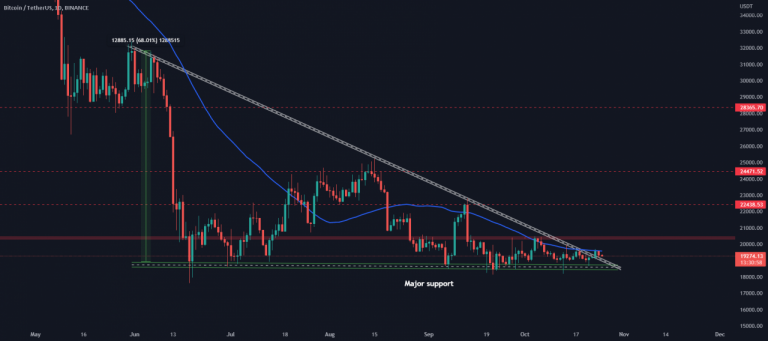
The bitcoin price descending triangle pattern has become a focal point for traders and enthusiasts alike, offering insights into potential market movements. This pattern, characterized by a series of lower highs and a consistent lower support line, often signals a bearish trend, prompting traders to refine their strategies accordingly.

Understanding how this pattern forms and how to identify it on charts is crucial for making informed trading decisions. The nuances of market psychology and trading strategies that leverage this pattern can significantly enhance a trader’s chances of success.

Understanding the Descending Triangle Pattern

The descending triangle pattern is a significant technical analysis formation that often indicates a bearish trend in the market. It typically surfaces when the price of an asset, such as Bitcoin, experiences a series of lower highs while maintaining a consistent low. This pattern can be crucial for traders aiming to predict future price movements and make informed trading decisions.The descending triangle is formed during a period of consolidation when sellers are increasingly willing to enter at lower prices, leading to a tightening price range.

In the context of Bitcoin trading, the pattern emerges as traders set lower highs, while the support level at the bottom remains relatively stable. This scenario highlights the struggle between buyers and sellers, with sellers starting to gain the upper hand as they press prices down towards the support line. As the pattern develops, it’s essential for traders to monitor the price action closely to identify potential breakout points.

Volume Significance in the Descending Triangle Formation

Volume plays a critical role during the formation of the descending triangle pattern, serving as a key indicator of the strength behind price movements. Analyzing volume trends can provide insights into trader sentiment and the likelihood of a breakout.As the descending triangle pattern forms, it’s important to observe how volume behaves. Typically, volume should decrease as the pattern progresses, indicating a reduction in buying interest.

However, a significant spike in volume during the breakout can serve as confirmation of a potential price move. In this context, the following points illustrate the importance of volume:

  • Volume Decrease: A consistent decline in volume throughout the pattern formation may suggest weakening buyer interest, reinforcing the bearish sentiment.
  • Volume Spike at Breakout: A sharp increase in volume during the breakout from the support line signals strong selling pressure and can validate the bearish trend.
  • Low Volume at Support Test: If the price approaches the support level with low volume, it may indicate that sellers are losing conviction, raising the potential for a reversal.

Monitoring these volume dynamics can aid traders in making decisions about entering or exiting positions when the price breaks through the support level, ultimately influencing their trading strategies effectively.

Identifying the Descending Triangle in Bitcoin Charts

Recognizing a descending triangle pattern in Bitcoin price charts is essential for traders aiming to make informed decisions. This pattern often signals a potential bearish continuation, making it crucial to identify correctly. By understanding the characteristics and key indicators of this pattern, traders can better navigate market conditions.The descending triangle is characterized by a series of lower highs converging with a flat support level.

Identifying this pattern involves several steps. First, traders should analyze price movements to spot a consistent trend of lower highs. Next, they should confirm the support level that remains intact during price fluctuations. The pattern typically culminates in a breakout, indicating a potential price decline.

Steps to Recognize a Descending Triangle Pattern

To accurately identify this pattern, consider the following steps:

  1. Examine the price chart for a series of lower highs, indicating a bearish trend.
  2. Look for a horizontal line that forms the support level, which should be tested multiple times.
  3. Confirm the validity of the pattern by ensuring the descending triangle does not break above the upper trend line.
  4. Monitor for a breakout below the support line, as this signals a potential continuation of the downward trend.

Historical Examples of Bitcoin Descending Triangles

Understanding historical price movements can provide insight into the descending triangle pattern. Notable instances in Bitcoin’s history illustrate the significance of this chart pattern. One such example occurred in late 2018, where Bitcoin’s price formed a descending triangle between $6,000 and $3,200. The lower highs established a bearish sentiment, and the eventual breakdown below the support level resulted in significant price declines.

Similarly, in early 2020, Bitcoin’s price exhibited a descending triangle before breaking down, ultimately leading to a strong bearish market phase.

Key Indicators for Identifying the Descending Triangle Pattern

Recognizing the descending triangle pattern is enhanced when traders consider specific indicators. The following table Artikels the key elements to look for in Bitcoin charts:

Indicator Description
Lower Highs A series of peaks that descend progressively, indicating selling pressure.
Horizontal Support A consistent price level that the asset repeatedly tests but does not break.
Volume Trends Declining volume during the formation of the pattern may suggest weakening momentum.
Breakout Confirmation A confirmed breakout below the support level with increased volume indicates a strong bearish signal.

By paying attention to these indicators and historical examples, traders can improve their proficiency in identifying descending triangles on Bitcoin price charts, aiding in their overall trading strategy.

Market Psychology Behind the Descending Triangle

The descending triangle pattern in Bitcoin trading is not just a technical formation; it also reflects the psychological dynamics at play in the trading community. Understanding these psychological factors can provide valuable insights into the behavior of traders and the overall market sentiment. Traders often experience a mix of fear and anticipation when they encounter a descending triangle. As the price continues to make lower highs while maintaining a horizontal support line, many traders begin to feel the pressure of potential losses, leading to emotional decision-making.

This emotional turmoil can influence market outcomes significantly, as traders may act on impulse instead of relying solely on technical analysis.

Emotional Responses of Traders during Descending Triangles

The emotional landscape during the formation of a descending triangle can be complex. Traders may exhibit various behaviors based on their understanding and interpretation of the pattern. The following points illustrate the psychological responses that traders commonly experience:

  • Fear of Loss: As prices approach the support level, traders may become increasingly anxious about a potential breakdown, prompting them to sell off their positions to cut losses.
  • Hope for Reversal: Some traders may cling to the hope that the support level will hold, leading to a reluctance to exit their positions despite mounting evidence of bearish sentiment.
  • Herd Mentality: The actions of traders around them can significantly influence individual decision-making. When many traders begin to sell, others may follow suit, accelerating the downward momentum.
  • Confirmation Bias: Traders often interpret information in a way that confirms their pre-existing beliefs. If they are inclined to believe the descending triangle indicates a bearish trend, they may overlook bullish signals.
  • Overtrading: In the face of uncertainty, some traders may engage in excessive trading, hoping to capitalize on short-term movements, which can lead to increased volatility.

“The descending triangle serves not only as a technical indicator but also as a reflection of trader sentiment, underscoring the emotional rollercoaster that often defines the trading experience.”

Examples of trader behavior can be observed during significant descending triangle formations in Bitcoin’s price history. For instance, during the 2018 bear market, a prominent descending triangle led to heightened selling pressure as traders reacted to negative sentiment in the market, resulting in a sharp decline in prices. Conversely, in earlier bull markets, some traders remained optimistic even as descending triangles formed, hoping for a bullish reversal that rarely came to fruition.Understanding the psychological factors and trader behaviors during these patterns can equip traders with better tools to navigate the market effectively.

Trading Strategies Utilizing the Descending Triangle

The descending triangle pattern can be a powerful tool for traders looking to capitalize on Bitcoin’s price movements. By recognizing this pattern, traders can formulate strategies that align with market behavior, enhancing the potential for profitable trades. This section will Artikel a trading strategy centered on the descending triangle, providing a structured approach for entering and exiting trades effectively.The descending triangle is often considered a bearish continuation pattern, suggesting that the price may break downwards after forming.

Identifying this pattern is crucial for traders, as it provides significant insights into market sentiment and potential price movements. Here, we will explore a reliable trading strategy based on the descending triangle, including clear steps for executing trades and a comparison of approaches that leverage this pattern for trading success.

Step-by-Step Trading Strategy for the Descending Triangle

To effectively trade using the descending triangle pattern, follow these structured steps that will help you navigate entry and exit points:

1. Identify the Pattern

Look for a series of lower highs and a consistent horizontal support level on the Bitcoin chart. The pattern should ideally form over several weeks to confirm its validity.

2. Confirm with Volume

Volume should decrease as the pattern progresses, which indicates a lack of conviction among buyers. A surge in volume during the breakout is a crucial sign.

3. Set Entry Point

The entry point for a short position should be just below the horizontal support level. This level serves as a key indicator that the price is breaking out of the descending triangle.

4. Determine Stop-Loss Level

Place a stop-loss order slightly above the most recent lower high to protect against false breakouts. This helps minimize losses if the market moves against your position.

5. Establish Profit Targets

Determine profit targets based on the height of the triangle. Measure the distance from the highest point of the triangle to the horizontal support level and project this distance downward from the breakout point.

6. Monitor for Reversal Signals

After entering the trade, keep an eye on potential reversal signals. If the price starts to show signs of bullish momentum, it may be wise to exit early to lock in profits.

7. Exit Strategy

Exit the trade when the price reaches your profit target or if a reversal signal appears. An alternative exit could be to trail the stop-loss to lock in profits as the price moves in your favor.

Comparison of Trading Approaches Utilizing the Descending Triangle

Different trading approaches can yield varied results when utilizing the descending triangle pattern for Bitcoin trading. Here are three primary strategies along with their characteristics:

Momentum Trading

This approach involves entering a trade immediately upon the breakout with aggressive targets. Traders who employ this strategy typically have a high-risk tolerance, aiming for quick gains based on immediate market movements.

Swing Trading

Swing traders often wait for confirmation of the breakout, looking for a pullback to the breakout level before entering a position. This method reduces the risk of false breakouts and allows traders to catch more significant price movements over several days or weeks.

Position Trading

Position traders focus on long-term trends and may use the descending triangle as a signal to enter a more extensive bearish position. This strategy is generally less focused on short-term price action, aiming to take advantage of longer duration trends.The choice of trading approach should align with individual risk tolerance, investment goals, and market conditions. Each of these methods can be effective, but understanding their nuances is crucial for successful trading in the Bitcoin market.

Risk Management Considerations

Effective risk management is crucial when trading based on the descending triangle pattern, as it helps mitigate potential losses and protect your capital. With the inherent volatility of Bitcoin, understanding how to manage risk can be the difference between a successful trade and significant financial setbacks. This section delves into the key techniques for risk management that traders should adopt when using the descending triangle pattern.

Key Risk Management Techniques

Implementing robust risk management techniques is essential to safeguard your investments. Here are several important strategies to consider:

  • Position Sizing: Determine the amount of capital to risk on each trade. A common approach is to risk no more than 1-2% of your trading capital on any single trade. This minimizes the impact of a losing trade on your overall portfolio.
  • Stop-Loss Orders: Setting a stop-loss order is vital. For descending triangle patterns, placing a stop-loss slightly above the most recent swing high can help protect against unexpected market movements.
  • Profit Targets: Establish clear profit targets before entering a trade. This not only helps lock in profits but also allows for better decision-making when adjusting trades in response to market changes.
  • Risk-Reward Ratio: Aim for a favorable risk-reward ratio, ensuring that potential profits outweigh potential losses. A common target is a ratio of at least 2:1, meaning for every dollar at risk, you aim to make two.

Importance of Stop-Loss Orders and Profit Targets

Stop-loss orders and profit targets play a pivotal role in maintaining discipline and ensuring that emotional trading decisions do not influence your strategy. By establishing a predetermined point at which you will exit a losing trade, you can maintain your focus on the overall strategy rather than reacting to market fluctuations. Similarly, setting profit targets helps you capitalize on favorable market movements without becoming overly greedy, ultimately contributing to a more systematic trading approach.

Risk-Reward Ratios for Descending Triangle Trades

Understanding risk-reward ratios is fundamental to successful trading. The following table illustrates various scenarios for trades involving the descending triangle pattern, showcasing how different entry and exit points influence potential outcomes.

Trade Scenario Entry Point Stop-Loss Point Profit Target Risk-Reward Ratio
Scenario 1 $30,000 $31,000 $28,000 2:1
Scenario 2 $29,500 $30,500 $27,500 3:1
Scenario 3 $29,000 $30,000 $26,000 4:1

In these scenarios, traders can see how adjusting entry points and stop-loss levels impacts the overall risk-reward ratio. Understanding these ratios helps traders make informed decisions and aligns their trades with their overall risk tolerance.

“The key to successful trading is not just about winning trades; it’s about managing your losses effectively.”

Case Studies of Bitcoin’s Price Descending Triangle Patterns

The descending triangle pattern represents a significant technical analysis formation that has appeared multiple times in Bitcoin’s price history. Studying these instances provides valuable insights into market behavior and potential trading opportunities. In this section, we will explore detailed case studies of notable descending triangle patterns, highlighting their formation, outcomes, and the subsequent movements in Bitcoin’s price.

Case Study: Early 2018 Decline

In early 2018, Bitcoin experienced a notable descending triangle pattern, which began forming after the market reached its all-time high in December 2017. This pattern was characterized by a series of lower highs and a flat support level around $6,000. The chart during this period shows an initial spike to nearly $20,000, followed by price decreases. As the descending triangle formed, market participants began to lose confidence, leading to increased selling pressure.

The descending triangle hinting at bearish sentiment often indicates potential breakdowns below support levels.

By mid-February 2018, the breakout occurred, with Bitcoin price falling to approximately $5,800, confirming the bearish outlook presented by the descending triangle. The aftermath of this pattern saw Bitcoin’s price continue to decline, reaching lows around $3,000 by the end of the year, demonstrating the pattern’s predictive power.

Case Study: Late 2019 Consolidation

Towards the end of 2019, Bitcoin formed another descending triangle pattern as it consolidated after a significant rally earlier that year. The apex of the triangle formed near the $7,000 mark, with lower highs creating a bearish outlook. This time, the support level was tested multiple times, showcasing market indecision.The visual representation of this pattern indicates a series of failed attempts to break above $7,800, while the support was consistently held above $6,500.

As the descending triangle completed, Bitcoin experienced a breakdown in early 2020 that brought prices down to approximately $5,600.

Analyzing volume during the breakout can provide insights into the strength of the move.

This breakdown led to a short-term panic in the market; however, Bitcoin soon recovered, illustrating the volatile nature of cryptocurrency trading.

Case Study: 2021 Market Correction

In the spring of 2021, Bitcoin experienced a descending triangle pattern after reaching an all-time high of around $64,000. This pattern emerged in the wake of rapid price corrections, with the triangle forming around the $55,000 level, characterized by lower highs and a horizontal support line.As the price approached the apex, there was increasing media coverage and speculation about potential market movements.

The breakout occurred in May, where Bitcoin plunged to nearly $30,000, validating the bearish implications of the descending triangle.

A descending triangle can serve as a warning sign for traders to be cautious when approaching key support levels.

The aftermath saw significant volatility, as Bitcoin’s price bounced back, making this case study particularly relevant for understanding market psychology and the potential for reversal after significant drop-offs.

Charts and Data Analysis

Several charts can illustrate the aforementioned case studies more effectively. Each chart can depict the periods where descending triangles formed, highlighting key support and resistance levels.

Chart 1

Early 2018 – Shows the descending triangle around the $6,000 level with price movements leading up to the breakout point.

Chart 2

Late 2019 – Highlights the consolidation around the $7,000 to $8,000 range, emphasizing the numerous attempts to break above resistance.

Chart 3

2021 Correction – Illustrates the triangle formation around $55,000 with the eventual price drop to $30,000.In analyzing these charts, it’s essential to observe volume patterns during the breakouts, which can signify the strength of market sentiment and the likelihood of continued price movement in the direction of the breakout.

Common Misconceptions About the Descending Triangle

The descending triangle pattern is often surrounded by misunderstandings among traders, particularly in the volatile world of Bitcoin. One of the biggest misconceptions is that this pattern is a guaranteed signal for bearish market movements. While there are historical precedents supporting this view, it is essential to approach the descending triangle with a nuanced understanding that considers various market dynamics.Misinterpretations of the descending triangle can lead to premature trading actions and missed opportunities.

This pattern can sometimes signal consolidation or even bullish reversals, depending on contextual factors. Below are some common misconceptions along with insights into why the descending triangle may not always lead to bearish outcomes.

Misconceptions About Bearish Outcomes

One prevailing misconception is that a descending triangle always culminates in a price drop. While this pattern often precedes bearish trends, it is crucial to recognize that market conditions can influence outcomes differently. Several factors can contribute to the invalidation of a descending triangle signal, including:

  • Volume Analysis: A descending triangle formation accompanied by declining volume may indicate weakening bearish sentiment. Conversely, increasing volume during a breakout can suggest strength in a bullish direction.
  • Market Sentiment: Overall market sentiment can drastically alter the expected outcome. Positive news or developments in the cryptocurrency space might lead to a breakout to the upside, despite the descending triangle formation.
  • Time Frame Considerations: The time frame used for analysis can affect the interpretation. A descending triangle on a shorter time frame may not hold the same significance as one on a daily or weekly chart.
  • Fundamental Changes: Major events, such as regulatory news or technological advancements, can disrupt the anticipated trajectory of the market, leading to unexpected outcomes.
  • Support and Resistance Levels: The strength of surrounding support and resistance levels can invalidate the descending triangle pattern if price action reacts to these levels rather than following the anticipated trend.

Understanding these factors helps traders avoid falling into the trap of basing decisions solely on the pattern’s visual representation without considering underlying market conditions. Assessing the broader context and incorporating additional technical indicators can lead to more informed trading decisions.

Closure

Bitcoin BTC USD Chart Descending Triangle Breakout ,000 or ,000

In conclusion, the bitcoin price descending triangle pattern serves as a valuable tool for traders looking to navigate the complexities of the cryptocurrency market. By grasping the intricacies of this pattern and implementing sound trading strategies, traders can better manage their risks and capitalize on potential price movements.

Common Queries

What is a descending triangle pattern?

A descending triangle pattern is a technical analysis chart pattern that indicates a bearish trend, characterized by a series of lower highs converging towards a horizontal support line.

How do I identify a descending triangle on a chart?

To identify a descending triangle, look for lower highs that create a downward slope and a flat support line where price has historically found support.

Can a descending triangle lead to a bullish reversal?

While a descending triangle typically signals a bearish continuation, it can occasionally lead to a bullish reversal if the price breaks above the upper trend line with strong volume.

What role does volume play in a descending triangle pattern?

Volume is crucial as an increase in volume during price declines can confirm the pattern’s validity, while low volume might indicate a lack of conviction in the trend.

Are there any common mistakes traders make with descending triangles?

Yes, a common mistake is failing to wait for confirmation of a breakout, leading to premature trading decisions based on the pattern alone.